

Our group at @LMU_Muenchen and @MPI_Biochem uses DNA nanotechnology to develop next-generation super-resolution microscopy techniques. #DNAPAINT
- Tweets153
- Following56
- Followers1K
- Likes127
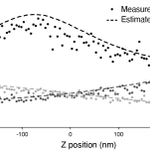

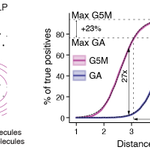

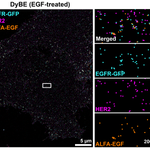
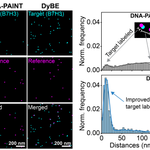


ALT The image on the cover shows two sugars from the same cell-surface glycan separated by 9 Å, visualized with RESI (resolution enhancement by sequential imaging) enabled by metabolic labelling with DNA barcodes. IMAGE: Luciano A. Masullo, Max Planck Institute of Biochemistry, Germany. COVER DESIGN: Vanitha Selvarajan Original paper: Masullo, L.A., et al. Ångström-resolution imaging of cell-surface glycans. Nat. Nanotechnol. 20, 1457–1463 (2025). https://doi.org/10.1038/s41565-025-01966-5 Abstract: Glycobiology is rooted in the study of monosaccharides, ångström-sized molecules that are the building blocks of glycosylation. Glycosylated biomolecules form the glycocalyx, a dense coat encasing every human cell with central relevance—among others—in immunology, oncology and virology. To understand glycosylation function, visualizing its molecular structure is fundamental. However, the ability to visualize the molecular architecture of the glycocalyx has remained challenging. Techniques

