

MSK Physiotherapist | Lower Limb Enthusiast | Aspiring Researcher
West Yorkshire
Joined November 2009
- Tweets406
- Following924
- Followers321
- Likes793


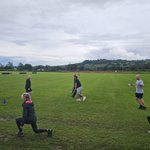


Another great turn out last night at @SkiptonLadiesFc delivering another @PowerUpToPlay session. Really engaged group and ideas of how to implement to this important group of players. Nice to get outside too!

Another successful @PowerUpToPlay session at @AiredaleMsk last night, updating coaches from Aire Valley Hockey Club on adolescent knee injuries and how we can help reduce risk with a 12min warm up.

Justin Murr retweeted

Today, at the @RCSnews hosted by @BritOrthopaedic a group of diverse and dynamic clinicians and patients agreed the top 10 research priorities in Women’s ACL injuries
This hopefully represents a huge step forwards in tackling the gender data gap in this area

Great reminder of the impact of ACL
Injuries in children and how it goes beyond absence from their sports @angiejphysio @PowerUpToPlay #PU2P

Looking forward to this day. Adolescent knee injuries, the female athlete and ACL rehabilitation 👌🏼@PowerUpToPlay

Justin Murr retweeted

2/2 promoting the value of the AHP research special interest group that has been established @Airedaleahps by @staceylalande #BDCAHP24

Justin Murr retweeted

The fabulous @h_carter43 expertly presenting her work from her @NIHRresearch doctorate on developing an intervention for ACLs… that’s the knee isn’t it ?! Good luck with the next steps


Justin Murr retweeted

@thecsp conference 2024, great day so far, lots of interesting talks (and posters 😉) @LTHTPhysio @DavidLunn86 @broc03 @LBUHealth @HeidiSiddle @LeedsBRC @JustJMX @gazliverphysio @stevenphysioHG1

Justin Murr retweeted

Watch Dr. LaPrade break down how to read an MRI of an ACL tear. From normal knee anatomy to the telltale signs of an injury—this is a must-see insight for any ortho enthusiast! Watch the video here>>>medilink.us/hlnk #ACLTear #KneeInjury #OrthoEducation

Nice update around Achilles rupture and ACL management from around our region at @Carnegie_Sport in an essential patient & public knowledge exchange event. Thanks @nmaherPT5 @broc03. Looking forward to more collaboration

Justin Murr retweeted
Curious about meniscal root tears? Dr. Robert LaPrade explains how to read MRI scans and identify these critical injuries. Perfect for anyone passionate about knee health and sports medicine. Discover more with a real patient case! medilink.us/p4eo #KneeCare #MRIInsights

Justin Murr retweeted

Trochlea Dysplasia as the Major Anatomic Risk Factors for Patellofemoral Joint Instability: An Infographic as a Visual Learning Tool
pubmed.ncbi.nlm.nih.gov/3900…

Great evening delivering the @PowerUpToPlay knee injury prevention talk and practical session to the coaches at @SilsdenJuniors. Really engaged and keen to make a difference in our area- just down the road from @AiredaleMsk


Justin Murr retweeted

Plantar heel pain survey! If you’re interested in completing the survey, please click here: app.onlinesurveys.jisc.ac.uk….
Please share with any colleagues that you feel may be of interest! If you have any questions, please contact Chris Drake: c.j.drake@leeds.

Justin Murr retweeted

📢UK Physiotherapists📢
If you have experience of treating shoulder osteoarthritis please consider completing this survey:
forms.office.com/Pages/Respo…
It should take less than 10 mins and no personally identifiable data will be collected.
Please feel free to share far and wide.
Justin Murr retweeted

🚨#NEW #QualitativeResearch
Injury prevention for women and girls playing Australian Football: programme cocreation, dissemination and early adopter coach feedback ⚽
@Knee_Howells, @AlexDonaldson13 et al!
OA ARTICLE 👉🏼 bit.ly/3vnidQX
#UnderTheSpotlight
#WeAreBOSEM


Delving in to the intricacies of turf toe. A commonly missed pathology. MTP Lachmans is the quick test!
Nice to hear most can be conservatively managed with physiotherapy. #BOFAS


Justin Murr retweeted

The Why, What and When of Objective Testing after ACL Reconstruction
---------
Why are we Testing?
The purpose of testing after ACL reconstruction is often questioned is it to predict new injuries or assess an athlete's readiness to return to the game? Although certain sports medicine tests are associated with an increased risk of injury, accurately predicting injuries remains challenging. Furthermore, conflicting findings exist in the literature regarding the effectiveness of passing a battery of tests in reducing the rates of new anterior cruciate ligament (ACL) injuries
Secondary prevention
Less than half of our ACL injured athletes are competing at the same level 3 years after their injury has been “fixed”. What is stopping the rest? We’ve been overlooking a myriad of other injuries that about half of the athletes after ACL reconstruction (ACLR) suffer on attempting to return to sport. Subsequent injuries do not include only ACL injuries. Literature reports short-term (muscle injuries) and long-term (meniscal or chondral injuries and osteoarthritis (OA))consequences of ACL injury and reconstruction that require our attention. By focusing solely on the rates of second ACL injuries, we might overlook the real problems: other injuries preventing our athletes from resuming their sports activities.
Monitor progress during rehabilitation
When athletes are preparing to return to sport after an ACLR, it is essential to address any remaining deficiencies in their physical and psychological condition.
These deficiencies can manifest in different areas such as strength, range of motion, joint laxity, performance, functional ability and capacity, as well as psychological readiness.
To accurately identify these areas of improvement, it is crucial to use tests and metrics with sufficient sensitivity.
By continuously monitoring the progression of these metrics during the rehabilitation process, athletes can track their improvement and ensure a comprehensive recovery that addresses all aspects affected by the ACLR.
Performance
And if they eventually return, will they be the same? According to UEFA studies, although 87% of professional football players are still playing three years after an injury, only 65% of them have regained their pre-injury performance levels. This disparity highlights the extent of the problem. If achieving a successful return to performance is the ultimate goal of surgery and rehabilitation, it appears that our current methods are falling short. Is there room for improvement in these return to performance rates? Unfortunately, the existing criteria mentioned in the literature offer limited assistance. Only a small proportion of studies have reported performance metrics at the time of return to sport. Objective performance metrics at the time of return to sport are essential to enhance secondary prevention and accurately evaluate an athlete’s readiness to perform at their full potential.
Testing Components
• Clinical Assessment
• Patient-reported outcome measures
• Strength
• Motor control
• Why all the fuss with vertical jumps?
• Horizontal hop landing
• Change of direction mechanics
• Biomechanical analysis
Discharge Criteria
Completion of the rehabilitation protocol and clearance to return to sport is not the same as return to competition. We propose minimum criteria required for a professional athlete to be cleared from the clinic/hospital setting and start training with their club, whereupon they should then gradually return to full participation.
These criteria should be adjusted and individualised according to their previous activity level. Our proposed discharge criteria are based on our clinical experience, research findings and our normative data.
It's important to acknowledge that the decision to return to training is not always straightforward and may be influenced by various factors outside the realm of pure medical considerations. By embracing informed and shared decision-making, athletes can navigate these complex choices, ensuring their well-being, while also considering the demands and pressures of the competitive environment they operate in.
Is Symmetry Important?
The goal of rehabilitation is to return the athlete back to normal. It is difficult to define normal, as this is different for each patient.
Loading asymmetries may predispose athletes for subsequent injury. So far, it is unknown if and how long the observed loading asymmetries during rehabilitation and at the time to return to sport persist after they return to sport.
This is highly relevant as it is unknown if these asymmetries can be related to future injuries or more chronic pathological knee conditions like meniscus or chondral failure signs, or early OA.
Whereas moderate mechanical loading is crucial for maintaining healthy cartilage, abnormal joint loading (either insufficient loading or high-intensity joint loading) increases the risk of OA. Our goal during the rehabilitation is to restore those asymmetries.
Clinicians should use asymmetry metrics on an individual level and by comparing to the noise of each test and each metric. Normally, the clinician does not have preoperative test values to set the end goals for each patient38. Achieving symmetry is an important goal during rehabilitation, but equally important is to return the athlete to their previous level of performance. We suggest that the uninvolved limb should be monitored during rehabilitation, and both limbs should reach matched-control normative values in the absence of pre-operative data.
Testing Tips
While manual muscle testing is commonly used, it is not the optimal option for precise and accurate measurements. Hand-held dynamometer is a must-have tool in every physical therapy clinic. Furthermore, for ACL and other lower and upper limb injuries, the use of force plates becomes necessary to gather more comprehensive data.
We are currently witnessing a shift in the way we approach testing and data collection, with the increasing accessibility of portable labs such as smartphones. This advancement in technology allows us to gather and analyse data with ease, reducing the need for specialized biomechanists or engineers. It presents us with an opportunity to expand our testing capabilities beyond basic measurements like girth and range of motion. As healthcare professionals, it is crucial for us to embrace this new era and leverage these opportunities to benefit our athletes.
To ensure effective testing, it is important to establish a regular testing schedule, such as every six weeks or two months. It is vital not to skip testing days, even if there are limitations due to insurance or other reasons. Testing should be integrated into the rehabilitation session, as it not only benefits the patient but also provides the clinician with a roadmap for guiding the rehabilitation process.
Standardization is key in testing. It is advisable to standardize the tests themselves, the tester performing the assessments, and the order in which the tests are conducted. Testing requires practice to minimize variability. Therefore, it is important to test only the tasks that the patient has trained before, as testing unfamiliar tasks may yield inaccurate results. It is also beneficial to create a database of normative data. If working within a club, aim to establish a normative database specific to your athletes, including measures of strength, jump metrics, and other performance indicators. If pre-injury data is not available, consider referencing normative data from the literature. However, keep in mind that each athlete is unique, and certain metrics can vary significantly depending on factors such as sex, sport, position, age, and more.
🔗Read More▶️ journal.aspetar.com/en/journ…
------------
– Written by @RoulaKotsifaki


