

Just Russ Mostly Apple, always curious about tech Thoughts, takes & stories along the way
New York, USA
Joined October 2026
- Tweets1.5K
- Following1.6K
- Followers1.6K
- Likes6K




Pinned Tweet
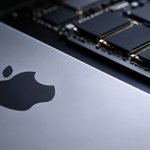
Apple finally brought touch to the MacBook Pro. But is it worth paying $400 more?
A closer look at the new display, the trade-offs, and who should actually buy one.

$895.4 billion.
That is Anthropic's locked compute and infrastructure commitments in the amended S-1.
Half due by 2030. The IPO filing reads like a power bill.
OLED iPad mini is out today.
IP67, sound through the screen, A20 Pro. Still 60Hz. Starts at $699.
Smallest OLED Apple sells, and the first sealed iPad
OpenAI's cyber pipeline found and patched 948 Linux privilege escalations in one run.
Cost: $1.2M in API credits. About $1,279 per exploit.
Pwn2Own used to pay $20K to $70K for one of those. The math flipped.
Instagram's Edits app is on Mac now.
Multi-track timeline, free 4K exports, Apple silicon only. No Windows version.
CapCut already lived on desktop. Meta just caught up to the bigger screen.
Apple reportedly cut some engineers' daily AI budget for tools like Claude and ChatGPT from $300 to $200, per Bloomberg's Mark Gurman.
It could drop to $100. Some non-engineering teams may go from $100 to $25.
Even Apple is counting tokens now.
Anthropic is going public, but whoever buys ANT won't be the one in charge.
Here's what the S-1 actually says about control, from a law student's point of view:
1. Anthropic is a public benefit corporation under Delaware law. The board has to balance shareholders' money with the people affected by the company and its stated mission, not just the stock price.
2. A Long-Term Benefit Trust holds a special Class T share that elects 4 of the 7 board seats. That's a majority of the board.
3. The seven co-founders get one single Class F share through a "Founder LLC." That one share carries 50.1% of the votes on normal shareholder matters. No economic rights, just control.
4. Because the trust picks a board majority, Anthropic counts as a "controlled company" under Nasdaq rules and can skip some of the usual independence requirements. It plans to use that for its nominating committee, which will include president Daniela Amodei.
5. Regular Class A buyers get one vote per share. Together they can't outvote a 50.1% block.
The money side, from the amended filing on Nov 2: about $17B in Q3 revenue, roughly 12x a year ago and up 47% from Q2, plus about $895B in compute and infrastructure commitments.
And no, the IPO isn't cancelled. There's no withdrawal on file with the SEC.
So the real question isn't the valuation. It's whether investors are fine owning a piece of a company they'll never get to steer.
Canva says growth slowed for the first time in a decade, and 1,271 roles get hit. That's 22% of the company teapaw.org/TechCrunch/status/2117…

Canva is cutting 22% of its staff as it faces its 'hardest year' yet.
spr.ly/6011BHIY3R



Apple is feeling the pressure of the AI boom, and it’s showing up in its margins.
Apple just reported $114.5 billion in quarterly revenue, beating Wall Street expectations.
But there’s a growing challenge: memory chip prices.
CEO John Ternus described the increase as “unprecedented,” warning that costs will continue to rise into next year.
Apple expects gross margins to fall to 45–46% in the December quarter, partly due to higher memory costs and AI-related expenses.
The irony? The same AI boom driving demand for Apple’s products is also making the components behind them more expensive.
AI is changing the tech industry in ways that go far beyond software.

An AI phone replacing the iPhone? Maybe one day, but not anytime soon teapaw.org/AdamZinebi1/status/211…

Sony stops making discs for new PlayStation games in January 2028. Its last standalone 4K Blu-ray player is discontinued in Japan, so the PS5 is now Sony's only 4K Blu-ray player there.
Digital is convenient. It also means you're renting a library you thought you owned.
California's July bar pass rate fell to 48.3%. More than half the room failed teapaw.org/Reuters/status/2117343…

Lawyer bar exam pass rates plummet in California, other large states reut.rs/4iAVk0Y

Russell retweeted

Applications are now open for the Anthropic Residency, a paid, fixed-term research program for academics, technical founders, and staff-level engineers who want to make AI safe and beneficial for everyone. No ML background is required.
Apply by November 22: alignment.anthropic.com/2026…
Russell retweeted

Starlink saves lives

Starlink helped save a woman stranded in Colorado’s freezing mountains.
A 37-year-old hiker was trapped in deep snow, unable to walk and suffering from cold injuries.
With no mobile phone signal, rescuers used Starlink to stay connected to their coordinator throughout the night.
She was rescued by helicopter and flown to hospital the next morning.
A lifeline from space helped rescuers bring her to safety.

AI agents are not taking over online shopping just yet.
DoorDash CEO Tony Xu revealed that third-party AI agents have generated only several hundred orders on the platform so far.
For context, DoorDash handles millions of deliveries every day.
Despite all the hype around agentic commerce, most customers are still placing their orders directly through the DoorDash app.
The technology is advancing rapidly, but consumer adoption is a different story.
AI agents may change how we shop. But the real question is: are people ready to let AI do the buying for them?

OpenAI is taking AI beyond chatbots and into the energy industry.
ADNOC, OpenAI and G42 have signed a multi-year partnership to integrate advanced AI across ADNOC’s operations.
The initiative will use OpenAI’s models and AI agents to connect decisions across the energy value chain, from oil field planning and production to refining, logistics and trading.
The goal? Help manage complex operations, improve decision-making and unlock new efficiencies.
What makes this particularly interesting is the bigger picture: AI is moving beyond digital products and becoming part of the infrastructure that powers entire industries.
The next AI revolution won’t just be about how we work. It will be about how the world operates.

OpenAI just cut its funding target from $30B to about $20B and lowered the valuation it's pitching from $1.4T to $1.25T, per the FT.
Still an enormous number. But it's the first time in a while the AI money machine has blinked.
Investors want receipts now.