

I translate stuff and make Youtube videos. Click the link below for all my socials (Youtube, Telegram, CC etc.)
Joined July 2020
- Tweets3.5K
- Following48
- Followers2.1K
- Likes331






Pinned Tweet
Some stuff I translated that you should read:
1. The concept of God in Islam
t.me/kaafiyahchannel/172
2. Reply to Ibn al Humam on إمكان الكذب
t.me/kaafiyahchannel/182
3. What Fitrah really means
t.me/kaafiyahchannel/142
4. The difference between محدث & مخلوق
t.me/kaafiyahchannel/136
The Kaafiyah Channel retweeted

Reading Tahawiyyah with my younger brother and we reached the part on the descent of Sayyidina Isa. So I asked: If someone objects to this by saying it contradicts Rasulullah ﷺ being the final Prophet, what would you say? He replied: Sayyiduna Isa was an old Prophet who is returning, he isn't a new Prophet after him ﷺ
This is the first time I've discussed it with him, yet he answered very simply and correctly, because it's an intuitive idea. I thought, he's already smarter than a few tens of thousands of braindead Qadianis!
The Kaafiyah Channel retweeted

Unfortunately, these types of comments stem from not understanding your interlocutor’s position. This brother clearly hasn’t studied Ashʿarite theology; otherwise, he wouldn’t say things like that, according to the Ashʿarite school: “God cannot speak”. This is nothing but slander. The distinction the Ashʿarites make between kalām lafẓī (linguistic speech) and kalām nafsī (internal speech) is to show that letters and sounds, in and of themselves, don’t have intrinsic meaning unless a conscious state behind them signifies that meaning.
For example, when you and I say “bring me water”, behind these words there is a property within the speaker that signifies their meaning. We don’t just utter the words “bring me water” with no prior meaning at all. Otherwise, there wouldn’t be a difference between a rational agent who says these words and a parrot or robot who utters them. A parrot will utter these words, or any other words, because it can produce sounds, but does that mean it has a conscious intentional state that signifies meaning? Of course not. The parrot is just uttering mere letters and sounds. The Ahl as-Sunna argue that speech is not confined to letters and sounds, which are self-evidently created, but that there is a conscious, intentional state within the speaker prior to saying anything, which is also called speech—this is known as kalām nafsī (internal speech). This speech for God is eternal and free from any incipient property.
As for this brother’s misunderstanding that kalām lafẓī refers to the knowledge of the expression’s composition (naẓm al-ṣīgha), that is false because the composition of the expression changes with the changes in the expressions that signify that meaning, while the internal statement remains unchanged. So, let us take our previous example: “bring me water”. This statement has a specific form of expression in English, and its form will change in another language, say in Arabic. However, despite the changes in the expression’s composition, the meaning behind the forms, which is the internal speech, does not change. Thus, reducing the statement “bring me water” to merely knowing its form of expression is incorrect because that frequently changes while the meaning behind it remains unchanged. Similarly, a single expression, such as “bring me water”, can have multiple meanings while the expression’s composition remains the same. The statement “bring me water” can be used as a command, report or anecdote, so the knowledge of the expression’s composition remains the same, but its meaning varies. Reducing kalām lafẓī to merely knowing the expression's composition is incorrect because we can have multiple expressions for the same meaning, and the same expression can have different meanings. Therefore, something beyond knowledge of the expression’s composition must be considered: kalām nafsī.
In fact, the Muʿtazilites argue that kalām lafẓī refers to knowledge, and the Ahl as-Sunna Ashʿarites have given them a detailed response in their works.

I'll suffice by sharing what Sh. Saeed Foudah said in a video.
You can watch the video (only 15 mins) here: youtu.be/ge9JwIC_UWM


With all respect, this is the problem with the Ash’ari school.
“We believe Allah speaks!” But what they really mean is speech used in an idiosyncratic meaningless way.
“We believe Allah’s actions are successive” But what we really mean is that the created effects are successive while God himself doesn’t act in succession.
“We believe the Quran is uncreated!” But what we really mean is that the Arabic Quran we recite is created, what is uncreated is this thing called “internal speech” that is not comprised of letter or sound.
If you will disagree, do so with manners in the comments. Thanks
This is a concocted distinction between حادث/محدث and مخلوق. There is no linguistic basis for this (see attachment, full article: t.me/kaafiyahchannel/136).
There is one exception: things that only have a mental existence are حادث but not مخلوق.


I think we have to get one thing straight: a poorly worded statement doesn't require an uncharitable ta'wil. The uncharitable understanding arises from the wording itself. Those who try to whitewash it are the ones doing ta'wil.
5
254
This book by Dr. Brown is one of the best works on this topic. He tackled the problem philosophically, historically and morally.

The Kaafiyah Channel retweeted

It’s not rarely discussed. Y’all are just historically illiterate. Many slaves went on to become sultans in the Islamic world. Eg. Mamluks. There was no racial basis for it.
The British and other Europeans running the Transatlantic Slave Trade were far worse by every metric.


Why is the history of slavery in the Islamic world so rarely discussed?
Historian Justin Marozzi writes that the enslavement of millions of Africans across the Middle East and North Africa – a trade that lasted for centuries – has been largely absent from public debate in the region ⬇️
telegraph.co.uk/news/2025/11…


The Kaafiyah Channel retweeted

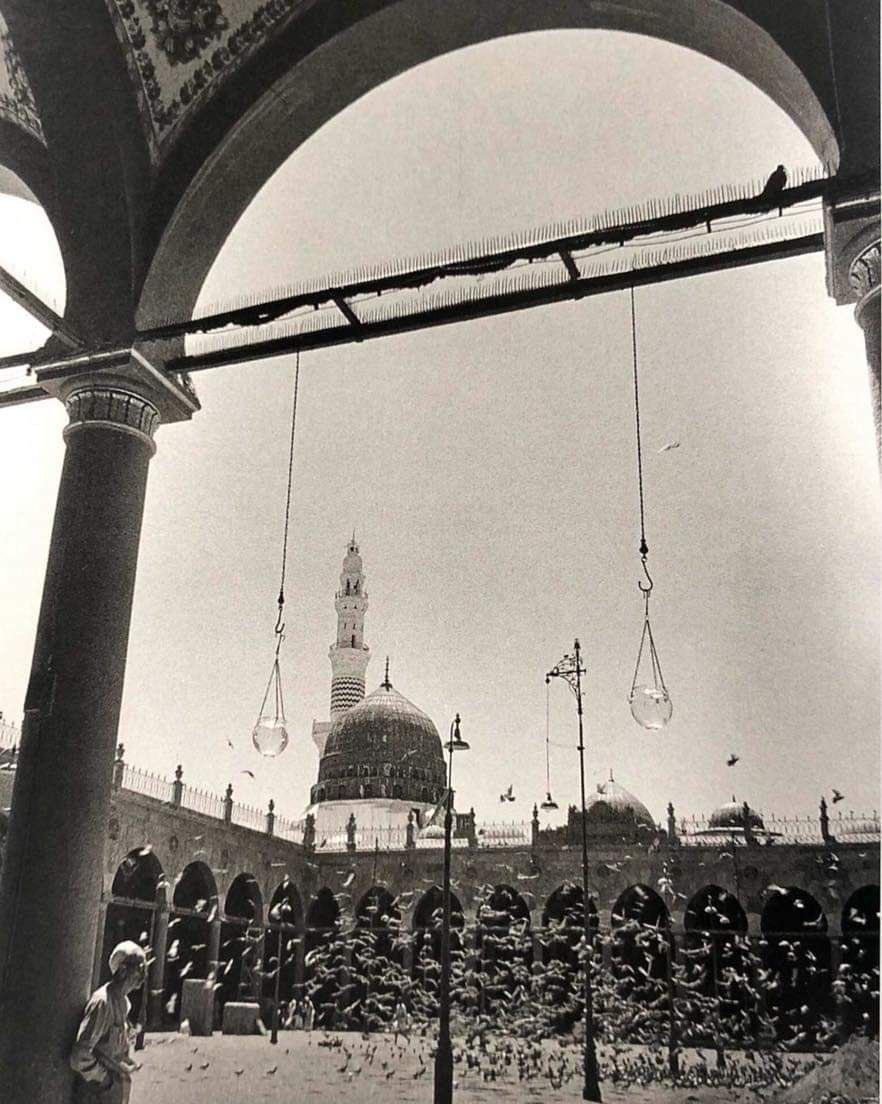
Historic photos of #المسجد_النبوي, showing its old features and scenes of its courtyards etc, documenting an aspect of the place’s memory.
Masjid Nabawi, Al-Madinah Al-Munawwarah.




It's interesting to observe the shifts in topics of interest in theological debates. A while back, the issue of khatm al-nubuwwah got revived; then we were dealing with haqaiq al-ashya' thabitah; now we're dealing with the Quran's compatibility with previous scriptures.
1
6
444
Depending on your circle and bubble, you may have seen other discussions and topics gaining traction. This is simply my POV.
1
118
To everybody who writes essays in tweets: ain't nobody reading that. This isn't the platform. I'm tl;dr-ing all of those tweets
Back in the day when I used to teach in a madrasa, I had two students named Inayah (about 8-9 y/o). They were the best man, good Quran readers too. I hope they are doing well in life. They honestly made me enjoy my job. They also made me realize that having kids isn't a bad idea
1
163
The Kaafiyah Channel retweeted

The funniest thing about these secularists is that Pakistan's ruling class are not “mullahs”. Their elites have been full of libs for decades. They have the power.
But they want to fantasize about how Pakistan would be a paradise if only the “mullahs” weren't around.

Your problem precisely is the articulation of the "islamist" narrative in a language that doesn't fit your idea of how a politically charged muslim should argue, classic neo-oriental tendencies. which is why you have to box muslims into "frantic mullahs-good sec-lib muslim" binaries, you're unable to fathom any political commentary beyond the secular-liberal-humanist paradigm, which you assume to be universal and neutral.
Kindly please don't punch above your intellectual pay-grade, stick to doing podcasts within your bubble.
Watched a video where a Salafi was criticizing Ash'aris and he said that since aĥaad hadiths don't support our creed, we resort to saying that they يفيد الظن.
Deceptively, or perhaps out of ignorance, he translated ظن as conjecture. That's wrong, "probability" is intended.
1
100
Travelled to Fes last week. We had the honor of being invited to the Qarawiyyin university, meeting the King's munshid and meeting many more people, alongside attending classes of the scholars who joined us on our trip. Absolutely wonderful. The post-Maghrib dhikr was enriching.
1
143
