

PhD student at Move.inFormation group @UniKonstanz in collaboration with @MPI_animalbehav and @INIBIOMAConicet
Joined January 2019
- Tweets319
- Following778
- Followers260
- Likes2.1K




Pinned Tweet
Really excited to announce that my masters thesis with @NHM_London and @ucl has been published! So much gratitude to my supervisors @KnappRew and @rfelice for their support and guidance (and patience 😅), and especially for sharing my enthusiasm for vultures
You’re unable to view this Post because this account owner limits who can view their Posts. Learn more
Katherine Steinfield retweeted

Less than 1 month left to apply for this PhD opportunity that asks how ecological disturbance shapes social networks with me in @CrabExeter funded by the @GW4plusDTP

New PhD opportunity on social behaviour in the context of ecological disturbance. Sept 2025 start, funded by NERC @GW4plusDTP. Apply by Jan 13. Project and application details: exeter.ac.uk/study/funding/a…

Katherine Steinfield retweeted

Another great #PhD opportunity for #HumanDimensions & urban carnivore ecology. Look here: docs.google.com/document/d/1…

Katherine Steinfield retweeted

🚨🚨PhD position alert!! 🚨🚨We are looking for a doctoral student to carry out behavioural research on acoustic and visual communication in wolves and dogs @ Comparative Cognition Lab (University of Neuchatel, Switzerland) and the @DomLabVienna (@VetmeduniVienna, Austria)

Katherine Steinfield retweeted

Overpublishing puts enormous stress on students and PIs.
And brings tons of money to publishers in STEM.
A new study shows that the number of papers is increasing FASTER than the number of #PhD graduates.
It’s an amazing work with very useful statistics. Huge kudos to the authors!
▫️
Main outcomes:
1️⃣ In 2022 the number of articles is 47% higher than in 2016. The amount of writing, reviewing and editing workload per scientist is increased enormously.
2️⃣ “Special issues” is a strategy for publishing lots of papers with reduced review time. This is possible due to the “publish or perish” pressure and clearly benefits the publishers.
3️⃣ The publishing time varies widely!
MDPI = 37 days. Frontiers = 72 days. Elsevier = 134 days. Springer = 157 days. Nature = 185 days.
4️⃣ The article rejection rates do not seem to correlate with publisher growth. However, rejection rates decline with increased use of special issue publishing.
5️⃣ Certain for-profit gold-open-access publishers create an increasing number of special issues, with uniquely reduced turnaround times, and in specific cases, high impact inflation and reduced rejection rates.
6️⃣ The authors suggest a new metric - Impact Inflation, which is reflected in self-citation within the same journal. For example, MDPI has a high impact inflation due to excessive self-citation compared to other publishers.
Conclusions and my opinion:
- Scientists have to spend a lot more time on reviewing and writing than before (on average).
- The more papers are published, the more the quality is compromised.
- Scientific progress has become partially bound to the business models of publishers and their revenue (a sad reality today).
- There is a huge lack of transparency. Much of these data had to be ‘web-scraped’ from numerous sources in order to get a full picture. We clearly need regulators to mandate open access to publisher’s statistics.
- Reduce the number of special issues! Those typically have low standards.
▫️
Science, publishing and funding make a trio that is very hard to disentangle.
However, research quality is controlled by the community.
This is why preprint + community review can make a big difference.
#AcademicTwitter #AcademicChatter

Katherine Steinfield retweeted

👋🏻 Hello! I wanted to say hi and reintroduce myself.
I'm David and I study the effects of changing landscapes on carnivore populations.
I studied #hyenas w/ @MaraHyenas for my PhD and then I worked at @oregonstate studying fishers
But now I'm doing something new 🧵


Katherine Steinfield retweeted

Registration is open for our 2-day training course on Conservation Genomics, at #ICCB!
Note: for the first 2 weeks, registration will be open for our African colleagues only, then the course will open up for all. Participation = free for LIC!
Please RT!
conbio.org/mini-sites/iccb-2…

Katherine Steinfield retweeted

Motivated to improve canine welfare? Check out our new funded PhD opportunity @RoyalVetCollege exploring private & commercial rehoming systems for dogs in the UK 🐕 Supervised by myself, @CompassVet @ZotVet & @UK_PetDogPop and funded by @DogsTrust 💛 Info: rvc.ac.uk/study/postgraduate…

Katherine Steinfield retweeted

We are swabbing drill sternal scent glands this week at Drill Ranch, Nigeria. Check out the oily hair on Shikra’s chest! He is one seriously smelly boy


Katherine Steinfield retweeted

Great news!
As part of the #Animove #elearning programme, you are now able to stream 2022 #Animalmovement & #remotesensing course lectures #opensource
Follow the link:
streaming.uni-konstanz.de/ta…
Thanks @unikn_streaming @UniKonstanz for making this possible.

Katherine Steinfield retweeted

Values are the fundamental goals/principles that guide our #behavior, including important #environmental decisions that impact conservation. Measuring wildlife values related to domination and mutualism can tell us a lot about people's willingness to #coexist with #wildlife (2/5)

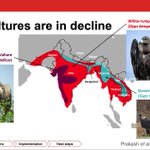
Wow, still in shock that I just heard Dr. Vibhu Prakash speak, the scientist responsible for discovering Asian vulture declines, identifying diclofenac as the cause, pioneering captive vulture breeding programs, and building the foundation for vulture conservation globally.😱
Many thanks to the @SAVE_vultures consortium for a fascinating morning learning about vulture tagging methods, transect surveys, NSAID testing, and vulture safe zone identification!
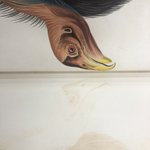
Woohoo! Check out the poster of our research on vulture skull morphology! Stay tuned, paper coming soon…
You’re unable to view this Post because this account owner limits who can view their Posts. Learn more
Katherine Steinfield retweeted

Hey Twitter, here's a hyena cub! 😻
Now that I got your attention: TIL that a proposed #HyenaEmoji has been at "Prioritization Pending" status at @unicode for ~4 years: unicode.org/emoji/emoji-requ…
Does anyone know how to speed the process up? It's 2023, high time we got one, no?!

ALT A spotted hyena (Crocuta crocuta) cub. (c) Arjun Dheer
Good morning, Edinburgh! If you’re at #BES2022 this year, stop by my poster and say hello ☺️

Katherine Steinfield retweeted

🟢 A new, free @IUCN #GreenStatusOfSpecies training course has been launched on conservationtraining.org, covering all of the key information needed to undertake a Green Status assessment 🐸
Find out more about the course in this Conservation News piece➡️ doi.org/jpq8

ALT Snapshot of the Green Status of the saiga, Saiga tatarica
Katherine Steinfield retweeted
We are looking for students for our research projects in 2023! For application, please send a motivation letter, a CV, and if applicable also a recommendation letter to Dr. Giulia Cimarelli ([email protected]).

Katherine Steinfield retweeted
Good morning @wildlifesociety! Are you ready for a change in scientific publishing? Send me a DM and let’s connect to chat about @StacksJournal! #TWS2022