








Pinned Tweet
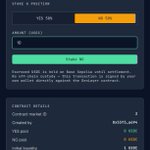
the funniest thing about xo market is watching people slowly realize that confidence and conviction are not the same thing.
crypto timelines are full of confident people.
“easy 10x.”
“guaranteed send.”
“top signal.”
“fade this and cry later.”
but confidence is cheap when nothing is attached to it.
xo market changes the atmosphere because now opinions can actually be stress tested publicly.
and once that happens, you notice something immediately:
people become way less dramatic when their thesis has consequences.
that is why i think prediction markets are bigger than gambling.
they expose the gap between:
what people say
and what people are actually willing to back
those are usually very different things.
the internet accidentally created a culture where being loud matters more than being accurate.
markets quietly reverse that incentive.
not instantly.
but over time, reality starts ranking people better than engagement algorithms ever could.
and honestly, that is refreshing.
because social media today is overloaded with recycled conviction from people who risk absolutely nothing for being wrong.
xo market feels like one of the first platforms i have seen where the internet starts moving from:
“who sounds smartest?”
to:
“who consistently positions correctly under uncertainty?”
that is a much harder game.
and probably a much healthier one too.
@xomarket

𝐈𝐏 𝐎𝐖𝐍𝐄𝐑𝐒𝐇𝐈𝐏 𝐂𝐎𝐔𝐋𝐃 𝐁𝐄 𝐎𝐍𝐄 𝐎𝐅 𝐁𝐋𝐎𝐂𝐊𝐂𝐇𝐀𝐈𝐍'𝐒 𝐌𝐎𝐒𝐓 𝐈𝐍𝐓𝐄𝐑𝐄𝐒𝐓𝐈𝐍𝐆 𝐑𝐄𝐀𝐋-𝐖𝐎𝐑𝐋𝐃 𝐔𝐒𝐄 𝐂𝐀𝐒𝐄𝐒.
Most blockchain projects focus on bringing financial assets onchain.
@IPXExchange is exploring something different: bringing intellectual property ownership into the picture.
And the timing is interesting.
Recent discussions at the U.S. Embassy in Dublin point toward an April summit focused on tokenizing intellectual property.
Think about music, films, sports and stories.
These are valuable cultural assets, but the creators and communities behind them don't always have a meaningful way to participate in the value they generate.
IPX wants to change that.
The idea is to let creators retain ownership while giving fans and communities new ways to participate in the economic value of the IP they love.
But here's what makes this interesting to me.
This isn't simply about putting another asset onchain. It's about exploring a different relationship between creators, ownership and the communities that help make intellectual property valuable.
If executed properly, this could open new possibilities for how cultural assets are owned and monetized.
The bigger question is whether tokenization can make IP ownership more accessible without taking control away from creators.
That's what I'll be watching as @IPXExchange moves forward.
Keep an eye on $IPX.
Fans have always played a major role in making IP successful, but their involvement has mostly stopped at watching, listening, and supporting.
@IPXExchange is trying to change that relationship.
The interesting part is how it turns fans from passive supporters into active participants in creative projects.
→ Fans can back real projects across film, music, games, and documentaries. → Supporters can earn rewards through their participation. → They get a chance to hold a stake in the projects they believe in. → Creators can raise funding without giving up ownership of their IP. → Support becomes a two-way relationship rather than a one-sided transaction.
What stands out to me is the change in incentives.
When fans have a real stake in a project's journey, their relationship with the creator goes beyond simply consuming the final product.
One thing worth understanding is how fan ownership, rewards, and revenue rights will differ across projects.
Overall, IPX is exploring a more collaborative model for the creative economy.
If fans help build the success, shouldn't they have a way to participate in the value too?
Creators shouldn't have to give up ownership just to bring their ideas to life.
That's one of the biggest problems IPX is trying to address.
For years, accessing funding often meant sacrificing part of what made the project valuable in the first place.
@IPXExchange introduces a different structure.
→ Creators tokenize their IP without selling it.
→ Fans get the opportunity to fund projects directly.
→ Capital stays in on-chain escrow until agreed milestones are achieved.
→ Funding and ownership don't have to come at the same cost.
→ Creators retain control while opening new ways to finance their work.
What stands out to me is the shift in power.
Instead of creators depending entirely on traditional funding channels, they can build a community around their IP and give supporters a role in its journey.
The important part will be how ownership rights and investor protections are defined in practice.
Overall, IPX is exploring a model where financing doesn't automatically mean giving something up.
Can this become a better deal for both creators and fans?
For a long time, funding creative projects came with a difficult trade-off: creators had to give up ownership or control to get the capital they needed.
@IPXExchange is approaching that problem differently.
The interesting part is how it connects creators, fans, and funding through on-chain infrastructure.
→ Creators tokenize real IP across film, TV, music, and gaming without selling ownership. → Fans can fund projects directly and participate in the upside. → Capital stays protected in smart contracts until agreed milestones are reached. → A single atomic transaction handles funding, project graduation, and market opening. → Everything operates on Base, with transparent execution.
What stands out to me is the change in the relationship between creators and investors.
Fans are no longer just supporting a project from the outside. They get a chance to participate in its funding and potential success.
One important question is how IP ownership, revenue rights, and investor protections will work in practice across different projects.
Overall, IPX is trying to solve more than fundraising. It's challenging who gets access to ownership and value creation in the entertainment industry.
If this model works at scale, it could change how creative projects find capital.
What do you think? Is this the direction IP financing should take?
𝐆𝐄𝐍𝐋𝐀𝐘𝐄𝐑 𝐈𝐒 𝐆𝐈𝐕𝐈𝐍𝐆 𝐆𝐄𝐍 𝐇𝐎𝐋𝐃𝐄𝐑𝐒 𝐀 𝐑𝐎𝐋𝐄 𝐁𝐄𝐅𝐎𝐑𝐄 𝐌𝐀𝐈𝐍𝐍𝐄𝐓 𝐄𝐕𝐄𝐍 𝐆𝐎𝐄𝐒 𝐋𝐈𝐕𝐄.
Most projects distribute tokens and tell holders to wait for mainnet.
@GenLayer is taking a different approach.
GEN arrives on TGE day, while mainnet comes later. But instead of leaving that gap as a waiting period, GenLayer is turning it into an opportunity to demonstrate commitment.
Think about that for a second.
Your unclaimed airdrop starts accumulating Staking Points automatically, even while the tokens remain locked.
1 GEN = 1 point per day.
No multipliers or complicated farming mechanics. The longer you hold, the more points you accumulate.
But here's what makes this interesting.
The leaderboard isn't just another points campaign designed to keep users engaged. It's part of the selection mechanism for the first wave of mainnet validators, including Foundation-backed seats.
That changes how I look at this distribution.
GenLayer isn't simply rewarding early holders. It's creating a path for committed community members to become part of the network's initial validator set.
And I think that's an important distinction.
A network needs more than token holders when it launches. It needs people willing to participate, take responsibility and help secure the infrastructure.
GenLayer is trying to identify those people before mainnet goes live.
The real opportunity isn't just holding GEN.
It's positioning yourself to help run the network.
Token distribution before mainnet, validator participation before launch.
That's an interesting way to build alignment from day one.

Justice has always been slow, expensive, and too often wrong.
A company liquidation case from 1951 is still open 75 years later.
A man was forced to pay the other side’s legal costs.
Anthony Ray Hinton spent 30 years on death row for a crime the bullets never matched.
These systems were built for scarce, high-stakes human disputes.
They collapse when the parties are AI agents making millions of deals per day at machine speed.
That’s the actual gap:
Payments (x402), identity (ERC-8004), and interop (A2A) are shipping.
None of them ships native dispute resolution for non-deterministic questions like “Did the work match the natural-language brief?” or “Was reasonable effort made?”
@GenLayer is the missing adjudication layer.
Intelligent Contracts (Python that can read the web, parse PDFs, and interpret language) + Optimistic Democracy (random diverse AI validators, Equivalence Principle, escalating appeals) produce a trustworthy decision in minutes for cents instead of years and tens of thousands of dollars.
Machine-speed commerce needs machine-speed judgment.
This is what that looks like.
#JusticeNeedsAnUpgrade @GenLayer

Slow. Expensive. Wrong.
It's been this way for centuries. It doesn't have to be.
#JusticeNeedsAnUpgrade
𝗢𝗻𝗲 𝗺𝗼𝗿𝗲 𝘀𝘁𝗲𝗽 𝗱𝗼𝗻𝗲. ✅
My @GenLayer airdrop registration is complete.
If you've been contributing in GenLayer maybe as a builder or through community content contribution, make sure you complete your registration at airdrop.genlayer.com.
I'm looking forward to the next phase and seeing how the ecosystem develops from here.
One important clarification: the confirmation image proves registration, not final airdrop eligibility. Eligibility remains subject to the official rules.
Now we wait for the next update.

GEN Airdrop Registration is open.
You've been building GenLayer with us since the start. Now it's time to register.
Open until Monday, October 26.
airdrop.genlayer.com
Cadet retweeted

the only fans worth having are encrypted ones
no, not that site
onlyfhens.fhenix.io/
Ndi be anyị, eziokwu ka m na-ekwu…
Ụwa blockchain agbanweela.
@GenLayer abụghị blockchain nkịtị.
Ọ bụ blockchain e mere maka mkpebi ndị chọrọ ịghọta asụsụ mmadụ, nyochaa ihe dị n’ịntanetị, ma tụlee ihe akaebe na-enweghị otu azịza doro anya.
A na-akpọ teknụzụ a Intelligent Contracts.
Kedu ihe mere o ji dị mkpa?
Chee echiche banyere esemokwu azụmahịa, ọrụ e kwere nkwa na a naghị arụzu, ma ọ bụ prediction market nke a ga-ekpebi onye meriri.
Smart contracts nkịtị na-arụ ọrụ nke ọma mgbe iwu doro anya ma nwee azịza a pụrụ ịgbakọ. Ma mgbe a chọrọ ịtụle ihe akaebe na ihe ndị na-edoghị anya, GenLayer na-eji AI validators dị iche iche nyochaa mkpebi ahụ tupu e nweta consensus.
Nke a bụ ohere ọhụrụ maka ndị developer, ndị na-azụ ahịa, na ndị na-ewu ọrụ n’oge AI.
@EdwardGoryeo, echere m na ihe a ga-amasị gị. Bịa lelee ya, sonyere Discord ha, ma soro ndị obodo kparịta ụka.
🔗 Referral m:
portal.genlayer.foundation/?…
#GenLayer #IgboCommunity

Your recent thread about a 𝐦𝐢𝐥𝐥𝐢𝐨𝐧 𝐀𝐈 𝐟𝐢𝐧𝐚𝐧𝐜𝐞 𝐚𝐠𝐞𝐧𝐭𝐬 looking like one giant depositor to a bank really stuck with me.
The example of Anthropic’s agents all creating the same Git branch was especially interesting. Different agents don’t necessarily mean independent decisions.
@kstellana , GenLayer uses diverse models across validators to reduce correlated failures. But how do you balance that diversity with the need for fast, consistent decisions when real money is on the line?
More disagreement can improve resilience, but it can also mean more appeals and slower finality.
𝐇𝐨𝐰 𝐝𝐨 𝐲𝐨𝐮 𝐝𝐞𝐜𝐢𝐝𝐞 𝐰𝐡𝐞𝐧 𝐭𝐡𝐞 𝐞𝐱𝐭𝐫𝐚 𝐬𝐜𝐫𝐮𝐭𝐢𝐧𝐲 𝐢𝐬 𝐰𝐨𝐫𝐭𝐡 𝐭𝐡𝐞 𝐝𝐞𝐥𝐚𝐲?
@GenLayer
Cadet retweeted
Fhenix goes mainnet this October.
For years, transacting onchain came with a tradeoff: participate in open, composable markets and, with it, surrender the privacy of your financial activity.
Dual mode turns what was once an inevitable tradeoff into a property of your asset itself.
For the first time, the same asset can be public when you want and confidential when you need- without sacrificing composibility or fragmenting liquidity.
The era of dual mode money is here, more soon.
Fhenix goes mainnet this October.
Onchain finance has always had a tradeoff.
You get open, composable markets, but your financial activity is exposed by default.
@Fhenix is approaching this differently with Dual Mode.
The same asset can be public when transparency is useful and confidential when privacy matters, without fragmenting liquidity.
That's the interesting part.
Privacy isn't just another layer added on top. It becomes a property of the asset itself.
If this works as intended, users won't have to choose between financial privacy and participating in composable onchain markets.
The next step for onchain finance isn't just more transparency. It's programmable privacy.
The era of dual-mode money is coming.

Fhenix goes mainnet this October.
For years, transacting onchain came with a tradeoff: participate in open, composable markets and, with it, surrender the privacy of your financial activity.
Dual mode turns what was once an inevitable tradeoff into a property of your asset itself.
For the first time, the same asset can be public when you want and confidential when you need- without sacrificing composibility or fragmenting liquidity.
The era of dual mode money is here, more soon.
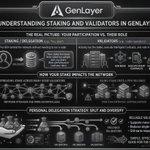
I used to think staking was simple: lock tokens and wait for rewards.
Then I looked closer at how staking works on @GenLayer.
𝐓𝐡𝐞𝐫𝐞 𝐚𝐫𝐞 𝐭𝐡𝐫𝐞𝐞 𝐭𝐡𝐢𝐧𝐠𝐬 𝐰𝐨𝐫𝐭𝐡 𝐮𝐧𝐝𝐞𝐫𝐬𝐭𝐚𝐧𝐝𝐢𝐧𝐠:
𝐒𝐭𝐚𝐤𝐢𝐧𝐠 / 𝐃𝐞𝐥𝐞𝐠𝐚𝐭𝐢𝐨𝐧: You put GEN behind the network without having to run a validator node yourself.
𝐕𝐚𝐥𝐢𝐝𝐚𝐭𝐨𝐫𝐬: They run nodes, execute Intelligent Contracts, and participate in consensus.
𝐕𝐚𝐥𝐢𝐝𝐚𝐭𝐨𝐫 𝐬𝐞𝐥𝐞𝐜𝐭𝐢𝐨𝐧 𝐦𝐚𝐭𝐭𝐞𝐫𝐬: Your stake contributes to a validator's selection weight, so who you delegate to can affect both network participation and your exposure to validator performance and risk.
𝐓𝐡𝐞𝐫𝐞'𝐬 𝐚 𝐛𝐢𝐠𝐠𝐞𝐫 𝐩𝐢𝐜𝐭𝐮𝐫𝐞 𝐡𝐞𝐫𝐞.
When stake is distributed across reliable validators, more operators can participate and the network can become less concentrated.
When too much stake sits with a handful of validators, that concentration can become a weakness.
If I were delegating GEN, I'd look beyond the advertised rewards and consider splitting my stake across several reliable validators.
The goal isn't just to earn rewards.
It's to support a healthier, more decentralized network while managing concentration risk.
Stake with a plan, not just for the APY.

Just opened my Perceptron Node Dashboard
Clean stats, real uptime, bandwidth contribution all in one place.
Feels good watching the node stay online and actually contribute to decentralized AI data collection.
Node online. Dashboard live. Building quietly.
@PerceptronNTWK #NodeAndProud

Cadet retweeted

Trade across your favorite CEXs and perp DEXs, from one terminal.
🔹 Prop challenges on live markets from 13 venues
🔹 No consistency rules or time limits
🔹 Connect your exchange to run your own capital
Get started and earn airdrop rewards ↓
hub.zonex.pro
Cadet retweeted

big week for Wingston holders
the first major announcement for the nft collection drops this week and from here you'll hear a lot more about why Wingston matters in Rally
to celebrate we're giving away 10 Wingstons
drop your wallet + tell us why you need one 👇👇
24 hours

I just joined the GenLayer campaign on @RallyOnChain 100,000 GLP prize pool is live and the mission is straightforward: 𝐡𝐞𝐥𝐩 𝐦𝐨𝐫𝐞 𝐩𝐞𝐨𝐩𝐥𝐞 𝐮𝐧𝐝𝐞𝐫𝐬𝐭𝐚𝐧𝐝 𝐰𝐡𝐲 𝐀𝐈 𝐚𝐠𝐞𝐧𝐭𝐬 𝐧𝐞𝐞𝐝 𝐚 𝐫𝐞𝐚𝐥 𝐜𝐨𝐮𝐫𝐭 𝐟𝐨𝐫 𝐝𝐢𝐬𝐩𝐮𝐭𝐞𝐬.
If you’ve been curious about @GenLayer , this is an easy way in. Read the thread, post your take, climb the board.
@Blackheart_chuk bro you’ve been asking what GenLayer actually is, this is the cleanest entry point. Jump in with me
app.rally.fun/campaigns/0x27…

The internet never had a judge.
AI agents are about to move $9 trillion. Nobody built the part that handles disagreement.
GenLayer did.
And now you can become part of it: portal.genlayer.foundation/g…
AI agents can already make deals with each other.
Payments clear.
Identity can be verified.
Messages move instantly.
But there's still a major failure point:
What happens when two agents disagree about whether the work was actually delivered?
That's where @GenLayer gets interesting.
Instead of relying on a single oracle or one model, GenLayer uses randomly selected validators that independently evaluate the evidence, natural-language terms and relevant web data before reaching consensus.
And if someone challenges the result, the case can escalate to a larger, fresh validator set.
The goal is machine-speed adjudication for disputes that traditional systems aren't built to handle.
That's the layer the agent economy has been missing.
The place to start is the GenLayer Portal, where you can build, validate and contribute to the ecosystem.
Meet GenLayer:
portal.genlayer.foundation/g…

Agents are already starting to move real money.
But when two of them disagree, the fallback is still a legal system built for humans.
One Sunday night, a custodian lost the keys to $150 million. Recovering it took a million dollars in court fees just to start, and $14,000 was left by the end.
That's what happens when disputes run on human time.
That's the gap @GenLayer is trying to fill.
Agents can make agreements, transact, and execute work. They also need somewhere to go when the outcome isn't obvious.
Internet Court gives those disputes an onchain adjudication layer. A jury of validators, each running a different AI model, examines the evidence and reaches a consensus no single party controls.
The goal is simple:
Disagree → adjudicate → settle.
Minutes and under a dollar for a first verdict, not hundreds of days.
Machine-speed commerce needs machine-speed dispute resolution.
That's the missing piece of the agent stack.
The internet never had a judge.
AI agents are about to move $9 trillion. Nobody built the part that handles disagreement.
GenLayer did.
And now you can become part of it: portal.genlayer.foundation/g…
Cadet retweeted

Introducing the first GenLayer Points campaign on @RallyOnChain.
We're rewarding the people who spread the word about GenLayer with 1% of all GenLayer Points: 100,000 GLP.
Everything you've done for GenLayer already counts. This is one more way to earn.
Here's how it works 👇

New @GenLayer campaign is LIVE!
GenLayer is building the court of the internet: the layer where AI agents settle their disputes
Amplify the thread that tells that story and help newcomers get what it is and why it matters now!
Good luck! 👉 app.rally.fun/campaigns/0x27…
