

Catholic convert, husband, father of three, domestic missionary/catechist, and aspiring saint. I know a lot less than I think I do. @itsevil2believe
Joined July 2011
- Tweets3.7K
- Following167
- Followers169
- Likes2K


Pinned Tweet
For those of you how ever need prayers, please feel free to send them to me. They will be added to my mass intentions right after my family, and added to our family rosary every evening.
Let it be forever remembered that Wyatt Earp was a no good, two timin, masonic, adulterous, gun grabbin conman.
Do pray for his and my soul

tonight's film is TOMBSTONE (1993)
scumbag degenerate pimp murderer conman rides into town, abandons wife, suspends Constitution
stars Frank Stallone, Billy Bob Thornton
2
30



According to your logic, Our Blessed Mother would not have committed deicide if she had an abortion at 6 weeks.
Pro abortion “christians” are absolutely baffling.
unavailable
31
Our Lady of Fatima Warned us (Thomas Russell) retweeted

Whoa! 🤯 This is incredible!
In a viral reel published by Parousia Media, Father Chris Alar of the Marian Fathers of the Immaculate Conception tells an amazing story of his experience while leading a Eucharistic procession on an Indian reservation in Canada.
Father Alar says he visited the Cree Indians in Canada and decided to process through the reservation with the Eucharist. He said he processed through all the roads, blessing about 1200 homes.
As he held the monstrance, Father Alar says the Indian reservation’s ringleader yelled at him, demanding he remove the Eucharist from the reservation.
The ringleader screamed, “Get that [blank, blank] out of here!” multiple times.
Father Alar says he “keeps on walking” with the monstrance and affirms he will not let go of the Eucharist.
After his third demand, the ringleader approached Father Alar and attempted to grab the monstrance. The ringleader then grabbed the monstrance, but immediately let it go because it burned his hands.
“He reaches up to grab it — and as he does, his hand is literally thrown off. And he screams,” Father Alar says. “It burned his hand completely, all the way across the palm.”
"He’s on his knees, and he looks up — and you can read his mind. He looked at that monstrance, and I guarantee you, the words going through his mind were, ‘What just happened?’
"All the women and children behind me fell to their knees and started worshiping."
Here is the full text of Father Chris Alar's story:
“I went to Canada, to the Cree Indians. No young men believed in the faith anymore. The only ones left were the old women and their grandchildren — not even the middle-aged.
“I take the monstrance, I put on my coat, and I decide I’m going to process it through the Indian reservation. I’m going to go up all the roads, and I’m going to bless houses. There are like 1,200 people who live on this reservation.
"So I go up, and I’m walking up the front, holding up the Eucharist. And this first Indian — the ringleader — yells, ‘Get that blank thing out of here!’
"I don’t pay any attention. I keep walking. Again, he yells, ‘Get that blank, blank thing out of here!’ I just keep walking very slowly. I’ve got all the women and children behind me.
"Then he comes down and says, ‘I told you, get that thing out of here!’ And he comes at me. I’m like, I’m not letting go. I’m not letting go.
"He reaches up to grab the monstrance. I’ve got it up. He reaches up to grab it — and as he does, his hand is literally thrown off. And he screams. It burned his hand completely, all the way across the palm.
"He’s on his knees, and he looks up — and you can read his mind. He looked at that monstrance, and I guarantee you, the words going through his mind were, ‘What just happened?’
"All the women and children behind me fell to their knees and started worshiping.
"Now, why do you think God performed that miracle? Because the doubt was starting to creep in again — the questions, the unbelief.
"This is why God sometimes allows Eucharistic miracles, like that one in Mexico or the one in Buenos Aires — because we’re doubting. We’re doubting.
"But you shouldn’t need a miracle. You should have faith that the miracle happens every day at the Mass, on that altar — and it’s turned into the Body and Blood of Christ.”
O Sacrament Most Holy, O Sacrament Divine, all praise and all thanksgiving, be every moment Thine!
You can find the full article here: churchpop.com/it-burned-his-…

Our Lady of Fatima Warned us (Thomas Russell) retweeted

𝗦𝗵𝗲 𝘀𝗰𝗿𝗲𝗮𝗺𝗲𝗱 𝘁𝗵𝗲 𝗺𝗼𝗺𝗲𝗻𝘁 𝘁𝗵𝗲 𝗘𝘂𝗰𝗵𝗮𝗿𝗶𝘀𝘁 𝗰𝗮𝗺𝗲 𝗻𝗲𝗮𝗿. 😱
Because demons always recognize what many humans ignore.
A Catholic priest walked through a courtyard holding the Blessed Sacrament.
When he approached a young woman, she collapsed and shrieked uncontrollably.
The closer the Real Presence came, the louder the darkness reacted.
Christ did not step back.
He stood firm.
Grace advanced.
Hell retreated.
By the end, the same woman who was thrashing in terror reached out in tears and embraced the priest as she was set free.
This is what happens when the Light enters the battle.
𝘭𝘶𝘮𝘦𝘯𝘤𝘰𝘳𝘥𝘪𝘶𝘮 𝘐𝘯𝘴𝘵𝘢𝘨𝘳𝘢𝘮


Our Lady of Fatima Warned us (Thomas Russell) retweeted

U wanna see a miracle? A bird became the messenger between life and death. There are no coincidences here, just grace. Driver had no clue about the collapsed bridge, God saved him and it got caught on camera. Boom!
An illegal alien insults the man who was helping her, lies to the police, steals a federal agents vehicle, and then murders/steals the citizen’s animals who rightfully reported her
This post is from a suspended account. Learn more
128


Reminder that fetal michrochimerism is a proof of Mary’s Immaculate Conception (born without original sin) and Assumption, as she forever carried the genes of Our Blessed Lord as a living tabernacle and still does so in Heaven
You’re unable to view this post because this account owner limits who can view their posts. Learn more
2
254
Our Lady of Fatima Warned us (Thomas Russell) retweeted

What a banger.
teapaw.org/QueenAnticommie/status…
Our Lady of Fatima Warned us (Thomas Russell) retweeted
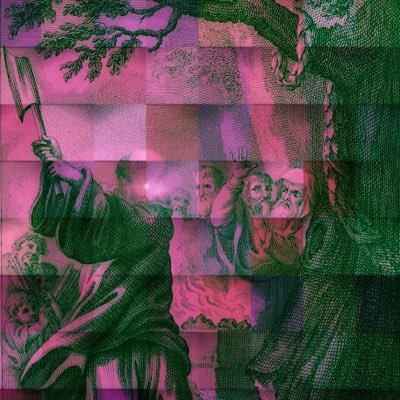
The deception of Isaac is quite possibly the most misunderstood story in the entire Bible.
So much of the Old Testament is treated as disconnected fables, concerned with a simple moralistic point. Rarely is the Old Testament shown as it actually is, an integrated running narrative building a coherent theological point. It is all one story driving home a main point—man has fallen, but God is providing a chosen seed who will redeem humanity. He has made an unbreakable vow to this chosen seed and his line, and even human sin and rebellion will not stop God from fulfilling His promise.
In this story, the villain is not Jacob as is so commonly told. The villain of this story is Isaac. But it is a story that shows us the villain can be redeemed, that repentance is possible, even when it seems totally unlikely. God’s grace will win in the end.
If you go through the passage in detail, you actually get a totally different picture than what you have seen in VeggieTales or your storybook Bible.
Isaac is now a very old man. And Isaac has gone blind. There is a theological-symbolic significance to Isaac’s blindness. Like the high priest, Eli, in 1 Samuel, Isaac’s blindness isn’t merely a physical disability, it is emblematic of a spiritual disability. He is unable to rightly judge things.
Esau in the preceding chapters has been shown conclusively to be very wicked. Not only has he sold his birthright for a pot of lentils, he has chosen to marry Canaanite women. Isaac and Esau know that this must not be done.
You’ll remember that Abraham had his servant travel all the way to Padan Aram to find Isaac a wife from among his kin. He absolutely could not intermarry with the people whom God had told the wicked children of Canaan whom they would dispossess. But Esau does this not once but twice! Yet Isaac prefers Esau because of the food he makes him. Isaac’s belly rules over him rendering him unable to discern anything judicially, and now his lack of spiritual discernment has become a total inability to see anything.
In this context, Isaac calls Esau to him. He tells Esau he is going to die and he should go hunt and kill some game for him to eat so that he would bless Esau before Isaac dies. When you see the other covenantal blessings of the patriarch’s children (Abraham is not shown doing this either way), Jacob brings all his sons together publicly and blesses them individually. The fact that Isaac is doing this, it is apparently a private affair, and only Esau is included.
What does this mean? It means that Jacob is excluded from any blessing at all. This is confirmed by the end of the story, when there is no blessing left for Esau (which was intended for Jacob). There is a biblical duty at the end of life to portion out your inheritance to your sons, with a double portion going to the eldest son. Esau is supposed to get two parts and Jacob one. But here, Esau is getting everything.
Rebekah overhears all of this. She sees the tyranny of her husband. That he has been inspired by Satan to attack God’s chosen seed and give everything to the seed of the serpent, Esau. And so she takes action. Rebekah is a good wife, a submissive wife. But human authority and submission is not absolute. Only God’s authority and our submission to Him is absolute. She has a greater duty to God.
And her husband is committing treason against God and what He has commanded. She has a duty to prevent great evil from occurring. If the household is a microcosm of political power writ large, she is operating as a lesser magistrate here. She is using her lesser authority to prevent great evil done by a greater authority.
She is also fulfilling a typological role. The serpent deceived the woman, and what we see repeatedly throughout the Old Testament is the woman deceiving the serpent in return. Just as Sarah, Rachel, Tamar, the midwives in the Exodus, and Rahab deceive the serpent, protect the Seed, and prevent great evil from occurring, so too does Rebekah here.
She calls her son Jacob to go to his father and pretend to be Esau. To put on Esau’s clothes and wear animal skins to appear as hairy as his brother. It is interesting to note that the very skins of the kids of the goats he killed to make the meal are the ones he wore to appear hairy. It is almost like the animals God killed to clothe Adam and Eve after their exile from the Garden.
Jacob is concerned that the plot will be discovered and he will be cursed by his father. But Rebekah tells him that curse will be upon her instead of him. This shows clearly Rebekah’s concern in all of this is to protect the chosen Seed. She will take upon herself the curse should it come. In all of this Jacob is a dutiful, obedient son.
Jacob’s statements to Isaac are also worth noting. When Isaac asks how he found the game so quickly, Jacob says something quite ambiguous, “because the Lord your God brought it to me.” In one sense, of course, this is true. The Lord did bring the food to Jacob by the hand of his mother.
After eating and drinking, Jacob kisses Isaac, and Isaac blesses him. He asks that God may give him the dew of heaven, the fatness of the earth, and plenty of grain and wine. That peoples will serve him and nations will bow down before him. That he would rule over his brethren, and his mother’s sons would bow down to him (remember this was all intended for Esau!).
Then a variation of God’s promise to Abraham: cursed be everyone who curses you and blessed be everyone who blesses you.
Isaac has just given Jacob the full blessing. All the richness of the earth and rule over the nations of the world will be his and his descendants.
Almost immediately after this, Esau returns with the food, and as soon as Isaac discovers what has happened he begins to tremble.
Isaac’s statement in verse 33 is an interesting one as well. Why couldn’t he simply take back the blessing and now bless Esau. It is not as though this blessing were a magical incantation. It’s not as though if someone random named Doug or Bill wandered into the camp and pretended to be Esau they would get the blessing. What this statement seems to be indicative of is Isaac’s repentance. He always knew the blessing was supposed to go to Jacob. He is admitting here that his rebellion has been foiled.
Esau’s reaction is fury. He blames Jacob, “heel-grabber” for grabbing his heel (supplanting him) these two times. Jacob is at fault for Esau despising his birthright. And Jacob is at fault for Isaac rebelliously giving the blessing to Esau. Isaac has to admit that he has given Jacob everything.
"I have made him your master and I have given him all the grain and wine." Isaac is admitting his own wickedness here. He intended to make Esau the master of Jacob and to give everything to him! This is like Haman being asked to conjure up the honors he thinks will be given to him, which were instead for his hated archenemy Mordecai, or Haman being hung on the gallows he erected for Mordecai. God really loves the Uno Reverse card in His story!
Isaac’s blessing to Esau is also intentionally ambiguous. He will dwell in the fatness of the earth and dew of heaven (but not possess it!), he will live by the sword (he will never be able to rest!) and he will rebel against his brother (and be cursed because of it!). Esau’s blessing sounds like a blessing to him, but is actually a curse!
Esau wants to kill Isaac, Rebekah hears of it, and sends him away to her brother in Haran. The seed is not supposed to leave the land, but in this case, he does. The intention, however, was always to return and inherit.
Rebekah tells Isaac Jacob must leave so that he would not marry a Canaanite, and Isaac blesses Jacob once more. This time the promises to him and to Abraham are passed onto Jacob, a further indication of Isaac’s repentance.
TL/DR: The story is about Isaac's tyrannical usurpation of the covenant, it is not about "why lying is bad" or some other moralistic point ripped from the context of the larger theology of Genesis.

All of my children blow kisses to Jesus during the consecration and when we go up to receive communion

1
3
72
Our Lady of Fatima Warned us (Thomas Russell) retweeted

Gm
Pls pray I can give a good confession this morning


