

African Competition & Antitrust Law | Data Privacy | Digital Markets
Kampala, Uganda
Joined December 2019
- Tweets415
- Following247
- Followers515
- Likes2.8K


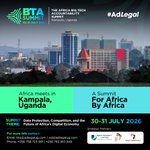


Yesterday, I participated in a high level panel on Consumer Protection in Transboundary Digital Markets at ATIS 2026 by @kta_law
We explored platform accountability, data privacy, competition & the need for stronger cross border regulatory cooperation in Africa’s digital economy


Kitaka Aziz retweeted

MTN Uganda (@mtnug), has been ordered to pay UGX 300M to a young Mobile Money Company for physically harassing its Agents in an Anti-Competition Drive.
Competition Advocate @KitakaAziz says the decision is “correct but immaterial in a competition lens”
legalreports.ug/mtn-uganda-o…

Kitaka Aziz retweeted

On 8 October 2026, I had the pleasure of launching The Law & Practice of Dispute Avoidance & Adjudication Boards, co-authored with Prof. Kenneth Wyne Mutuma, at the @CIArb conference in Diani, Kenya.
This publication reflects our shared conviction that African construction disputes require African solutions, grounded in international best practice.
Volume 1 examines the foundations, legal principles and procedures governing Dispute Avoidance and Adjudication Boards (DAABs), combining legal analysis with practical guidance for construction professionals, lawyers, adjudicators and arbitrators.
🤖 Made with AI

Kitaka Aziz retweeted

The COMESA Competition and Consumer Commission has issued new requirements for persons representing parties before the Determination Panel, including a Special Power of Attorney & proof of current authority to practise law in a COMESA Member State.
Read: comesacompetition.org/regula…

Kitaka Aziz retweeted
The @UCC_Official June 2025 Minimum Cybersecurity Guidelines place cybersecurity firmly within the governance and regulatory responsibilities of licensed operators in Uganda.
Read Publication: adlegalug.com/2026/08/18/uga…

Honoured to be shortlisted for the continental PICCASSO Awards Africa 2026. Grateful to see the work we are doing at @AdLegalug in data protection and competition recognised on this platform.
#FairCompetition #digitalmarkets #DataPrivacy

When you spend your days talking about data, privacy and compliance, it is nice to occasionally have someone say, “You guys are actually doing something right.”
Thank you @hub_adr for this recognition.
Proud to be part of the AdLegal team!

We are honoured to be nominated for Data Protection & Privacy Team of the Year at the PICASSO Awards Africa 2026.
Proud of our team @KitakaAziz , @KamogaLuke @AyesigyePA @nicholasmurere
#AdLegal #PICASSOAwardsAfrica2026

What happened when African competition regulators, practitioners, policymakers, civil society and technology experts came together to examine the growing influence of Big Tech in African markets?
The conversations concluded. The insights remain. #BTA
BTA SUMMIT REPORT 2026 (DAY 2) | BIG TECH & COMPETITION ENFORCEMENT IN AFRICA
We unveil to you the BTA Summit Report 2026, capturing the key conversations, insights and outcomes from Day Two of the Africa Big Tech Accountability Summit.
A reflection on the state and future of digital competition, Big Tech accountability and enforcement in Africa.
Read the full report and discover the key outcomes.
Click the link: adlegalug.com/wp-content/upl…
#BTA2026 #BigTech #DigitalCompetition #CompetitionLaw #Africa

Kitaka Aziz retweeted

📰 Issue 4 of #TheEastAfricanPrivacyMonthly is here!
July has been a notably active month for data protection and privacy across the region and beyond. Key stories in this issue include:
🇺🇬Uganda: Uganda's Data Protection Regulator, Personal Data Protection Office, Uganda (@pdpoUG ) issued its first-ever decision involving an entity as a complainant. The High Court found a newspaper outlet in violation of one's #privacy publishing his personal data without consent, and @WhatsApp confirmed to have complied with PDPO's corrective orders.
🇰🇪Kenya: The Office of the Data Protection Commissioner(@ODPC_KE) released new sector-specific guidance notes covering transport, #dataprotection policies, and DPOs, alongside draft guidance on AI and emerging technologies open for public comment. Kenya also published Virtual Asset Service Providers Regulations with significant data protection implications.
🌍 Across Africa: Olumide Babalola LP (@OBLPLaw) gears up for PrivCon 2026, Nigeria's leading annual privacy conference.
🌐 Globally: France becomes the first EU member state to approve a blanket social media ban for children under 15; the European Data Protection Board (@EU_EDPB) published draft Guidelines on Anonymisation of Personal Data, and Thailand introduces a fast-track mechanism for urgent removal of unlawful online content.
📣 In Focus: The inaugural Africa Big Tech Accountability (BTA) Summit, convened by AdLegal International (@AdLegalug ), took place on 30th –31st July 2026 in Kampala, Uganda.
🔗 Read and download the newsletter here: bit.ly/4wZLZ8X
Subscribe to our Substack to receive future issues directly in your inbox.
Visit our website dpoprivacycentre.com to read more about what we do.
🔖 Editorial Team: @joelonamugera | @HellenNdagire3
#DataProtection #Privacy #DataGovernance #BigTech #BTASummit

Kitaka Aziz retweeted
At the First Africa Big Tech Accountability Summit 2026, Rosa Carling, Director at @Foxglovelegal , offered a powerful perspective on the growing intersection between generative AI, competition, and the future of independent journalism.
She explained that Foxglove approaches technology as both a powerful tool and a potential source of harm—particularly where the immense market power of Big Tech companies can amplify its effects.
A central concern raised was the impact of Google’s AI Overviews and AI Mode on news publishers. When publishers opt out of having their content used for generative AI, they can risk losing visibility in Google Search. Given Google's dominant position in search, being excluded from its index can have profound consequences for publishers' ability to reach audiences and generate revenue.
Rosa highlighted evidence showing that generative AI summaries can result in 50–70% reductions in click-through rates to news websites, potentially undermining the economic sustainability of independent media.
She also pointed to an important regulatory development in the UK, where the Competition and Markets Authority (CMA) has required Google to provide publishers with meaningful opt-out mechanisms for the use of their content in AI products—without penalising them in search rankings, and with the requirements extending to future AI products.
The broader message was clear: AI governance cannot be separated from competition policy, media plurality and the protection of public discourse.
For Africa, the lesson is particularly important. As global technology platforms expand their AI products across African markets, regulators, policymakers, civil society and affected industries must consider whether existing competition and regulatory frameworks are sufficient to address new forms of market power.
The response to Big Tech cannot be fragmented. Regulators across jurisdictions need to learn from one another, coordinate where possible, and ensure that technological innovation does not come at the expense of competitive digital markets, independent media and the public interest.
@martha__dark
#BTASummit2026 #BigTechAccountability


Kitaka Aziz retweeted
During his keynote address, Mr. Babatunde Irukera underscored the transformative impact of digital platforms on competition in Africa. He explained that the more users a platform attracts, the more data it collects, enabling it to refine its algorithms, improve its services, and attract even more users.
Mr. Irukera further challenged participants to consider the experience of a young entrepreneur in Kampala, Nairobi, Lagos, Johannesburg, Cairo, Kinshasa, or Lilongwe seeking to sell products online and her competitor is Amazon. Such entrepreneurs are no longer competing only within their local markets but alongside some of the world's largest digital platforms, highlighting the need for fair and contestable digital marketplaces.
He commended African competition authorities for responding proactively to these emerging challenges, noting that the continent has not remained on the sidelines of digital market regulation. He pointed to South Africa, Kenya, Egypt and Nigeria for developing innovative enforcement approaches to understand digital markets, address barriers to competition, and create a fairer environment for businesses of all sizes.
This happened at the First Africa Big Tech Accountability (BTA) Summit 2026.
#BTASummit2026 #BigTechAccountability
Kitaka Aziz retweeted
Why did Uganda's landmark data privacy case against Google begin?
In this video, @RayAmplifies , a complainant in Uganda's Google Data Privacy case, explains the motivation behind the complaint. He notes that the objective was never simply to challenge one company. It was to advance digital sovereignty, strengthen platform accountability, and reinforce institutional accountability in Uganda's digital ecosystem.
He poses a fundamental question: Is it acceptable for a global technology company to operate in Uganda while failing to comply with the country's mandatory data privacy and protection laws?
The case invites an important conversation about whether multinational technology companies should be held to the same legal standards as every other entity operating within Uganda's jurisdiction.
#BTASummit2026 #BigTechAccountability #DataProtection #Privacy
Kitaka Aziz retweeted
Did you know how Uganda's Personal Data Protection Office investigates complaints against Big Tech?
Mr. Baker Birikujja (@DirectorpdpoUG) , @pdpoUG , provided a rare look into the investigative process adopted by the Personal Data Protection Office when handling complaints involving major technology companies. Drawing from Uganda's successful investigations into Google, Meta, and WhatsApp, he explained the practical steps the Office follows—from receiving and assessing complaints to conducting investigations, engaging the parties involved, and reaching enforcement decisions.
All this happened at the First Africa Big Tech Accountability Summit during the session, "Inside the Investigation Room: How African Data Protection Authorities Took On Big Tech."
#BTASummit2026 #DataProtection #Privacy @GilbertSsetuuma
Kitaka Aziz retweeted

Last week's #BTTASummit2026 proved that Africa isn't just joining global conversations on Big Tech, AI, and competition law—we're shaping them.
Kudos to @KitakaAziz , @KamogaLuke , @Patience Ayesigye, and Nicholas Murere for leading a truly limitless vision. #BigTech


This was deep @HaroldTurijay !
#BTA
Mr. Harold Turigye (@HaroldTurijay) emphasized that although Uganda does not yet have a dedicated legal framework governing the use of artificial intelligence by company boards, directors are not operating in a regulatory vacuum. He noted that boards have a duty to ensure compliance with existing domestic laws that address many of the legal and governance issues AI legislation is ultimately expected to regulate.
Drawing on Uganda's Data Protection and Privacy Act, he referenced the recent AdLegal v. Meta & WhatsApp decision, in which Meta's privacy policy was found to be inconsistent with Uganda's data protection and privacy requirements. The case, he explained, demonstrates that organizations deploying AI and other digital technologies remain accountable under the country's existing legal framework, even in the absence of AI-specific legislation.
Against this backdrop, Mr. Turigye called on company boards to take a proactive approach by establishing robust AI governance and compliance mechanisms. He urged boards to begin with the fundamentals, ensuring adherence to existing legal obligations—while preparing their organizations for the more comprehensive AI regulatory frameworks that are expected to emerge.
#BTASummit2026
Kitaka Aziz retweeted

Our C.EP, Counsel @kalikumutima1 had the distinct honour and humbling privilege of presenting Mr. Babatunde Irukera with a token of appreciation in recognition of his insightful,thought-provoking, &impactful presentation at THE AFRICA BIG TECH ACCOUNTABILITY SUMMIT.
#AdLegal


Kitaka Aziz retweeted
Two remarkable women @UgLadyLawyer & @BrownieEbal
One shared commitment.
Advancing the conversation on innovation and the future of Africa's digital economy at the Africa Big Tech Accountability (BTA) Summit 2026.
#BTA2026

Kitaka Aziz retweeted
Unlike many domestic industries, aviation is inherently international. Every international flight involves multiple jurisdictions.
A recent decision of the High Court of Malawi in Steven Prince Thengo v Ethiopian Airlines (Commercial Case No. 175 of 2025) represents an important milestone in the evolution of regional competition law. The Court did more than determine a procedural question; it reinforced the role of the COMESA Competition and Consumer Protection Commission (CCCC) as the appropriate forum for resolving cross-border aviation and consumer protection disputes involving multiple COMESA Member States.
While considering whether Malawi was the appropriate forum, the Court found that the claimant had failed to demonstrate that justice could not be obtained in other jurisdictions such as Zambia, Ethiopia or Israel. The Court further observed that the claimant also had access to regional dispute resolution mechanisms.
The Court then made an important observation:
"Malawi, Ethiopia and Zambia are member states of the Common Market for Eastern and Southern Africa (COMESA). One of the COMESA enforcement agencies created by the Treaty is the COMESA Competition and Consumer Protection Commission (CCCC), whose mandate is to promote fair competition and protect consumer welfare across the Common Market."
The Court went even further by specifically recognizing the Commission's jurisdiction over aviation markets.
It held: "The airline market is one market which is closely regulated by the CCCC... Based on the nature of the claimant's case this will be an appropriate forum for the claimant to file his complaint since two or more COMESA states are involved."
Instead of encouraging parallel national litigation, the domestic court recognized that the COMESA Treaty established specialized institutions with expertise and jurisdiction over cross-border competition and consumer protection matters. This approach strengthens the principle of institutional complementarity. This approach shows that rather than competing with regional regulators, national courts are increasingly reinforcing them.
For airlines, legal practitioners, competition authorities, and policymakers, the judgment sends a clear message: cross-border markets require cross-border solutions. As regional integration deepens, domestic courts are likely to play an increasingly important role in directing litigants toward specialized regional institutions that are better equipped to resolve disputes spanning multiple jurisdictions.
