

Professor of Economics at @UCSanDiego @GPS_UCSD. Trail runner, gravel biker, news reader, international economist, tweets on all of the above.
San Diego, California
Joined March 2018
- Tweets3.5K
- Following793
- Followers2.3K
- Likes6.8K







Kyle Handley retweeted

The U.S. trade war strained businesses before Iran conflict. GPS Prof. @KyleLHandley urges Congress to restore predictable trade policy. Read this new commentary: cato.org/blog/trade-war-was-…
#UCSanDiego #GPSFaculty #TradePolicy #PublicPolicy

ALT Aerial view of colorful shipping containers at a busy port illustrating global trade issues discussed in economic commentary.


Kyle Handley retweeted

New Stata commands fereg and feppml fit regressions with many fixed effects. In simulations, they were 5–62 and 5–87 times faster than reghdfe and ppmlhdfe, from @JFSchmieder nber.org/papers/w36017

Kyle Handley retweeted

"The Trade War Was a Problem Before Iran—Congress Can End It" via @KyleLHandley cato.org/blog/trade-war-was-…

Kyle Handley retweeted
"Yet the finding that [the China Shock] caused one in four manufacturing jobs lost from 1990 to 2007 has not aged well. Neither has the populist turn against free trade that began around the time of the original research" 🔥 economist.com/finance-and-ec…

Kyle Handley retweeted
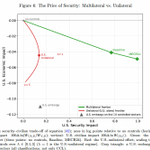
Multilateral controls on dual-use goods reduce leakage and adversaries’ real military spending. Acting alone, even with an embargo, cannot match the security impact, from Jingting Fan, @kylelhandley, and Nuno Limão nber.org/papers/w35898

Kyle Handley retweeted
New @nberpubs: "Export Controls and the Economics of National Security" nber.org/papers/w35898#fromr… viia @KyleLHandley

Kyle Handley retweeted
I think we academic economists failed, and I mean failed, to both push back and offer alternative narratives, mechanisms, and context for what the China Shock did. The publication herding on the China Shock as a credible identification strategy led to a series of papers giving the impression China Shock *caused* all of our problems. Super newsworthy and wrong. At best it caused some problems to get *relatively* worse in a very unequal way across regions. We needed a lot more Marshall McLuhan moments

Kyle Handley retweeted
"President Donald Trump’s tariffs are supposed to bring manufacturing back to America. But a bicycle factory in Virginia’s Blue Ridge Mountains shows how the levies themselves often sabotage that goal." 😯 bloomberg.com/graphics/2026-…


Kyle Handley retweeted

I organized an economist amicus brief in support of affirmance of the Court of International Trade's ruling in Oregon v. Trump and Burlap and Barrel v. Donald J. Trump that the administration exceeded its authority when it imposed 10 percent worldwide tariffs under Section 122 of the Trade Act of 1974.
In the brief, we argue that "large and serious United States balance-of-payments deficits," which the tariffs purportedly address, are impossible in today's system of floating exchange rates. We explain what such deficits looked like in the context of fixed exchange rates policymakers found themselves in until the 1970s, and that the government conflates balance-of-payments deficits with negative intermediate balances on the accounting statement known as the Balance of Payments. With floating exchange rates, no balance-of-payments imbalance can be “large and serious" in the sense of Section 122.
Separately, we argue the United States does not face the "fundamental international payments problems" the statute requires as a threshold condition for authorizing (or in fact, mandating) the tariffs.
The government's interpretation of the statutes and the economic concepts in it would grant it unconstrained authority to impose worldwide tariffs that, as we have seen, have vast economic and political significance.
You can read the full brief here: aei.org/wp-content/uploads/2….

Kyle Handley retweeted
When your biggest trading partner is also your biggest source of uncertainty, trade gets complicated.
GPS Prof. @KyleLHandley breaks down the U.S.-Canada trade war, where trust and future policy—not just tariffs—are at stake.
Listen: ow.ly/582p50ZHuek
#TradePolicy


Kyle Handley retweeted

Had a fantastic experience today being one of the guests on @KQEDForum alongside @KyleLHandley and @drdesrochers, hosted by Alexis Madrigal, talking US-Canada trade.
You can listen to the one-hour show here:
kqed.org/forum/2010101915050…
Kyle Handley retweeted

I typically keep opinions to myself, but when academic research strongly supports my prior on an issue that affects my daily life as a teacher, I can’t help but share. We need the SATs back badly. Thank you @dartmouth for this highly illuminating study. aeaweb.org/articles?id=10.12…

Kyle Handley retweeted

For those interested, because there is a lot of noise around the news, I offered an analysis of the claims demanded: monapaulsen.substack.com/p/c…


Kyle Handley retweeted

It seems a bit strange to call price controls a part of "Anti-fascist Economics" when price controls were one of the primary economic policies of Fascist Italy.

Kyle Handley retweeted
👀👀👀

Waterborne shipments of crude oil and petroleum products from the U.S. Gulf Coast increased in April and May 2026. #TodayInEnergy bit.ly/4xKI6Vg

Kyle Handley retweeted

If you are or know a James Nathaniel Brown in or around Ann Arbor, MI, please let him know that he lost his wallet at the BP station on Washtenaw Avenue. I found your debit card there. Please RT. If it’s true that we are all connected through 7 links or so - this should work.
Kyle Handley retweeted

Distribution of Calculus I readiness @ UC Berkeley, before and after test-blind admissions.
1/2

Kyle Handley retweeted

Excellent analysis. It was once a "puzzle" (Feldstein-Horioka) that countries financed investment from domestic saving. Now that we have big trade flows financing savings vs. investment just like the models said, it's an "imbalance." Not just fiscal deficits, but many transfers, consumption subsidies, and saving taxes push US to consumption. Econ 1: Real effects are usually more important than monetary policies, especially over decades.

Finally read Gopinath-Gourinchas-Rey-IMF point on Yuan and imbalances. I agree completely with the central message.
Their central message. Global trade imbalances (dominated by China-US) are not due to exchange rate/monetary policy (much), but (mostly) to fiscal policy and other underlying primitives. ✅
My view: Yep. This is pure common sense! FX/monetary policy can have effects, but temporary not for decades + undervalued Yuan→inflation boom (typically) but we see deflationary slump.
My view 2. Imbalances are still implicitly portrayed as a terrible thing, to be "fixed", but I am less sure whether there is a clear argument here once we say the reason lies in primitives or fiscal policy---rather than monetary policy, say. Sure, you can change fiscal policies and affect imbalances, but that's not the same as saying "a big additional motivation for changing fiscal policy is to "fix" these imbalances", the change in imbalances is simply a side product.
Why? Consolidating public+private the aggregate US acts as impatient borrower and aggregate China as a patient saver, taking those as given, the resulting imbalances are likely mostly efficient responses. Changing these fiscal policies may well be optimal, but that can simply reflect issues of optimal tax, redistribution, insurance and debt management; not mainly or at all a focus on international capital flow statistics.
Again, I'm just using common sense here (and some economic theory in the background).
