








So happy for Louise Glück today. Have loved her poetry ever since my “Biblical and Mythological Influences in Lit” class at VA Tech. Here’s one I remember from that class. poetryfoundation.org/poems/4…
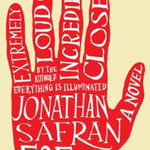
Just finished. Lots to say. I’ll start with that a good friend lent this book to me before he died unexpectedly. I think he probably loved the deeply “nerdy” references throughout: D&D, Marvel, Tolkien, other roleplaying games.

1
3
So teaching today should focus on teaching allusions as they come. Oscar Wao alludes to a ciguapa, the Watcher (from Fantastic Four), Minis Tirith, and the dictator Trujillo. No one is saying we all should study all of these allusions, but they can be taught as the book is read.
1
Next up, The Brief Wondrous Life of Oscar Wao. Its epigraph is a quote from the Marvel villain Galactus. In short, it "had me at hello."
1
Just finished Midnight's Children by @SalmanRushdie. Made me think about how much of Islamic/Indian culture and mythology you need to know to understand his writing. Is that different, though, than what you need to know of Faulkner's South or Fitzgerald's New York?
1
2
Midnight's Chidren won the "Best of the Booker Prize" award in 1993, being voted the best novel to win the Booker in its first 40 years. That seems to me to be about as canonical as it gets. But the novel is not widely read in schools.
1
Is it just me? Or is this kind of awesome? (My favorite moment is the dab/sneeze)
youtu.be/VIiA9ha1PDw via @YouTube
nymag.com/intelligencer/amp/…
An amazing article about Silicon Valley's insane tech opportunities masking as a guide to Stanford. Long, but divided into parts, and any chunk I look at is fascinating.
Assigning this great article in a couple of weeks. About the history and purpose of corporate speak:
vulture.com/2020/02/spread-o…
Just finished Future Home of the Living God by Louise Erdrich. Really enjoyed it. May have been a little apocalyptic to read during this time, though. Focused on religion in the “end times” and pregnancy’s relationship with the future.

1
Jason White retweeted

Just adjourned our School Board meeting (update to follow tomorrow) re:
✳️paying FT & PT employees
✳️teaching lost content
✳️teaching new content
✳️access to online learning
✳️dual enrollment
✳️special ed
✳️grades
✳️graduation
✳️SOLs
✳️AP classes
✳️courses for next year
Article about smart thermometers, the raw data they are producing, and how that data may help to predict where coronavirus rates will spike. Have to admit I love new (especially unexpected) ways to solve old problems.
nytimes.com/2020/03/18/healt…
1
And here is the map itself. Hard to manipulate and imperfect (not sure why California shows as not having problems): healthweather.us
1
And Florida? Here is an image of beachgoers from Tuesday, March 17. If you look at the "healthweather" map, there definitely is a correlated spike. We know correlation does not equal causation, but...
cbsnews3.cbsistatic.com/hub/…
