

We study rapid decision making in the human brain using multimodal non-invasive measures of neural, physiological and behavioral activity. PI: Paul Sajda
New York, NY
Joined February 2018
- Tweets119
- Following131
- Followers142
- Likes422




LIINC retweeted

Our faculty played, now its your turn! 📝
Hit the link to find out which BME professor you are👉bzfd.it/4yIAkMB
LIINC retweeted

We’re increasingly tasking AI agents with long-horizon research: open-ended problems too large to search exhaustively, in campaigns that run autonomously for days on end.
As that happens, the bottleneck shifts from execution to judgment. Running large numbers of experiments autonomously is increasingly within reach. But knowing what’s worth investigating is what drives discovery, and agents need to be able to learn that from their own experience.
In this work, we ask whether this meta-reasoning ability can be learned from the downstream consequences of an agent’s own research decisions. We introduce MIRA, a harness that isolates these meta-reasoning decisions from long-horizon trajectories, and MIRA-AC, a generative actor–critic method that trains meta-reasoning with RL by assigning credit directly to the decisions that shape long-horizon research.
We find that training the same model to both forecast the future potential of partial research states and select the next investigation from them, while learning only from its own proxy hill-climbing experience, improves gold performance and shifts research behavior across several autoresearch environments. 🧵
LIINC retweeted
Check out our paper for more discussion about how MIRA improves allocation of additional inference in long-horizon tasks, details on step-level generative critics, decision-level credit assignment, asynchronous long-horizon RL, and more:
Paper: arxiv.org/abs/2610.02525
Youtube: youtube.com/watch?v=_PR2CKgE…
Big thanks to: @EfroniYonathan, @BMEChairCU, @KavehHassani, and @anirudhg9119

LIINC retweeted
We’re excited to announce this year’s Distinguished Guest Lecture speakers at Columbia BME! 🎙️
Join us as we welcome an inspiring lineup of leaders whose groundbreaking work is shaping the future of biomedical engineering🦠⚙️


LIINC retweeted
🚨 New work on Bayesian reasoning in multi-turn LLM interactions 🚨
Introducing BayesBench, evaluating how well LLMs perform (i) latent inference—recovering hidden structure behind an interaction, and (ii) outcome prediction using the inferred latent, as evidence accumulates
🧵

LIINC retweeted
As agentic traces become increasingly longer with several intermediate decision steps, we expect targeted credit assignment to be essential for designing more efficient post-training methods.
Paper: arxiv.org/abs/2605.25507
Code: github.com/Ankur-Samanta/SRP…
[10\n]

LIINC retweeted
Did you know over 80% of Columbia BME MS students are involved in research?
Our MS program offers world-class biomedical engineering education and opportunities to participate in cutting-edge research. Learn more here👉 bit.ly/4r5ecba

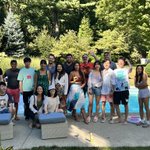
Another great kickoff to the new academic year with our annual @LIINClab pool party! @ColumbiaBME


2
106
LIINC retweeted
This week, our faculty came together to reimagine the future of Columbia BME. From strengthening our classes and research programs to expanding career opportunities for students, the future sure looks bright😎 🧪

LIINC retweeted
EXTRA EXTRA! Read all about our Fall/Winter 2024 semester in the latest edition of BME Insights here➡️ bit.ly/3WfaBtc

LIINC retweeted
The Engineering in Medicine Symposium is a few weeks away! Let's dive into our Neuroscience and Biomedical Imaging speakers👉
Register now: bit.ly/3TMWYBY


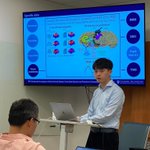
Great job Hengda — we are proud of you!

Welcome to our first #ThesisThursdays of the year! To start off 2024, we’re spotlighting @ColumbiaBME
Hengda He’s research into major depressive disorder, specifically treatment-resistant depression.


1
240
Just released from the @LIINClab, PhysioLabXR. Paper and GitHub repository below. An open source python environment for #BCI and #VR #AR #XR. Perfect timing given release of @Apple #VisionPro
theoj.org/joss-papers/joss.0…
github.com/PhysioLabXR/Physi…
223
Yay Xiaoxiao!

🌟 Meet Xiaoxiao Sun, a graduate research assistant in BME! Dive into her story and insights in our latest #ColumbiaBMEBlaze interview. 📚 #WomenInMedicine

1
165
Team Led by Neuroengineer Paul Sajda Wins $12M DARPA Grant for Research on Depression and Suicide | Columbia Engineering engineering.columbia.edu/new…
5
219

LIINC retweeted
Hey Vogue, we have your next cover story!
We caught up with BME's new department chair, Paul Sajda to ask him #20Questions
bit.ly/45fCm79
LIINC retweeted

Vikram S. Pandit Professor of @columbiabme @EE_ColumbiaSEAS Paul Sajda’s research focuses on understanding & tracking the dysfunction in the brain & body that causes these disorders to potentially develop therapies that allow us to treat them: bit.ly/45eLedE
LIINC retweeted
2023 has been a blast so far! Check out the @ColumbiaBME Spring/Summer Edition of BME Insights📖bit.ly/bmeinsights-ss23 Read about our accomplishments this semester, from major research, to faculty awards, to our 7th Annual Engineering in Medicine Symposium. @CUSEAS @Columbia