

The Integrated Mangrove Ecology Lab @SwimsHKU @HKUniversity. #Mangroves #Macrofauna #Biodiversity #Conservation #Ecology.
Hong Kong
Joined September 2020
- Tweets86
- Following67
- Followers107
- Likes39




iMEco Lab retweeted

This research underscores the urgent need for improved waste management, policy implementation and coastal conservation efforts to safeguard these vital ecosystems #mangroveprotection #HongKongecosystems #MangrovePollution #Debris
iMEco Lab retweeted
Implications: Our results confirm that land-derived debris from mismanaged waste, rather than debris coming from the Pearl River, is the primary source of anthropogenic debris threatening Hong Kong's mangroves. 🚮
iMEco Lab retweeted
3⃣Landward Accumulation: Debris aggregation was highest in the landward zones, aligning with existing research and 4⃣ Seasonal Impact: In the dry season, more debris accumulated in both seaward and landward zones.
iMEco Lab retweeted
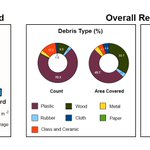
Our findings indicate: 1⃣ Spatial Variability: Debris abundance and distribution varied across zones, with plastic being the predominant material.
2⃣Top Contaminants: Both plastic and non-plastic domestic items covered the most surface area (largest potential ecological impact)
iMEco Lab retweeted
Out today fully open access in Marine Pollution Bulletin sciencedirect.com/science/ar… with fantastic colleagues @cnot_paleo_hku @SCannicci - we looked at the drivers of anthropogenic pollution in the peri-urban mangroves of Hong Kong @LabImeco @SWIMSHKU @BioSciUCT

iMEco Lab retweeted

🦀🐚🦞🐠 A brilliant keynote talk at @MeetingMmm6 by @sara_fratini. It was great to hear about the importance of genetic approaches in the #conservation and management of #mangrove fauna

iMEco Lab retweeted
🚨Just published open-access🚨. Check out our new paper looking at how fine-scale environmental conditions and thermal tolerance of crab larvae 🦀🦀🦀influence their community dynamics in HK mangroves!
@SCannicci
@francesca_porri
@LabImeco
doi.org/10.1007/s10113-022-0…

iMEco Lab retweeted

Congratulations to @GeogheganKevin for passing his PhD defense this week, with his thesis titled; "The present and prospective ecology of a rocky shore predator: foraging, physiology and their microbiome". Well done Dr Geoghegan! @SWIMSHKU @BaydenRussell @SCannicci @LabImeco


iMEco Lab retweeted

Fauna is playing a role in the plastic debris degradation
Free access to our new publication led by @mandydrms with @SCannicci and @LyleVorsprung
👇👇👇
authors.elsevier.com/a/1eayX…
iMEco Lab retweeted
Honoured to be part of this review in @ELSenviron examining the roles that macrofauna play in the fragmentation of macro to micro and nano plastics! Led by @mandydrms with @SCannicci and @cnot_paleo_hku it’s available for free for the next ~40 days @LabImeco @SWIMSHKU


Excited to share with you the first paper from my Mphil is out with @LyleVorsprung @SCannicci @cnot_paleo_hku !
Read on and find out more about #plastic fragmentation associated with aquatic and terrestrial macrofauna 🦞🦀🪱
Check it out at 👇🏻
authors.elsevier.com/c/1eayX…
iMEco Lab retweeted

A fantastic @NatGeo article on how #mangrove forests play a vital role in #HongKong #marine #ecosystem function & ecosystem services they provide humans! Features a lot of great research by @SCannicci @SWIMSHKU @HKUSBS @hku_science nationalgeographic.com/envir…
iMEco Lab retweeted

We would like to show you some of the postgraduate research being carried out at SWIMS! Ranging from mangroves to coral reefs, climate change to restoration, we have a variety of research groups spanning the diverse range of habitats found in Hong Kong.
youtu.be/orN3sGjs7ik
iMEco Lab retweeted

Hey #Twitterverse, please help me to retweet the following call for a #postdoc position on #seagrass eco-physiology, #genetics and #evolution. Just few days for the deadline. More info below. Join us!! #HongKong #research #postdocjobs

Looking for a #postdoc to join our lab! The project integrates ecophysiological, evolutionary & genetic approaches into conservation/management of #endangeredspecies #seagrass in #Asia (see Ref: onlinelibrary.wiley.com/doi/…). More info👇 Please RT!!
iMEco Lab retweeted

Today, on International Day for the Conservation of the Mangrove Ecosystem, let's pledge to conserve and protect our mangroves that are so essential to the health of the planet.
Let's strive to make a better and greener tomorrow!
#FijiNews #TeamFiji #FijianGovernment #Fiji

iMEco Lab retweeted

Watch our video and share with us on #WorldMangroveDay why YOU think mangroves are so great! @MangroveProject @IUCN_Mangrove @Mangroves @MangrovePh @NUSCNCS @NUSgeog @IUCN_ecosystem @IucnOcean @MangroveWatch @fdahdouh1 @LabImeco #mangrovesareawesome

It's #InternationalMangroveDay!
Here's the #MangroveLab and it's friends telling us why #mangrovesareawesome
If you love mangroves, then retweet by sharing a video, photo or text saying why YOU think Mangroves are awesome and tag us. Lets spread some #mangrovepositivity today.
iMEco Lab retweeted

Congratulations to Pedro from @LabImeco on a great PhD defense!🎉 Really happy to watch you make it through 🦀💫 #mangroves #physiology @SWIMSHKU @SCannicci @HKUSBS


iMEco Lab retweeted
of microhabitats serve its own function at local scales and operate as corridors to the adjacent coastal environment for the successful development of fish and invertebrate larvae utilising these habitats (END).

iMEco Lab retweeted
4. Microhabitats form microscapes that ensure linkages to the seascape at large
Habitat heterogeneity, through the provisioning of microhabitats, allows biodiversity to persist. These "microscapes" where single systems are interconnected by heterogeneous patches...(4/N)
iMEco Lab retweeted
Highlights:
1. Microhabitat variability results in spatio-temporal differences in larval assemblages
2. Fish larvae are entering mangroves earlier than previously postulated
3. Larvae use microhabitats as corridors before settlement into nursery areas (3/N)

iMEco Lab retweeted
We know that #mangroves are important nursery grounds for juvenile fish and invertebrates - but what about their larvae?
Here we investigated both fish and invertebrate larval assemblages within qualitatively different microhabitats at two mangrove forests in South Africa (2/N)
