

Co-Founder/Chief Connector @SANGevents. Speaker. Proud Uncle to 4 adorable nieces. FSU alum. Love music, books and movies. https://teapaw.org/t.co/DDF1scWOz7
Los Angeles
Joined June 2008
- Tweets8.2K
- Following6.4K
- Followers12.1K
- Likes2.2K





Larry Benet retweeted

The most important book right now for understanding company building in the age of AI is about an agent... a hollywood one... Ari Emanuel's book ('roll the calls') -- there are TWO key lessons from it (one simple, one a bit more nuanced but even more important...)
The two:
First - the easy but important point... it is all sales right now as software commodifies, and the real lesson of first half of the book is simple -- as software commodifies and everything is just sales, if you get a 'no' call the next day... over and over and over... be relentless and keep asking til you get the answer you want. This mentality has historically not been in software / tech CEO DNA, but as the leverage of being 'unique genius' gets destroyed by arms-dealing AI / commodification of expertise (and certainly software) -- the winners are storytellers and salespeople.
Second - the more intellectual but even more important point - WHAT AGENTING REALLY IS? Why does anyone pay an agent... for trust / the relationship. What do agents do? Whatever the clients need / everything - not one thing. Why this matters? it totally changes business building. In a world where tech is 'hard' being a leader is figuring something out about the universe, building an advantage around that competency, and doubling down over and over on your 'advantage' in providing something specific. No more... whether for consumers or for companies...
if you are a 'business' in an agentic world, your asset it TRUST of your client, and you do as much for them as you can / anything (also send them random gifts). Your job is to get in the door, become trusted, and then pick up more and more business doing whatever the customer needs. This means the mission is SERVICE not PRODUCT or MISSION. The asset is the 'relationship' ... and the winners do everything they can for their clients.
If you are building a modern business right now - this reality changes everything from how tech companies were built over the last 20 years or so... mission is less important, top-down vision is less important, instead what matters is sales, clients, and being flexible with 'free to develop' software and services to SOLVE problems for your actual specific customers.
It this GOOD for most (startup) business... probably not.
Agents get fired all the time, there is less enterprise value in what they build, etc... also per Ari's book, in the agenting world, scale is everything -- but from a technological deterministic perspecitve... this is where we are going, and founders that understand that (relenteless sales, how do i get in the door with something and build trust, and then what I 'do' is everything ... will be the RELATIVE winners)...
Truly one of the best to ever do it @TurnerSportsEJ announces his retirement, his poem every year at @NBA all star weekend for the legends brunch is the highlight for me. You may get sweaty eyeballs watching this.
If your a @JerrySeinfeld @BeingLarryDavid or a Seinfeld fan, this is a must watch


Larry Benet retweeted

Poppi's founders just learned the most expensive lesson in M&A!
When they sold to PepsiCo, the deal was for $1.9B plus a $300M earnout (a future contingent payment based on the performance of the brand for some period after closing).
And PepsiCo just announced that it is valuing that $300M at a “paltry” $12M.
That stings!
I've negotiated a lot of earnouts in my career. Here's what most sellers don't understand until it's too late:
1. An earnout is a future bet on a business you no longer control.
After closing, the buyer sets budget, pricing, hiring, marketing, etc. Every lever behind whether or not you get your earnout belongs to someone else.
2. The incentives can flip the day you close if you’re not careful.
As a seller, you want to do everything to hit the targets. But as the buyer, you pay less if they're missed.
Ideally, the earnout is structured so that both parties win or lose together.
If performance tanks, the buyer earns less overall so it pays less to the seller.
If performance improves, the buyer earns more so it pays more to the seller.
Incentives are aligned.
What you absolutely cannot allow to happen is an earnout structured so that performance can improve allowing the buyer to earn more, but still pay less to the seller.
How on earth could that happen?
I'm so glad you asked...
3. The accounting decides the outcome.
How you define "revenue", "EBITDA" or any other measurement metric used to determine the earnout is what ultimately drives the payout.
So things like how corporate overhead gets allocated or what happens when the Seller’s product is folded into a larger brand with competing products becomes unbelievably important.
Again, remember the incentives.
With a poorly structured earnout, a company like PepsiCo could be incentivized to buy a brand like Poppi and purposely underinvest in the brand in order to eliminate a key competitor to its other products.
So PepsiCo could earn more by driving more revenue to products other than Poppi, while simultaneously reducing the earnout payable to Poppi because Poppi's direct performance declines.
PepsiCo wins -> Poppi loses.
Sellers have to be very careful about how the accounting for the earnout is defined and whether it causes misaligned incentives.
4. The reasons above are why earnouts are among the most litigated terms in M&A.
Sellers often sue buyers claiming the buyer sandbagged performance. And Buyers defend by saying “The contract gave us full discretion."
Courts will generally enforce whatever terms the parties agreed to in writing, so an argument that Buyer acted in “bad faith" rarely saves a seller who didn't negotiate adequate protections.
5. If you agree to an earnout, protect it at all costs!
> Tie it to metrics like revenue, which are subject to less manipulation than metrics like Adjusted EBITDA.
> Include strict operating covenants around things like required budget, sales support, and no diverting customers to other products or business lines.
> Push for audit rights and a dispute mechanism.
> Demand acceleration of the earnout if the buyer or product line is sold, merged, shut down, or deprioritized.
> Keep the measurement period short! The longer the period, the more opportunity it gives a Buyer to game the system.
To be transparent, I don’t have any background into what happened here. I have no idea if the earnout was poorly structured or if PepsiCo acted in a way to purposely reduce the earnout.
That's not the point of this post.
What I do know is that a $300M earnout that is written down to $12M is a tale as old as time and almost certainly to end up in litigation.
And even if not the case in this particular instance, in most cases where this happens, there's often things that could have been done in the transaction documents to avoid it.
My advice to every seller I represent who is considering agreeing to an earnout is simple:
Value the deal based on cash at close and treat the earnout as a bonus. If you get it, great. But don’t count on it!


Pepsi paid $2bn for Poppi and now says it won't pay the $300m earnout. Everyone's acting surprised.
What happens when a giant buys a challenger brand, with the receipts:
- Honest Tea, Odwalla, Zico: all bought by Coke, all discontinued. Zico's founder bought it back.
- Bai: Dr Pepper paid $1.7bn, wrote most of it down.
- Bodyarmor: Coke paid $5.6bn, took a $760m impairment three years later.
- Rockstar: Pepsi paid $3.85bn, has lost share every year since.
- Freshly: Nestlé paid $1.5bn, shut it within three years.
- Dollar Shave Club: Unilever paid $1bn, sold it for a fraction seven years later.
- Bonobos: Walmart paid $310m, sold for $75m.
- Mirror: Lululemon paid $500m, wrote it off and shut it.
- Ballast Point: Constellation paid $1bn, sold for pocket change four years on.
- Reebok: Adidas paid $3.8bn, sold for $2.5bn fifteen years later.
- Snapple: Quaker paid $1.7bn in 1994, sold for $300m in 1997. The original.
The pattern isn't bad luck. The brand was bought to protect the original and core portfolio, not to grow. Once it's off the market, the job is done.
If you ever sell to one of these: the cash on day one is the price. Everything else is a promise from someone who is incentivized is not to keep it.
Larry Benet retweeted

JUST IN: The man who stopped the school shooting in Bend, Oregon, has been identified as 36-year-old Kalub Giamanco.
Giamanco, a carpenter, was reportedly driving home for lunch when he heard gunshots.
After hearing the gunshots, Giamanco, who has a concealed carry permit, followed the suspect into the school.
He then shot and killed 16-year-old John J Griffin moments after the teen opened fire into a special education classroom.
Giamanco, who has two children of his own who attend the school, is family friends with one of the victims, a 7-year-old who uses a wheelchair and was shot in the face.
The 7-year-old survived and is in the hospital.
Three children at Silver Rail Elementary School were killed. Their ages are 5, 8, and 11.
According to Giamanco's brother, Giamanco doesn't feel like a hero because he feels guilty for not being able to save more children.
You are a hero, Kalub.


Great insights on AI, founders and San Fran tech ecosystem

I spent 48 hours in SF hanging out with billionaires, data labs and AI founders and execs running $1B to $100B companies.
My observations:
1. Sooo MANY stories of data brokers making like $2M a WEEK selling company data to labs. I can't tell if it's the beginning or a bubble, and I kept wondering which niches are left. Digging into it actively.
2. At dinner, someone asked the table, "If a new model drops next month, does your company get better or worse?" HALF the table went quiet! I think that's the best question to ask about any AI startup right now.
3. The bar people talk about now is hitting $1B in revenue in 12 months (I guess that's the new unicorn?). What I didn't hear much about is retention. AI revenue can come in fast and leave fast, and I think we're going to see a lot of stories of AI companies with huge revenue and terrible retention.
4. It's pretty clear we're living through the reinvention of the computer. The model is the CPU, the harness is the operating system, and skills and plugins are the apps. Thinking about it that way makes it easier to see where the whitespace is.
5. We're maybe 12 months from an agent that can watch you work for a week and then do your job without any instructions. The screen recording plus agent memory plus local model combination makes this possible right now.
6. Agent harnesses feel like the new GPT wrappers, in a good way, especially vertical ones. The best teams I talked to treat the model as swappable. One founder walked me through routing different models to different jobs: one for taste and visuals, a cheaper one for the everyday stuff, another for text.
They use prompts they can move across models over fine-tuning, and A/B test the output on what users actually do with it: do they edit it, export it, share it? A vertical harness is basically four things: the connectors for that industry's data, evals written by people who know the work, rules for what the agent can and can't touch, and a clean screen for a human to review. The model is maybe 20% of it.
7. There's a lot of reverse engineering going on/cloning going on more than I've ever seen. People are decompiling software and rebuilding it with agents, and someone showed a suite of like 10 apps that are worth $5B+ each all that he cloned open source. Me and everyone are still thinking through what it means when software gets this easy to copy.
8. My guess is the value moves to data. If the software can be rebuilt quickly, what's worth paying for in a legacy SaaS company is the years of customer data and workflows inside it. Some SaaS companies are secretly data companies.
Gets me thinking about how do you truly value data for this saas companies? Like if we were buying these dying saas companies at 2x ARR before (as example), maybe there is a better metric. Idk, just thinking out loud here.
9. It feels like a good chunk of legacy software won't make it to the agentic era, especially anything built around people clicking through a lot of screens.
10. Every company I talked to wants to pipe its internal data into one place and expose it to agents through MCP. Then they look at the data and realize it's a mess: five versions of the same customer, old Slack channels, PDFs nobody can search. Cleaning that up feels like a big consulting opportunity!
11. A lot of founders are building the basic building blocks for agents: APIs, data layers and tools. Some of the companies I saw barely have a UI because the main user is an agent. I really believe the startups that build primitives to this agentic era will do extremely well. Building blocks is the best way to think about it.
12. Labs can get plenty of training data, but it's harder to get real examples of agents failing inside companies. Whoever has those logs has something valuable.
13. Someone running a big consumer company told me the next fight is over memory. The model that remembers the most about you wins, and the smartest model matters less than people think.
14. Physical AI came up a lot. Astra I think was the first model that got people into AI can actually do CAD, and I think a lot of people are thinking what does vibe manufacturing really look like. The line I keep thinking about came from a robotics founder: the hardest problems in AI are deployment problems now, not research problems. Their robots work on their own, call a human when they get stuck, and every one of those calls becomes training data.
15. Cybersecurity companies are having a moment and are actually cool companies to build now, especially the ones that clean up after a breach. Every agent with access to your systems is a new door into your company, and a lot of those doors were left open.
16. Some startups are worth more dead than alive now. A shutdown company with 5 years of Slack, email and code can get paid for licensing all of it. I wouldn't be surprised if founders start factoring that into when they shut down.
17. People are starting to talk about monetizing the agent web. It feels really early, but when the most popular user of the internet is an agent, what startups should you be building?
18. I think agent insurance is coming. Once an agent makes an expensive mistake, insurers will want audits before they cover anyone.
19. Several people said the hire they want most is someone with taste who can write evals. The models are getting good at generating ideas, so the hard part is judging which ones are good.
20. New trend I observed: startup raises VC, uses venture dollars to become a creator, startup fails, founder falls back on being a full-time creator and incubates other products bootstrapped.
21. Getting SIGNIFICANT distribution is HARD right now. Founders are sponsoring buses, buying billboards like crazy and throwing parties with famous DJs to get noticed. Kinda feels dotcom era in that sense.
Attention is what's scarce! The growth guy going viral sharing his UGC strategy from Wispr Flow is a good example. It's the sauce everyone wants, and I truly believe there are probably only 50 people on the planet who know how to scale these types of businesses efficiently in this era.
Always good to get that dose of SF. I felt sooo lucky to have such an incredible trip during such an incredible time in building businesses. Surreal in so many ways.
Happy to be home and locked in.
Until next time!


There is something very wrong when no one at the big banks or on Wall Street ever go to jail for criminal activities.

Dear Secretary Bessent @SecScottBessent,
My name is Everett Stern. In 2010 I was a compliance officer at @HSBC. From a back office in New Castle, Delaware, I watched billions of dollars move to drug cartels, sanctioned regimes, and terrorist organizations. The enemies of the United States. I documented it, I escalated it, and when the bank would not act, I took it to the @FBI, the @CIA, and eventually the @SECGov.
The result was a $1.92 billion settlement. At the time, it was one of the largest in American history. It was also about five weeks of the bank’s profit. Not one banker was charged. Not one went to prison.
I paid a different price. I lost my career, my savings, and my place in the industry I had trained for. I was blacklisted. Every door in American finance closed at once. I slept on a camping cot in a 300 square foot apartment because I could not afford a bed, and I waited tables at @PFChangs to eat. I tell you this not for sympathy, but so you understand that I know exactly what it costs to do the right thing in American finance, and exactly how little the system does in return.
I made that sacrifice because I believed it would change something.
Yesterday, your department fined @BankofAmerica $1.2 billion for failing to report more than $5 billion in suspicious transactions, some of it tied by your own findings to Chinese laundering networks, narcotics, and the southwest border, alongside 475 apparent sanctions violations touching Russia, Iran, and global terrorism. The bank admitted it willfully violated the Bank Secrecy Act.
Fourteen years after HSBC. A bank with “America” in its name. And once again, not one individual charged.
Secretary Bessent, I want to say plainly what I believe you already know. The fines are not working.
A fine is paid by shareholders, absorbed by the balance sheet, and forgotten by the next earnings call. Bank of America reported earnings this morning. Nobody who set the alert thresholds, nobody who decided the 2024 cease and desist could wait, nobody who chose the backlog over the law will lose a single thing they value. Their lives are untouched. That is the entire reason the behavior repeats.
This is money laundering. This is blood money. Money that reaches a cartel buys fentanyl that kills Americans. Money that reaches a terrorist organization buys the next attack. This country has fought a war on drugs and a war on terror for decades, at enormous cost in lives and treasure, and all the while we have allowed the financing to flow through institutions we charter and regulate. Cut off the money and we win. We have never seriously tried.
There is also a question of equal justice that I cannot let go.
Before I walked into the FBI building to report HSBC, I stopped in front of the Great Seal on the wall and read the words engraved beneath it: “Justice is the defense of our liberty.” I believed that. I still want to. But every day in this country, people go to prison for crimes that are nothing next to moving money for the people who want Americans dead. A suit, a title, and a corporate badge should not be a shield from the consequences that apply to everyone else. If a street dealer goes to prison for what he sells, the banker who moved the cartel’s money should be standing next to him.
I also want to raise something that is rarely said in these conversations. Why has no one inside Bank of America come forward the way I did? The answer is that everyone in American banking knows what happened to me, and to the whistleblowers who came after. The last person who spoke up is the only policy anyone believes. That is a culture problem, and it starts with leadership, in the banks and in the agencies that regulate them.
This is not a political issue. It has spanned administrations of both parties. It is a national security issue, and I am asking you to treat it as one.
Three things would change the math overnight.
Refer individuals for criminal prosecution. Not the analyst in the queue. The executives who set the thresholds and chose the risk. One banker in handcuffs would do more than every fine in Treasury’s history combined.
End “too big to jail.” An institution cannot be too big to fail and too big to jail at the same time. If it is the first, it must be held to a higher standard, not a lower one.
And if Bank of America will not act as America’s bank, review its charter. A national charter is a privilege granted on behalf of the American people. It should be conditioned on not moving money for the people trying to kill them.
Secretary Bessent, you said yesterday that these actions send a clear message that even the biggest institutions are not above the law. With respect, the institution was never the problem. The people inside it are above the law, and they know it. Until that changes, I will keep writing letters like this one, and the next bank will keep paying the next fine.
I gave up everything I had to stop this. I am asking you to use the power you have to finish it.
Respectfully,
Everett A. Stern
HSBC Whistleblower
Founder and Intelligence Director, Tactical Rabbit
Charlie ward is a world class human being.

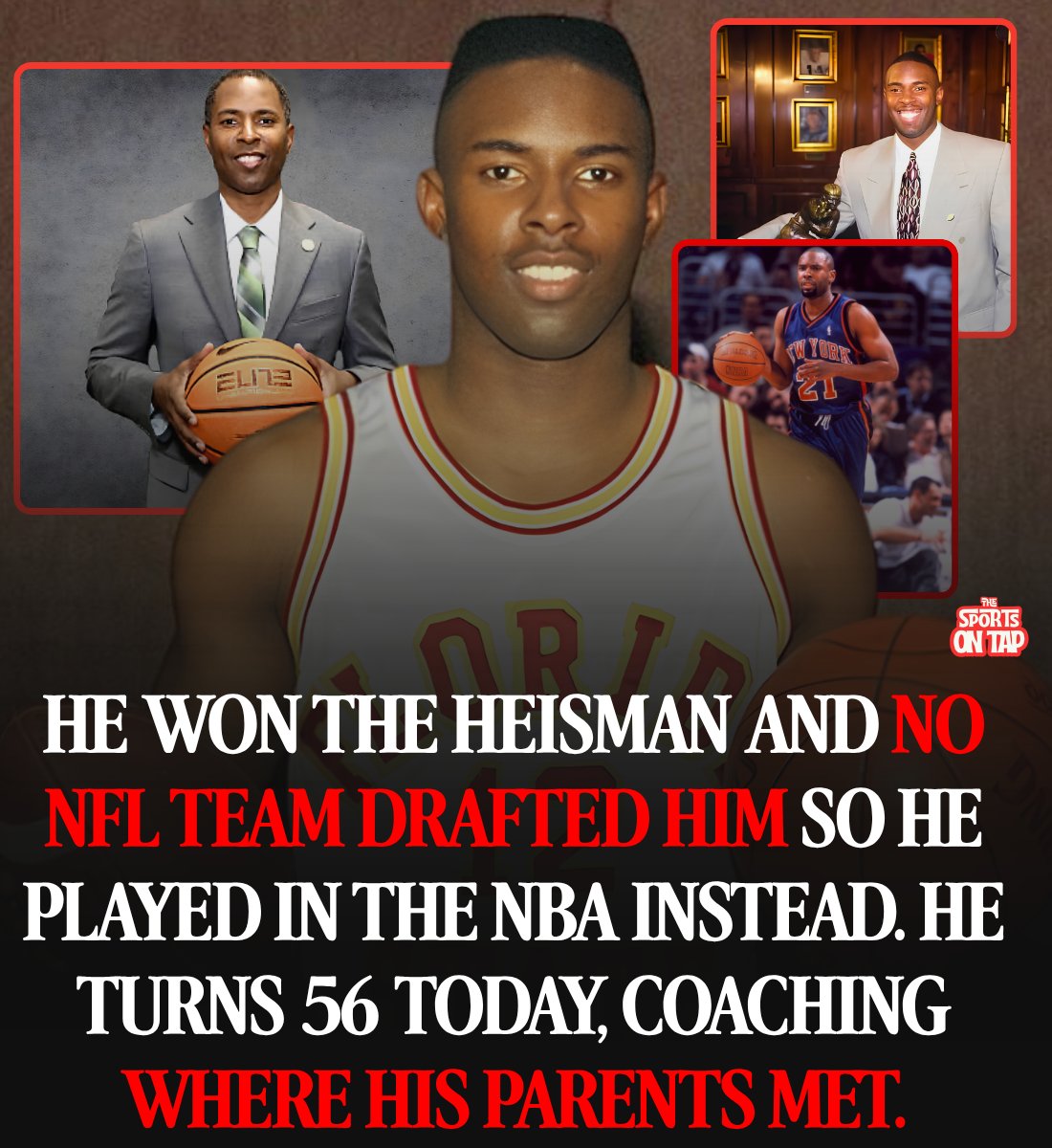
Charlie Ward's parents met on the campus of Florida A&M more than 65 years ago.
He went to Florida State, won the Heisman Trophy, and not one NFL team drafted him.
He turns 56 today, and he is the head basketball coach at Florida A&M.
Here is the whole thing.
His father played football for the Florida A&M Rattlers under Jake Gaither. His older sister Lita went there too.
Ward grew up on that campus with his dad, at Rattlers football games and Rattlers basketball games.
Here is how he puts it.
"I was born a Rattler."
Then he went to Florida State and played quarterback.
In 1993 he won the Heisman, the Maxwell Award, the Davey O'Brien Award and the Sullivan Award, which goes to the best amateur athlete in the country in any sport.
He took the Seminoles to their first national championship, 18 to 16 over Nebraska in the Orange Bowl. Their only loss all year was to Notre Dame.
Then the NFL Draft came and went and nobody took him.
He had told teams he would only consider the NFL if he went in the first round. Tony Dungy has said that Dennis Green thought about spending a first rounder on him and decided he could not risk Ward refusing to sign.
So Ward went undrafted, and he is still the only Heisman winner that ever happened to.
Here is what Green said afterward, offering him a free agent deal.
"A free agent contract is not very lucrative, but what it gives you is opportunity."
Ward said no.
Two baseball teams had already taken him. The Milwaukee Brewers in the 59th round in 1993, the New York Yankees in the 18th round the next year. He did not sign with either one.
He played basketball instead.
The New York Knicks took him 26th overall. He became their starting point guard, started all 82 games one season, and went to the Finals in 1999, where the Knicks lost to the San Antonio Spurs in five.
He played 11 seasons. 3,947 points, 2,539 assists, 744 steals.
Now the part most people do not know.
In June of 2018, on a church trip to Mexico, Ward had a stroke.
He recovered completely. He went vegan and changed the way he trains so it would not happen again.
He coached high school basketball in Tallahassee for seven years after that.
Then in April of last year, Florida A&M called.
Here is what he said about taking it.
"This is the only collegiate job that I was willing to take."
He went 15 and 16 in his first season there.
Charlie Ward is the only person who has won a Heisman Trophy and played in the NBA.
He spends his days now at the school where his parents met.
Larry Benet retweeted

I'm home after two weeks that felt like two months... and a few of the lessons surprised me.
I met with 3 billionaires, launched Own or Be Owned, walked 170,000 people through the 12 profit levers, met with YouTube execs, recorded podcasts with a guy who's done $2 billion in sales and a woman who's screened 2 million executives, and launched our new business tech product.
Here are 12 lessons from two weeks of too many meetings:
1. Stop improving broken systems. Question why they exist. Joe Liemandt's Alpha School has kids finishing core academics in 2 hours a day while reportedly learning twice as much. Most people would use AI to make the 6 hour school day 10% better. Joe asked why school needs 6 hours at all.
2. Take smarter risks. Jenny Just turned $1.5M into a multibillion-dollar company, PEAK6. Her edge is nearly 30 years of decisions where the feedback is immediate and the stakes are real. Confidence is the receipt you get after surviving risk over and over.
3. Build an ecosystem of assets, not just one business. David Adelman started with student housing (Campus Apartments, $2B+ in assets) and kept going: alternative assets, a family office, the Philadelphia 76ers. Instead of asking what business to build, think about assets you can own to make every other one more valuable.
4. Every billionaire I met was weirdly comfortable being misunderstood. They make fewer decisions, but bigger ones, and they go all in on them. From the outside, that looks crazy. But you can't build an abnormal life while trying to look normal.
5. An audience is not a business. We walked 170,000 people through 12 profit levers in three days. That attention is powerful… but it only matters if it turns into customers.
6. Nothing X-rays a company like a live launch. Three days live exposed every weak spot in our messaging, tech, team, offer and follow up. Too many people joined for Zoom to handle.
Our payments broke. Amazon pulled our listing because the demand looked fake. Scale finds every crack you've been ignoring.
7. Information is cheap. Most owners already know what's wrong. They just need to DO THE THING.
8. The best operators simplify aggressively. A lesson from Dean Graziosi, right hand to Tony Robbins: great operators don't leave a meeting with 30 priorities. They leave with one constraint.
9. Creators are quietly becoming holding companies. Meeting with YouTube execs made this obvious. One video can bring in a customer, a hire, an acquisition, an investor and product launch.
10. The best conversations rarely happen onstage. One of the most valuable ones of the trip was at 9 am in a café. The rest happened backstage, in cars, and in the ten minutes before my next meeting.
11. Growth is usually hiding behind one uncomfortable decision. Raise the price. Kill the offer. Replace the person. Narrow the customer.
Two weeks. Three cities. Three billionaires. One book launch. 170,000 owners.
My biggest takeaway of all?
The next level rarely requires more information... just moving faster.
Larry Benet retweeted

Mark Cuban says if he were 20 today, he'd skip venture capital entirely.
His reasoning: a $100K/month AI consulting business for small businesses beats chasing a 0.1% VC lottery ticket.
The math is brutal and obvious once you say it out loud.
Most founders spend years grinding for a shot at diluted equity, a 10-year exit, and a 95% failure rate. Cuban is pointing at a different path — one where AI tools let a 20-year-old build real cash flow fast, without giving up ownership or control.
The contrarian insight isn't "consulting is underrated." It's that the AI moment has made consulting scalable in ways it never was before. One person can now deliver what used to take an agency.
$100K/month is $1.2M/year. Profitable from day one. No board. No cap table. No begging for a Series A.
That's the business Cuban wishes he'd had access to at 20.
Larry Benet retweeted

One book I’d recommend to everybody right now: How to Stop Worrying and Start Living by Dale Carnegie.
It’s still the best advice I know.
Live in day-tight compartments. Just focus on today.
During this book tour if I looked at my full schedule I would have collapsed, so I didn’t look. I said, can I get through this meeting? Yes. Okay. Now the next one.
Write down your goals. Work backwards from them, and attach yourself to the right people.
You are the weighted average of the five people you spend the most time with.
Hang out with people who have good character, good work ethic, creativity, and optimism.
The optimists are winning. The pessimists may sound smarter, but they don’t win. They get too cynical and it eats them alive.
And if you’re a kid hanging out with people who rot on the couch, you will rot on the couch.
Choose your five people carefully.
Great advice from @ferrazzi as the network grows try to invite multiple people to attend the different events, dinners, workouts ect that you do so you can connect with your network and maximize limited time you have.


Larry Benet retweeted
Higgsfield is the most untold story in tech.
$1BN in ARR in 18 months. Faster than everyone other than OpenAI and Anthropic.
They spend $4M a month on models. They expect this to be $100K per person per month.
They have 150 people working in a content machine.
They will breed more millionaires than any other company in Kazakh history.
For the first time, @alexmashrabov on the journey to $1BN in ARR. (below)
1. The Power of the Immigrant Founder
Coming from Uzbekistan, Alex was pushed into competitive programming at age eight as his single path to reach the United States. For international founders, placing top in global competitions serves as the ultimate social elevator, instilling the relentless work ethic required to build breakout companies.
2. My Biggest Lessons in the Journey to Finding Product-Market Fit
@higgsfield burned over $10 million of its $16 million seed round chasing hype and narrative rather than product quality. With under $5 million left, the team pivoted to product-led growth, solving camera control for creative directors, which immediately triggered organic hypergrowth without paid ads.
3. The 150-Person Content Team Powering Higgsfield's Billion in ARR
Nearly half of Higgsfield's workforce consists of 150 in-house creative professionals producing tutorials, ads, and cinematic projects. Generating 90 minutes of TV-quality AI video requires 100 hours of raw output, proving human taste and curation remain the primary drivers of distribution.
4. We Spend $4 Million per Month on Models
Higgsfield spends $4 million monthly on internal model usage, averaging $10,000 per employee so teams can freely vibe code and test workflows. Uncapped inference compute acts as a force multiplier, allowing top talent to discover breakthroughs at maximum velocity.
5. Why Chasing Benchmarks Is Bullshit and the Corporate Misalignment Occurring
Public benchmarks have devolved into corporate psyops where lab researchers overfit test data to secure bonuses before job-hopping. Text-to-video benchmarks ignore real production workflows requiring 3,000-word prompts, proving direct customer iteration beats artificial leaderboards.
6. Why Team Sizes Won't Be Impacted as Much as People Think
While AI handles over 60% of basic support requests, complex B2B environments cannot eliminate human teams. High product velocity constantly shifts rules and context, requiring smart, coordinated operators across legal and customer success.
7. Americans Are Way More Promiscuous When It Comes to Leaving Companies
Silicon Valley workers routinely jump jobs every two years, prioritizing short-term trends over deep commitment. This transactional market gives international hubs an advantage, where cultural loyalty and team stability build compounding technical moats.
(links in comments)
Larry Benet retweeted

Washington needs a good power washing top to bottom. Five things I would do today to end corruption in Washington across all three branches of government:
1. Ban all stock trading.
2. Ban all participation in prediction markets.
3. Mandatory retirement at 75 years old.
4. Mandatory blind trust for individuals with a net worth more than $1 million.
5. Ban all foreign gifts to public officials, including foreign investments in their businesses or other entities.
Congrats to @PalmerLuckey & anduril for this incredible accomplishment

Congrats to @PalmerLuckey and Anduril for winning the Wildfire XPRIZE - for detecting and suppressing a wildfire within 10 minutes of ignition!

Love @CoachGoldsmith and @kenblanchard

You can believe in yourself be humble at the same time.
Ken Blanchard is a great thinker, teacher and human being. He also believes in himself.
The greatest leaders that I have ever met all believed in themselves. They knew they deserved to be where they were.
They were also not fixated on themselves. They were focused on serving others. They asked for feedback from their stakeholders. They worked on personal improvement. They believed in themselves enough to know that it was OK to admit to being human.
In Ken's terms, they did not think less of themselves - they thought about themselves less!
Humility is often misunderstood. Too many people think it means putting yourself down, minimizing your strengths, or pretending you aren’t talented. That’s not humility - that’s insecurity.
Humility isn’t weakness. It’s wisdom. And it’s one of the most powerful strengths a leader can develop.
Life is good.
Marshall

Crazy

My project manager came into my office this morning to tell me she’s stepping down to become a stay-at-home mom.
She makes $68,000 a year.
Her husband earns $72,000.
They just had their second child, so she called licensed local daycare centers to get quotes for an infant and a toddler.
Average cost: $2,650 a month. That’s $31,800 every year straight out of their post-tax income.
After federal taxes, state taxes, and healthcare deductions, her take-home pay was roughly $3,700 a month.
After paying $2,650 for daycare, she was working 40 hours a week to net $1,050 a month…..or about $6.50 an hour.
She looked at me and said: "I’m literally spending 160 hours a month away from my kids just to clear $250 a week after childcare costs."
We didn't just build an expensive economy.
We built a system where holding down a mid-class job as a second earner costs more than staying home.
It would be a lot better.

How much better would America be if members of Congress adopted the West Point Standard?
1. You cannot lie.
2. You cannot cheat.
3. You cannot steal.
(Or tolerate anyone who does.)
@WestPoint_USMA can't get involved in politics, but politicians should live by West Point values.
Larry Benet retweeted

Doug Leone, Chairman of Sequoia Capital, on why childhood pain is the most durable source of drive you can hire for:
Most firms hire for credentials. Leone hires for damage.
"So, I think it starts with the people that we hire. We hired people that had a shock in their system when they were growing up."
He's specific about what that shock looks like:
"Maybe they were shunned. Maybe they were too smart for their own good. Maybe they were left by a parent. Maybe they were in a vicious competition with a twin brother. We have all those."
And he counts himself in the sample:
"In my case, I came from Europe. I got abused in high school. I was pissed off."
The reason this works as a hiring filter is duration. Motivation built on money or status gets satisfied and then evaporates. Motivation built on an early wound doesn't:
"So, we find these folks are a little edgy and for the rest of their lives they have something to prove in some ways not very different than founders."
For the rest of their lives. That's the asset @dougleone is buying, and it's the same asset he's looking for in the founders Sequoia backs.
But the trait comes with a defect attached, and Leone names it starting with himself:
"We put those people in an environment of trust. We teach them because those people and starting with myself, we were not pros at using the we pronoun. Those people tend to be I people because they were set aside and we put them in a circle of trust and we teach them that we is better than I."
People who were set aside learn to win alone, so hiring a dozen of them gets you a dozen solo operators rather than a partnership. Trust is what converts the pronoun.
Then the unglamorous mechanic holding it together:
"We get compensation right. We don't have a situation that Johnny makes 10% more than Susie. It's pretty flat, which means we share things among us."
Put a room full of people with something to prove on an unequal scale and the drive you hired turns inward, on each other, until the scoreboard is what everyone is really competing on. Take the scoreboard away and the drive stays aimed outward.
What's left is an engine that doesn't need managing:
"And so we have this need, this incessant need to do something, to win that never goes away. And so when you say we work hard, it's all we've ever known."
Effort like this isn't extracted through discipline or bought with incentives, because it was already running long before anyone showed up to manage it.