
Postdoctoral Associate - Harvard University
Joined May 2021
- Tweets59
- Following87
- Followers92
- Likes270



Jason Lequyer retweeted

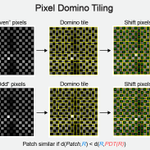
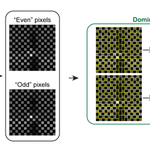
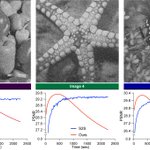
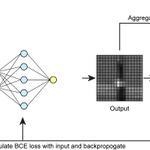
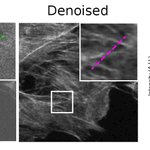
SpillOT is a zero-shot denoising and spillover correction tool for multiplexed imaging data.
nature.com/articles/s41592-0…

Jason Lequyer retweeted

Excited to share that our novel method for spillover removal (SpillOT) has been published in Nature Methods! nature.com/articles/s41592-0…


Excited to share SpillOT, our spillover correction tool for highly multiplexed images has been published in @naturemethods doi.org/10.1038/s41592-026-0…
Excited to share SpillOT, our spillover correction tool for highly multiplexed images has been published in @naturemethods doi.org/10.1038/s41592-026-0…
Big thanks to our co-authors Cindy Hsu (@whh_wenhsin), Reuben Philip (@reuben_phi), Anna Erpf (@AnnaCErpf), Angela M. Y. Chan, Christine Tran, Ben X. Wang and Zoltan Maliga.
1
2
108
SpillOT is available as a Fiji plugin and as a standalone python script, both available on our GitHub (github.com/jason-lequyer/Spi…). Please DM me if you have any questions about how to use and deploy SpillOT for your data.

1
46
Jason Lequyer retweeted

Efficiently finding a desired set of mutations to push protein toward a desired property in the sea of 20^L possible mutations is one of the holy grails of molecular engineering. Introducing ProTEUS: a mutation-resolved World Model for closed-loop protein evolution with SOTA performance on various protein engineering tasks and a new axis of scaling.
Jason Lequyer retweeted

🚨 Today we report cryo-EM structures of Bxb1 integrase complexed with its attB/attP DNA substrates before, during and after recombination.
We engineer Bxb1 mutants with improved recombination and altered sequence recognition properties.
Out today @MolecularCell ⬇️
Jason Lequyer retweeted

(1/6): How can we better test therapeutics without using animals or risking lives? Lab-grown human mini-organs, called “organoids”, provide an answer! Despite their progress, organoids and related methods lack realistic flow through blood vessels, the “plumbing” of our bodies.
Jason Lequyer retweeted
(1/7): New preprint from the lab! We generate physiological vascular flow in vitro to vascularize organoids, interrogate the effects of hemodynamic forces on vascular architecture, and model the disease Hereditary Hemorrhagic Telangiectasia.

Jason Lequyer retweeted

My earlier work helped me appreciate how allelic diversity quietly limits therapeutic genome editing. Co-leading this project to begin tackling that challenge has been a major highlight of my postdoc!

Today in @Nature we report a new prime editing strategy that can rescue a common cause of many genetic diseases in a disease-agnostic manner. This approach converts a redundant endogenous tRNA into an optimized suppressor tRNA, enabling a single prime edit to rescue premature stop codons across different diseases.
(1/15)
drive.google.com/file/d/1bSv…

Jason Lequyer retweeted
Really excited to share this synthetic phosphorylation piece out @ScienceMagazine. We present design rules for engineering synthetic phosphorylation circuits and its application in engineering cell therapy.
science.org/doi/10.1126/scie…

Jason Lequyer retweeted

Excited to share our new paper, "Glutamine missense suppressor transfer RNAs inhibit polyglutamine aggregation," published in @MolTherapy_NA! Grateful to be included in this work — a great way to close out 2024 and the first semester of my PhD! cell.com/molecular-therapy-f…

Jason Lequyer retweeted

Excited to share our new work on causal sensitivity analysis for fairness metrics at #NeurIPS2024! We've developed a causal sensitivity analysis framework to understand how underlying measurement biases (encoded by DAGs) impact machine learning fairness evaluations. 1 / 5

ALT Two DAGs representing proxy and selection bias.
Jason Lequyer retweeted

Explore our tagging tools from the @Pelletierlab! They feature cassettes with mStayGold for bright and photostable endogenous fusions.
Now available on @Addgene: addgene.org/Laurence_Pelleti….
Check out the paper in @embojournal: embopress.org/doi/full/10.10…
#FluorescenceFriday

Jason Lequyer retweeted

I don't see what makes the GFP design "chain of thought". It's a multi-step process that involves Gibbs sampling, many selection filters, human decisions, and heuristics to see works best. It's classic computational protein design with a very powerful generative model. 5/

ALT Algorithm 15 gibbs_seq_given_struct Algorithm 16 joint_optimize
Jason Lequyer retweeted

Preprint alert! The force-sensitive protein, FHL2, promotes atherosclerotic endothelial phenotypes (junction discontinuity, hypercontractility, and high tissue permeability) through actin-microtubule crosstalk!! Check out the whole story on bioRxiv: biorxiv.org/content/10.1101/…