

Interested in the pursuit of excellence in all facets of life (mine and others). CEO of $150MM Healthcare Biz. Also SMB and CRE ownership.
Joined October 2009
- Tweets1.6K
- Following1.2K
- Followers332
- Likes45.7K






Most organizations start with a good goal. Then the goal grows, changes, or gets taken over by people who want something else. That's usually when it goes bad.
17
In healthcare, AI can help with a lot of the work. It can't sign for it.
A doctor still signs the chart.
The practice still answers to regulators.
The CEO still answers to the board.
The smarter AI gets, the more a leader's job is deciding what it's allowed to do, and owning the result.
26

Levi Bauer retweeted

I am a big fan of The Last Book. It runs on a computer that has no internet and can save a life.
It is a local series of tools including a local AI that is a reference when all around you is failing and falling apart, like the power grid goes down and you need to purify water or fix an old car.
This is a powerful local tool.
Don’t wish you had it when it is too late.
lastbook.org/


To anyone in their 20s: nobody feels ready for their first big job. The people who look ready just started earlier.

37
Optimism without work is wishful thinking. Work without optimism burns you out. You need both, every day.

Underrated life advice: Always assume things will work out, then do the work to make it true. It’s a mindset of active optimism. Earned faith. It creates a quiet confidence that allows you to tolerate the uncertainty of life better than anything else.
47
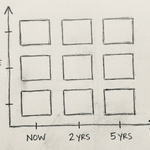
When someone tells me AI can't do something, I ask: today, or in two years?
Most AI arguments are two people talking about different years.
25


Leaders used to build systems for people. Now they build them for people and AI agents.
Most leadership teams haven't noticed the job changed.
26
If you're a young doctor deciding between a job and a partnership, ask one question:
Do I want to be the resource that helps someone else reach their goals?
Or do I want to have the resources to reach my goals and my group's?
Both can be a good career. Just pick on purpose.
Employed: you are the resource. Independent: you have the resources. Every young doc should hear that before signing anything.
39
Works the other way too. The people who are great managers of humans are turning out to be our best builders of agents. Clear instructions, clear standards, quick feedback. Same skill.

“Every gripe you have about bad managers is a bug report for interacting with agents.”
This article is pure gold from @addyosmani
1
1
38
Living below your means is how you stay in the game. Most people don't get knocked out by a bad idea. They get knocked out by a bill they can't pay when the bad year comes.
I’m convinced that 99% of success is just the ability to stay in the game. The best things in life are a result of compounding. But you can’t compound if you let yourself get taken out of the game. Whatever storm life throws your way. Adapt. Survive. Advance. Stay in the game.
41
Doing the smart thing is hard and no fun. Delayed gratification gets you money. Living below your means lets you keep it.
45
This is true. It's difficult to even explain what we're doing now to people who don't know about AI or who are even using it some in their daily work. It's also that AI can do more today then it did yesterday and you don't know that unless you're in it deep.
I still think it will end up being like web design back in the 2000's. Was it wasted effort when you learned HMTL and all that good stuff when WYSIWYG editors did finally come around? Maybe in the end you could view it that way, but it did give those first web developers a 5-10 year head start on the drag and drop users.
A 5-10 year head start in AI is basically a lifetime.

It’s almost incomprehensible how wide the distance is between someone who’s working at the frontier with AI and basically everyone else right now.
The crazy thing is these lines are not converging, but only growing farther apart. If the curve of AI progress had leveled off, it would certainly have given most people and companies time to catch up or implement their workflows in a standardized way. The technology would have neutralized competitive advantage because everyone would be using it the same way.
But what’s happened is the opposite. The curve of AI progress is basically going vertical right now, which means if you had codified your processes 3-6 months ago you’re likely already behind again. Now imagine most companies that kicked into gear a year ago and thought that they were done. Even further behind now.
I’ve never seen a technology in my life and career that improves at this rate, which consequently means you need to upgrade your expectations at a similar rate. Our brains weren’t wired for this, and our organizational change management processes certainly weren’t either.
With any form of recursive self improvement, things just get wilder. It’s a time when you will need to be constantly reevaluating the things that didn’t work just a couple months ago to see if they now can be solved. AI native companies certainly have a strong advantage due to this right now, so now it comes down to can the bigger companies keep up. Wild times.
1
44
Seems like this trend can’t keep going, but it seems to.

BREAKING: The average cost of a family’s annual health insurance premium in the US is up +$1,303 YoY, or +5%, to a record $28,303.
This marks the 4th consecutive annual increase of at least +$1,300.
Over this period, the average annual premium for family coverage has surged +$5,884, or +26%.
To put this into perspective, CPI inflation has risen +13% over the same period, or half as much.
Since 1999, the average health insurance premium for a family has soared +$22,494, or +387%.
This represents an average annual growth rate of +6.1%, well above CPI inflation at +2.6% over the same period.
Health insurance has never been more expensive.

1
1
110
Give people an easy way to provide their AI access to their banks and bank actions and it will be easy to tell who is who. Making it hard makes the AI tinkerers get creative.

SCOOP: Major U.S. banks are detecting unauthorized third-party AI agents inside customer accounts, including some attempting to take actions that appear to be independent of user instructions, sources told Axios.
The findings have alarmed banking executives, who are racing to restrict access to their systems as AI moves at a velocity faster than financial institutions can respond, multiple industry and bank executives told Axios.
Several banks are now preparing for worst-case and even “day after” scenarios, including how to rapidly secure or restore customer accounts if things go wrong, the people said.
Several bank executives told Axios they're struggling to distinguish between human users and AI agents. One executive said banks also struggle to determine whether agents are authorized by customers or potentially operating without their permission, more akin to rogue agent behavior.
Read my latest for Axios here: axios.com/2026/10/22/ai-agen…

1
27