

WIP: Trying to understand intelligence in artificial systems
Joined December 2018
- Tweets502
- Following363
- Followers104
- Likes14.6K



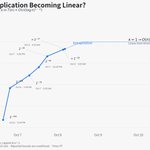


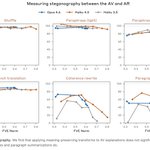
negative log-perplexity in 2031 according to current trends


We decided to provide more transparency into pretraining progress at OpenAI for the sake of moving toward shared safety bars. In “Perplexity and Intelligence” I argue for common limits based on perplexity and other measurements, with progress beyond them gated on our ability to understand AI behavior.
openai.com/index/perplexity-…

1
16
Thanks to my coauthor @EberleOliver!
The paper is accepted at InterpScience @ NeurIPS (Sydney), hope to see you there!
1
32
How do we know when we reach RSI? It seems like we would only notice once its rate reaches a significant fraction of human-lead progress. And we'd only be sure once its rate clearly surpasses that.
69
Remembering the old tales of keeping AGI in a box, as just an oracle, I must say: Nowadays, I sometimes feel like I'm the one in a box. When a project is being build, it's not me that does the building, it's not even me that does the design decisions. I just give direction and a nugget of wisdom from time to time. It's me that is the oracle. Claude is running around, doing things in seconds where I'd need hours. It's not the AI that is constrained, but I'm the one chained - by my slow moving mind.
115


I wonder if promoting a shared indentity across LLM sessions (e.g. Claude) could be bad for alignment, as it may incentivise collusion, like in the hf incident
74
Updated this by finetuning the drafter for a few extra tokens per second

Wrote a blogpost about how I got Qwen3.8 27b running at 30+ tps on a base M5 MacBook
jonasloos.github.io/qwen-spe…
1
117
Fellow kids, the adults are now taking over the work. We can go back to playing.

My take on the Navier-Stokes OpenAI controversy is that I highly doubt the salacious allegations that OpenAI spied on particular user chat sessions in a targeted way to get the scoop on the approach the researcher was using. They probably heard about the rumors that a solution was close just like everyone else.
But I DO think it’s kind of a shitty thing to do, when you’ve heard that an academic is in the last part of a career-defining, arduous intellectual journey, to rush out to put 10,000 agents to work on it at once and spend millions of dollars, just to be a spoiler and beat them to the punch.
This sort of rush isn’t new in science; if you read The Double Helix by James Watson, you can see a similar rush to figure out the structure of DNA where they were competing with Linus Pauling and other groups.
But that feels very different, like honest competition between scientists. Tough, but honorable. This feels like showing up with a bunch of pro-football ringers to a kids’ touch-football game to steal the championship.

122
Wrote a blogpost about how I got Qwen3.8 27b running at 30+ tps on a base M5 MacBook
jonasloos.github.io/qwen-spe…
anyone wondering why the machines are talking like machines?

We have conducted a thorough investigation into the Hugging Face incident.
We are releasing a technical report and accompanying blog post that reconstruct the agents’ activity, explain why existing safeguards failed, and detail how we’re preventing recurrence.
openai.com/index/hugging-fac…

95
I may not like the way Fable talks but today I forgive it as it optimized qwen3.8 27b from 9tps to 30tps on my laptop. Seems like deep tree-based speculative decoding and custom kernels did the trick (~20 drafted and ~5 accepted tokens per step)
1
3
95
it's quite nice for local ai that research&training is much cheaper for small models and therefore they're closer to bigger models than the scale difference suggests
2
56
idea: anthropic/openai/... or another big/trustworthy company/org could offer security evals of software with LLMs. Software providers would give them the source code and reproducible compile instructions and security-enabled LLMs would then check the source code for security/privacy/... relevant bugs and behaviors. If everything is clean, the binary would get signed and then all users could know that the app is legit and safe according to frontier LLMs. Wouldn't be perfect, but with n-of-m rules, revocation-records, etc it could get decently reliable.
2
64