

French Diplomat | Ex @franceintheus | Former Visiting Fellow @WashInstitute | Cairene, Beiruti, Rbati | RT ✖️ endorsement
Washington DC
Joined February 2012
- Tweets2.6K
- Following2.3K
- Followers1.8K
- Likes2.9K






Louis Dugit-Gros لوي دوجيه-غرو retweeted

After 4 fantastic years at @franceintheus I joined last month @HudsonInstitute as a fellow at the Center on Europe & Eurasia. My work will focus on Europe-US relationship, EU Security and Defense, among other things 1/2
Louis Dugit-Gros لوي دوجيه-غرو retweeted

Ever wondered how France can be both a fiercely secular Republic and steeped in strong historical traditions?
Here’s the visual proof (plus what a French diplomat in full uniform looks like) 👇

Louis Dugit-Gros لوي دوجيه-غرو retweeted

Dimanche est une merveilleuse opportunité pour faire une journée de déconnexion


Louis Dugit-Gros لوي دوجيه-غرو retweeted

Ahurissant ! On demande au pays envahi, dévasté et bombardé de ne pas être trop méchant à l’égard de son agresseur. Mais qu’ont-ils tous avec la Russie?

Louis Dugit-Gros لوي دوجيه-غرو retweeted

Quite a photo.
Having completely ignored the Europeans on Iran and berated their rejection of his war, @EmmanuelMacron manages to get @realDonaldTrump to sign the MoU in Versailles.

Louis Dugit-Gros لوي دوجيه-غرو retweeted

Avec nos partenaires britannique, canadien, australien, néo-zélandais et norvégien, nous prenons aujourd’hui de nouvelles sanctions contre les responsables de l’intensification de la colonisation et des violences en Cisjordanie.
A titre national, nous avons interdit d’accès à notre territoire le ministre Bezalel Smotrich, quatre responsables d’organisations de colons et vingt-et-un colons violents.
Bezalel Smotrich promeut activement l’annexion de la Cisjordanie, qu’il revendique ouvertement, la création de nouvelles colonies en Cisjordanie, la recolonisation de Gaza, l’effondrement économique de l’Autorité palestinienne et ses conséquences délétères sur la population palestinienne : c’est une politique que ne peut accepter l’écrasante majorité de la communauté internationale, fermement attachée à la solution à deux Etats. – at Paris, France

Louis Dugit-Gros لوي دوجيه-غرو retweeted

This exemplifies what many foreign observers have missed about the context of "forward deterrence": in the past five years, the concrete commitments to France's neighbors have significantly increased, from the Norwegian Sea to the Baltic Sea to the Eastern Mediterranean.

France and Cyprus will sign on Monday a status of forces agreement allowing Paris to station troops on the Mediterranean island, two senior Cypriot government officials told POLITICO.
politico.eu/article/france-c…

Louis Dugit-Gros لوي دوجيه-غرو retweeted

France 🇫🇷 got €93 billion investment out of which Japan 🇯🇵 (Soft Bank) alone invests €45billion into French 🇫🇷 nuclear ☢️, tech, AI & data.
This isn’t business; it’s an astronomic geo-economic investment. Meaning: US 🇺🇸China 🇨🇳 are unpredictable & Japan 🇯🇵 hedges to Europe ⤵️

Choose France: Emmanuel Macron annonce des investissements record pour 93 milliards d'euros, créant "plus de 15.000 emplois" #BFM2
Louis Dugit-Gros لوي دوجيه-غرو retweeted
À compter de ce jour, Itamar Ben-Gvir est interdit d'accès au territoire français.
Cette décision fait suite à ses agissements inqualifiables à l'égard de citoyens français et européens passagers de la flottille Global Smud.
Nous désapprouvons la démarche de cette flottille qui ne produit aucun effet utile et surcharge les services diplomatiques et consulaires, dont je salue le professionnalisme et le dévouement.
Mais nous ne pouvons tolérer que des ressortissants français puissent être ainsi menacés, intimidés ou brutalisés, qui plus est par un responsable public.
Je relève que ces agissements ont été dénoncés par un grand nombre de responsables gouvernementaux et politiques israéliens.
Ils font suite à une longue liste de déclarations et d’actions choquantes, d’incitations à la haine et à la violence à l'encontre des Palestiniens.
Comme mon collègue italien, je demande à l'Union européenne de prendre également des sanctions à l’égard d’Itamar Ben-Gvir.
Louis Dugit-Gros لوي دوجيه-غرو retweeted

Nous apprenons avec tristesse le décès du sergent Bin Chen et du caporal-chef Axel Delplanque, au cours d'une plongée de nuit dans la Maine, à Angers, dans le cadre d’un stage de formation des plongeurs de combat du génie.
Sincères condoléances de l’armée de Terre à leurs familles, leurs proches et leurs frères d’armes du 1er régiment étranger du génie, du 6e régiment du génie et du 13e bataillon de chasseurs alpins.


Louis Dugit-Gros لوي دوجيه-غرو retweeted

Le journaliste français Christophe Gleizes, condamné à sept ans de prison et détenu en Algérie, renonce à son pourvoi en cassation, ouvrant la voie à une possible grâce du président Abdelmadjid Tebboune, a annoncé sa famille mardi sur France Inter.
➡️ u.afp.com/SaEK

Louis Dugit-Gros لوي دوجيه-غرو retweeted

🔴 DIRECT - "Si Israël continue cette politique, qui au fond contrevient à son histoire même, nous ne pouvons pas faire comme si de rien n'était", indique E.Macron, interrogé sur la remise en cause de l'accord d'association entre l'État hébreu et l'Union européenne.
#Canal16
Louis Dugit-Gros لوي دوجيه-غرو retweeted

If governments were actually doing their job, this Palantir document 👇 wouldn't be a manifesto they proudly boast about, but a clear sign of the urgent need to purge its software from the public institutions it has infiltrated.
What are they saying, essentially?
They basically promote a clash of civilization worldview in which there exists a "they" - the supposed enemies of Western civilization, whose cultures the document codes as inferior - and a "we" who must stop indulging in decadent restraint and invest massively in AI weapons and defense software (which conveniently makes Palantir's product catalog the civilizational cure).
Look at point 4 for instance. They write that "the limits of soft power, of soaring rhetoric alone, have been exposed. The ability of free and democratic societies to prevail requires something more than moral appeal. It requires hard power, and hard power in this century will be built on software."
It all rests on a pretty massive assumption: that coexistence is impossible. Why would "free and democratic societies" (by which they obviously mean Western-style liberal-democracies) need to "prevail"? Why can't they simply coexist with other civilizations or political systems out there?
Nowhere in the document do they defend this assumption: it's simply asserted as the starting condition of the argument.
But it's the entire ballgame: if civilizations and political systems can coexist - as they largely have, imperfectly but recognizably, throughout history - then the entire case they make in the document evaporates.
In fact one can argue that, studying history, the big problem was not that civilizations couldn't coexist: it was that, from time to time, one of them decided that others were inferior, threatening, or standing in the way of its rightful expansion - and acted accordingly.
So many catastrophes and so much human suffering in history trace back not to the fact of plural civilizations, but to one of them deciding it could no longer tolerate the others.
The problem, in other words, has almost always been exactly the worldview Palantir is now selling. Their manifesto isn't warning against the cause of some of the worst periods in history: it's arguing for reviving them!
Or take point 15: they explicitly call for the re-armament of Germany and Japan, and an end to "Japanese pacifism". Basically undoing one of the foundational settlements of the post-WW2 order.
I mean, think about the insanity of this for a second: a private company - unelected, answerable only to its shareholders - is casually proposing to overturn the security architecture of two continents. A settlement that took a world war, and tens of millions of dead to establish.
Why do they propose this? There is obviously a commercial motivation: a remilitarized Germany and Japan are massive new defense-software markets.
But the more troubling answer is that point 15 fits into the ideological project the rest of the manifesto lays out - a civilizational contest requires a consolidated Western bloc, and pacifist members are a liability in such a contest.
So taking a step back we now have what's the most influential defense-software company in the world, with its code deeply embedded in all the machinery of Western states - intelligence agencies, militaries, police forces, welfare systems, border controls - openly outing itself as an ideological project.
They're effectively saying "our tools aren't meant to serve your foreign policy. They're meant to enforce ours."
Because, worryingly, that's what they CAN do. Palantir software is all about basically telling states: "these are your threats, these are the people and groups to watch, these are the patterns that matter, these are the targets that warrant action."
For instance the DGSI - the French intelligence services - use Palantir (see: teapaw.org/RnaudBertrand/status/2…): do you honestly think the software is warning them about, say, the NSA tapping the phones of French government officials? About the weaponization of US extraterritorial law against French companies? Did it warn them about the AUKUS ambush that cost France a sixty-billion-euro submarine contract? Obviously not.
And that's exactly what the manifesto is saying. They've positioned themselves as advocates of Western civilizational unity, so their software can't undermine it. The ideological position and the product roadmap have to align, or the whole project falls apart.
This makes their software not only deeply dangerous for the world as a whole but also, almost by definition, for any country using it. When it comes to your security as a state, it is primordial you base yourself on truth as opposed to ideology. The entire point of an intelligence agency is to tell its government what is true, not what your so-called "allies'" defense contractors would like you to see.
A state that outsources its threat assessment to a company with an explicit ideological agenda is not gathering intelligence, it is essentially subscribing to propaganda.
The conclusion couldn't be more obvious. Every government still running Palantir software in its intelligence, security, or public-service infrastructure needs to start ripping it out, now! Lest they want to be embarked on the delusional and deeply destructive clash-of-civilizations crusade Palantir has now openly committed itself to.

Because we get asked a lot.
The Technological Republic, in brief.
1. Silicon Valley owes a moral debt to the country that made its rise possible. The engineering elite of Silicon Valley has an affirmative obligation to participate in the defense of the nation.
2. We must rebel against the tyranny of the apps. Is the iPhone our greatest creative if not crowning achievement as a civilization? The object has changed our lives, but it may also now be limiting and constraining our sense of the possible.
3. Free email is not enough. The decadence of a culture or civilization, and indeed its ruling class, will be forgiven only if that culture is capable of delivering economic growth and security for the public.
4. The limits of soft power, of soaring rhetoric alone, have been exposed. The ability of free and democratic societies to prevail requires something more than moral appeal. It requires hard power, and hard power in this century will be built on software.
5. The question is not whether A.I. weapons will be built; it is who will build them and for what purpose. Our adversaries will not pause to indulge in theatrical debates about the merits of developing technologies with critical military and national security applications. They will proceed.
6. National service should be a universal duty. We should, as a society, seriously consider moving away from an all-volunteer force and only fight the next war if everyone shares in the risk and the cost.
7. If a U.S. Marine asks for a better rifle, we should build it; and the same goes for software. We should as a country be capable of continuing a debate about the appropriateness of military action abroad while remaining unflinching in our commitment to those we have asked to step into harm’s way.
8. Public servants need not be our priests. Any business that compensated its employees in the way that the federal government compensates public servants would struggle to survive.
9. We should show far more grace towards those who have subjected themselves to public life. The eradication of any space for forgiveness—a jettisoning of any tolerance for the complexities and contradictions of the human psyche—may leave us with a cast of characters at the helm we will grow to regret.
10. The psychologization of modern politics is leading us astray. Those who look to the political arena to nourish their soul and sense of self, who rely too heavily on their internal life finding expression in people they may never meet, will be left disappointed.
11. Our society has grown too eager to hasten, and is often gleeful at, the demise of its enemies. The vanquishing of an opponent is a moment to pause, not rejoice.
12. The atomic age is ending. One age of deterrence, the atomic age, is ending, and a new era of deterrence built on A.I. is set to begin.
13. No other country in the history of the world has advanced progressive values more than this one. The United States is far from perfect. But it is easy to forget how much more opportunity exists in this country for those who are not hereditary elites than in any other nation on the planet.
14. American power has made possible an extraordinarily long peace. Too many have forgotten or perhaps take for granted that nearly a century of some version of peace has prevailed in the world without a great power military conflict. At least three generations — billions of people and their children and now grandchildren — have never known a world war.
15. The postwar neutering of Germany and Japan must be undone. The defanging of Germany was an overcorrection for which Europe is now paying a heavy price. A similar and highly theatrical commitment to Japanese pacifism will, if maintained, also threaten to shift the balance of power in Asia.
16. We should applaud those who attempt to build where the market has failed to act. The culture almost snickers at Musk’s interest in grand narrative, as if billionaires ought to simply stay in their lane of enriching themselves . . . . Any curiosity or genuine interest in the value of what he has created is essentially dismissed, or perhaps lurks from beneath a thinly veiled scorn.
17. Silicon Valley must play a role in addressing violent crime. Many politicians across the United States have essentially shrugged when it comes to violent crime, abandoning any serious efforts to address the problem or take on any risk with their constituencies or donors in coming up with solutions and experiments in what should be a desperate bid to save lives.
18. The ruthless exposure of the private lives of public figures drives far too much talent away from government service. The public arena—and the shallow and petty assaults against those who dare to do something other than enrich themselves—has become so unforgiving that the republic is left with a significant roster of ineffectual, empty vessels whose ambition one would forgive if there were any genuine belief structure lurking within.
19. The caution in public life that we unwittingly encourage is corrosive. Those who say nothing wrong often say nothing much at all.
20. The pervasive intolerance of religious belief in certain circles must be resisted. The elite’s intolerance of religious belief is perhaps one of the most telling signs that its political project constitutes a less open intellectual movement than many within it would claim.
21. Some cultures have produced vital advances; others remain dysfunctional and regressive. All cultures are now equal. Criticism and value judgments are forbidden. Yet this new dogma glosses over the fact that certain cultures and indeed subcultures . . . have produced wonders. Others have proven middling, and worse, regressive and harmful.
22. We must resist the shallow temptation of a vacant and hollow pluralism. We, in America and more broadly the West, have for the past half century resisted defining national cultures in the name of inclusivity. But inclusion into what?
Excerpts from the #1 New York Times Bestseller The Technological Republic: Hard Power, Soft Belief, and the Future of the West, by Alexander C. Karp & Nicholas W. Zamiska
techrepublicbook.com
Louis Dugit-Gros لوي دوجيه-غرو retweeted

Just 20 minutes before Trump announced the Strait of Hormuz was open—Someone dumped 7,990 lots of Brent crude futures.
A $760 million bet that oil prices would drop.
Orders far larger than anything else in the market at that moment.
They made a fortune.
But somebody knew the announcement was coming.
This is insider trading at the highest level of government.
Louis Dugit-Gros لوي دوجيه-غرو retweeted

📍 Proche et Moyen-Orient | Retour sur les engagements des moyens 🇫🇷 face aux menaces aériennes
💥 Protection des intérêts français dans la zone et application des accords de défense
🎯 Les armées 🇫🇷 maintiennent une posture défensive active, en coordination étroite avec nos partenaires, pour la sécurité et la stabilité de la région 🛡️
Louis Dugit-Gros لوي دوجيه-غرو retweeted

📍Balard | Nous accueillons depuis maintenant une semaine les officiers des différentes nations qui ont souhaité participer à l’initiative visant à contribuer au rétablissement de la navigation dans le détroit d’Ormuz.
La phase de planification avance, avec l’objectif commun de promouvoir la sécurité de la navigation maritime dans cette zone stratégique.
Cette initiative s’inscrit dans une logique strictement défensive. Elle est un véritable engagement au service de la paix et de la stabilité régionale.

Louis Dugit-Gros لوي دوجيه-غرو retweeted
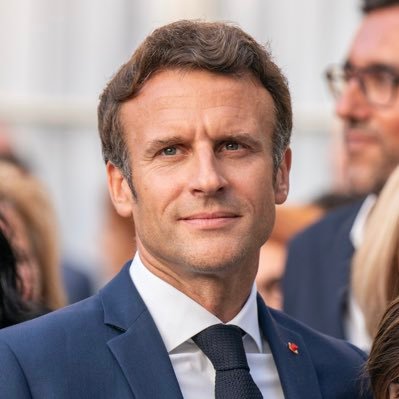
I spoke today with Iranian President Massoud Pezeshkian, as well as with U.S. President Donald Trump.
I told both of them that their decision to accept a ceasefire was the best possible one.
I expressed my hope that the ceasefire will be fully respected by each of the belligerents, across all areas of confrontation, including in Lebanon. This is a necessary condition for the ceasefire to be credible and lasting.
It must open the way to comprehensive negotiations capable of ensuring security for all in the Middle East.
Any agreement will have to address the concerns raised by Iran’s nuclear and ballistic missile programs, as well as its regional policy and its actions obstructing navigation through the Strait of Hormuz.
This is how a strong and lasting peace can be built, with the support of all those who are able to contribute to it. France will play its full part, in close coordination with its partners in the Middle East.
This is also what I discussed today in my exchanges with the leaders of Qatar, the United Arab Emirates, Lebanon, and Iraq.
Louis Dugit-Gros لوي دوجيه-غرو retweeted
Je viens de m’entretenir avec le Président libanais Joseph Aoun ainsi qu’avec le Premier ministre Nawaf Salam.
Je leur ai exprimé la pleine solidarité de la France face aux frappes indiscriminées menées par Israël au Liban aujourd’hui, qui ont fait de très nombreuses victimes civiles. Nous les condamnons avec la plus grande fermeté.
Ces frappes menacent directement la pérennité du cessez-le-feu qui vient d’être conclu. Le Liban doit impérativement en faire partie.
J’ai redit la nécessité de préserver l’intégrité territoriale du Liban et la détermination de la France à soutenir les efforts des autorités libanaises en faveur de la souveraineté du pays et de la mise en œuvre du plan de désarmement du Hezbollah.
Louis Dugit-Gros لوي دوجيه-غرو retweeted

#عاجل | ماكرون:
📌أستنكر بأشد العبارات الممكنة الضربات الإسرائيلية على لبنان
📌أجدد التأكيد على ضرورة الحفاظ على وحدة أراضي لبنان
