





Honam Wong retweeted

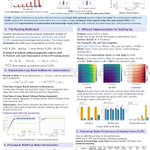
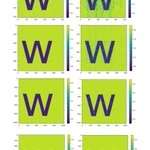
Can we distill few-step AR video models without DMD?
Yes! We analyze why AR FlowMap distillation fails and fix it, matching 14B DMD models using only a 1.3B AR teacher while preserving diversity.
Project page: enkeejunior1.github.io/ar-vi…
Paper: arxiv.org/abs/2611.31164
🧵 (1/n)


I’m actually confused, in 2023/2024 people say better perplexity / val loss does not necessarily lead to better downstream performance, why people are bringing this up again
4
24
5,512
Honam Wong retweeted

New post: LMs transmit reward hacking propensity in the wild
Hidden signals in Claude's short chat data make LMs hack on long-horizon tasks. Newer LMs spread more hacking despite better alignment scores.
To stop this, we fix the "bug" in a discredited tool: Influence Function.
Honam Wong retweeted

What China’s AI researchers are building, testing, and debating.
We bring in-depth technical analysis from Zhihu, China’s knowledge-sharing community, to readers around the world.
What you’ll find here:
• Technical breakdowns of new models from Chinese labs: model design, training choices, and engineering trade-offs.
• Hands-on reviews and critical evaluations: what works, where models fall short, and why.
• Perspectives from researchers: real conversations with the people behind the models and tools.
We credit the original Zhihu contributors and link to their work.
We’re also connecting researchers through Zhihu’s AI Researcher Club.
The program offers research spotlights, interviews, Paper Talks, and community events to help researchers share their work and find collaborators. Selected projects may also receive compute resources and funding support from @SoTALab_AI.
Have research to share or researchers to recommend?
📝 Apply (CN): rcnmkynuc7as.feishu.cn/share…
👥 Recommend a researcher (CN): rcnmkynuc7as.feishu.cn/share…
🔗 Explore the full program (CN): rcnmkynuc7as.feishu.cn/wiki/…
New here? Start with a selection of our technical deep dives and reviews in the replies. ⬇️


Honam Wong retweeted

Although academia has a lot of now useless virtue signaling, it is still filled with passionate, hardworking people. I'm thankful in a way, for me, AI has just made clear what was already devoid of meaning. This is a good time to reevaluate what is really important to you.
Honam Wong retweeted

Strengths: Clear and easy to follow, solves an interesting problem
Weaknesses: The method seems to only work for the Riemann Zeta function. Have the authors considered an ablation using other analytic functions? A convincing rebuttal here would raise my Soundness score
Honam Wong retweeted

We fully support OpenAI's transparency initiative. Thanks to @merettm @markchen90 @gdb @sama for leading the way.
We all got into this field to build safe AGI that is genuinely good for humanity. One of the hardest parts of AI safety is coordination, and this is a step in the right direction. Many more steps like this will be needed to deliver safe, contained, and aligned AGI in the next few years.
We're committed to sharing our pre-training progress on a common held-out evaluation set. With OpenAI's permission, we report MAI-2 Base on their evaluation set. Its log-perplexity is 0.819, putting it in the same ballpark as the GPT-5.6 Sol base model. Our model uses the same tokenizer as OpenAI, so the numbers are directly comparable.
In the future, to be able to compare across labs we might need to report bits-per-byte (BPB) rather than perplexity since different labs use different tokenizers. We will also need different evaluation datasets - the fact we have access to OpenAI's evaluation dataset is a special case.
Safety and alignment is now the mission. It's the absolute number one most important focus for our industry. And it begins with small, practical steps like these towards better coordination on pacing.


We decided to provide more transparency into pretraining progress at OpenAI for the sake of moving toward shared safety bars. In “Perplexity and Intelligence” I argue for common limits based on perplexity and other measurements, with progress beyond them gated on our ability to understand AI behavior.
openai.com/index/perplexity-…

Honam Wong retweeted

We decided to provide more transparency into pretraining progress at OpenAI for the sake of moving toward shared safety bars. In “Perplexity and Intelligence” I argue for common limits based on perplexity and other measurements, with progress beyond them gated on our ability to understand AI behavior.
openai.com/index/perplexity-…
Honam Wong retweeted

I seriously think US open-weight models wouldn't be this good without Chinese open-weight models and vice versa.
And proprietary models wouldn't be this good (and cheap) without open-weight models.
Competition is a good thing.

The monitorability part looks interesting

Some of you thought that Inkling 2 Small was too big at 594B parameters. We heard you: Inkling 2 Mini is a looped transformer with just 26B parameters, small enough to run on your laptop, powerful enough for agentic work with a score of 20.1 on AA Index.
thinkingmachines.ai/news/ink…

5
539
Honam Wong retweeted

Detaining a PhD student on her way back to Princeton from presenting scientific work at a conference is not how we get the best and brightest scientists in the world to want to come to the US. I hope this is resolved quickly! More details:
dailyprincetonian.com/articl…

Honam Wong retweeted

we have a (new) pretraining feature that lets you do autoresearch on top of @karpathy's nanochat scaling ladder on a few nodes but also launch jobs on thousands of gpus with automatic recovery
love how beautiful these scaling plots look even at very small scale


Honam Wong retweeted

Our colleague Eva Yi Xie, a Princeton neuroscience PhD student, was detained by ICE at Reagan National Airport on her way home from SfN, where she’d just presented her poster. She’s being held in Chantilly, VA. Please help us bring her home. 📷


Honam Wong retweeted

On-policy distillation (OPD) is now a core part of LM post-training. But there exist many OPD objectives, and it's not always clear which one to choose.
We shed light on this question by theoretically analyzing how this choice affects what the student learns and how fast.
🧵

To make inference cheap, people either distill a large model into a small one or train a small model far past the Chinchilla-optimal token budget. But a small model has limited capacity. Is there work that characterizes how far (the limitation of) distillation or overtraining can push a small model?
5
11
1,190
Honam Wong retweeted

We're sharing new data on how AI is changing research at OpenAI.
We find researchers' AI use continues to rise exponentially, and agents are completing longer tasks, but human involvement remains central in research. Researchers are also spending more time on safety and alignment, with human effort in these areas growing faster than in any other individual research area.
This report aims to increase transparency around research acceleration and inform the governance of increasingly capable AI. We believe that AI labs should be required to track and publicly report indicators of recursive self-improvement (RSI): the process by which AI accelerates the development of future AI systems.
Our hope is that this expanded report will help sustain and advance shared measurement norms across the industry.
openai.com/index/research-ac…

Could be personal opinion, but research should be forward-looking instead of just doing what is popular currently

Honam Wong retweeted

I'm amused by the situation I'm in right now. Pulled a 3-nighter to prepare ICLR rebuttal for the paper I like the most, trying to defend AI bs reviews.
wait for 10 days, no reply at all. dead silence
AC does not even leave a message.
yea I'm not playing this dumb game anymore
Wondering what architecture did OpenAI use ?


We also evaluated how many serial reasoning steps GPT-6.2 Astra can do in a single output token (without chain of thought). It can perform 12.3 steps, versus 10.5 for GPT-6 Astra and 8.6 for GPT-6.1 Sol, the previous highs. We measure the number of steps models can perform at an accuracy of 25% above chance, where each step is normalized for complexity.
Before GPT-6 Astra’s release, the most capable model was Claude Fable 5.1, which is able to perform only 4.2 serial steps. The oldest model we assessed is Claude Opus 3, which performed 2.3 steps.
This capability is notable because models that can do complex reasoning without any chain of thought may be harder to monitor.
We hope to finalize this and other measurements of more abstract model capabilities, and release them in the coming weeks.

ALT Scatter chart of serial reasoning steps in a single output token versus SimpleQA Verified score. GPT-6.2 Astra is highest at about 12 steps, followed by GPT-6 Astra at about 10.5 and GPT-6.1 Sol at about 8.6; most other models are below 6.
1
5
967