






At #SHOCKUK26, Professor Lüscher will explore Cardiometabolic Considerations and joins the discussion: Has recent evidence changed everyday management of cardiogenic shock?
But how do we translate emerging evidence into practice, particularly in a condition as complex as cardiogenic shock?
From scientific discovery to clinical practice: how do we turn evidence into better outcomes?
With over 2,000 publications and 250 scientists mentored, Prof Thomas F. Lüscher has helped shape cardiovascular medicine.

What does this variation tell us about how UK shock care should be organised?
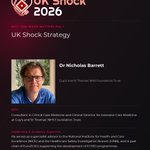
At #SHOCKUK26, Dr Nicholas Barrett, Past Chair of EuroELSO, will explore UK shock strategies.
Yet ECPR use varied between ECMO centres - some centres had low ECPR volumes but good outcomes.
What is the optimal number of ECPR cases for a centre? Is there a minimum volume needed to maintain expertise, or do systems, patient selection and speed to treatment matter more?
Can ECPR transform outcomes after cardiac arrest - and what does it tell us about UK shock care?
A UK multicentre study co-authored by Dr Barrett examined 2,117 VA-ECMO patients, with 963 surviving at six months. Within this cohort, there were 302 ECPR runs and 92 survivors.

When we support the circulation during high-risk PCI, does that translate into better outcomes?
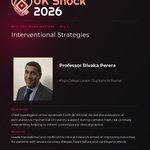
At #SHOCKUK26, CHIP-BCIS3 chief investigator Professor Divaka Perera will take us through interventional strategies in cardiogenic shock.

CHIP-BCIS3 raises an important question: can we better identify patients most likely to benefit from mechanical support?
At #SHOCKUK26🫀, chief investigator Professor Divaka Perera will take us through interventional strategies in cardiogenic shock.
Routine unloading did not improve the primary hierarchical endpoint.
The mechanistic substudy found that unloading reduced inotrope use but did not improve cardiac index, filling pressures or post-PCI myocardial stunning.
Does routine mechanical support during high-risk PCI improve outcomes?🤔
CHIP-BCIS3, led by Professor Divaka Perera, randomised 300 patients with EF ≤35% and extensive coronary disease to elective Impella CP support or standard care.
Got a case, project or research you want to share?
Bring it to SHOCK 2026.
Trainee, researcher or clinician, if you’re working in cardiogenic shock, ECMO or mechanical circulatory support, we want to hear from you.
Get your abstract in 👇

When conventional CPR fails, can ECMO change the outcome?
Prof Demetris Yannopoulos has been at the forefront of ECPR research, including the landmark ARREST trial.
Pleased to welcome him to UK SHOCK 26.
#ECPR #ECMO #CardiacArrest #CardiogenicShock

Cardiogenic shock: we’ve come a long way, but there are still more questions than answers.
Looking forward to some interesting discussions at SHOCK 2026.

At #SHOCKUK26🫀, Professor Moonesinghe will explore the role of national networks in transforming critical care.
But what actually improves outcomes at population level?🤔🤔
More beds, transfer networks 🚑and training matter - but only if they translate into better care for patients.
The challenge is understanding what works, and how to make it work reliably at scale.
Afterwards, she led NHS England’s critical care transformation programme, which increased critical care bed capacity by 25%, established regional adult critical care transfer services and expanded intensive care training across the workforce.
Professor Ramani Moonesinghe provided national clinical leadership during that response, including securing £10 million to support the mental health and wellbeing of the critical care community.
How do you change critical care across an entire health service?
During COVID-19 pandemic, critical care had to rapidly expand capacity while facing shortages of staff, equipment and medicines 😐- and limited knowledge of a new disease🤒.

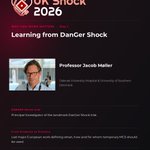
At #SHOCKUK26🫀, DanGer Shock Principal Investigator Professor Jacob Møller will take us beyond the primary endpoint and explore what this landmark trial means for the next generation of cardiogenic shock care.