

UPSC – Making Top Quality GEOGRAPHY accessible | Geography Optional | Environment | Mapping | 👇 https://teapaw.org/t.co/epnPMsc2ia
Hyderabad
Joined January 2013
- Tweets2.4K
- Following343
- Followers14.6K
- Likes903






Delhi AQI is crossing 400+, and UPSC aspirants are literally trading their lungs for a rank. 🫁
Is it worth moving to Old Rajender Nagar/Mukherjee Nagar and prepare for UPSC ?
#UPSC #DelhiPollution #IAS
22%YES
78%NO
45 votes • Final results 5
775
Which Indian river is known as the Dakshin Ganga?
8%Krishna
75%Godavari
17%Kaveri
0%Mahanadi
76 votes • Final results 3
553
Giving away a set of essential UPSC prep books & NCERTs to a deserving aspirant who genuinely needs them. 📚
If you are an aspirant or you know someone who could benefit from these,
Reply with what you need and a brief note on how it will support your preparation.
Credits to @DC_Chirps – at New Delhi, India


Which soil is commonly found in the Indo-Gangetic Plains?
3%Laterite soil
1%Black soil
91%Alluvial soil
5%Red soil
77 votes • Final results 2
608
Which of the following rocks is formed by the cooling and solidification of magma?
15%Limestone
69%Granite
11%Shale
6%Sandstone
54 votes • Final results 4
565
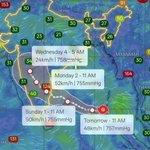
Another Tropical depression is in the pipeline! 🌀 Stay alert and get ready, Andhra Pradesh and Telangana.
Get ready for a decent spell of Rains..
Keep safety measures in place as conditions develop. 🌧️

3
431
Which of the following landforms is most commonly associated with a river in its youthful stage?
7%Natural levees
13%Ox-bow lakes
71%V-shaped valleys
9%Extensive floodplains
45 votes • Final results 5
546
Black soil in India is most suitable for the cultivation of which crop?
6%Coffee
4%Tea
83%Cotton
7%Jute
54 votes • Final results 4
492

Which of the following rivers is known as the ‘Vridha Ganga’ (Old Ganga)?
60%Godavari
5%Krishna
18%Kaveri
17%Narmada
117 votes • Final results 5
863
Which one of the following is NOT a depositional landform of a river?
9%Alluvial fan
11%Natural levee
19%Point bar
62%Gorge
47 votes • Final results 2
534
1. The ocean produces more than 50 percent of the air we breathe.
2. Humans have only explored 5 percent of the world’s oceans. But humans have impacted every part of the ocean with waste and chemical pollution.
3. Animals living in the bathypelagic zone or deeper never see sunlight. (Some organisms living there, such as vampire squid and humpback anglerfish, produce their own light).
4. More than 99 percent of Earth’s inhabitable space is in the open ocean.
5. The ocean is divided into five zones:
(i)Epipelagic zone
(ii)Mesopelagic zone
(iii)Bathypelagic zone
(iv)Abyssopelagic zone
(v)Hadopelagic zone
6. Oceans cover more than 70 percent of the Earth’s surface, and half of those waters are at least 3 km deep.
7. The ocean is 11,000 m deep at its deepest point. On average, the ocean is about 3,688 m deep.

Which one of the following landforms is most characteristic of limestone regions?
7%Mushroom rock
71%Sinkhole
5%Barchan
17%Drumlin
42 votes • Final results 5
845
UPSC preparation teaches you more than facts and concepts. It teaches patience, resilience, and the courage to begin again.
Stay sincere in your efforts, calm in your approach, and kind to yourself along the way.
2
25
981
Which one of the following is most directly associated with a subduction zone?
23%Mid-ocean ridge
54%Deep-sea trench
23%Rift valley
0%Transform fault
35 votes • Final resultsDear aspirant,
Give yourself the same patience you give your preparation.
Growth takes time, and every honest effort is a step forward.
13
611
