


mtv retweeted

One more dawn. One more day.
The second launch attempt of #Artemis I is happening tomorrow!


mtv retweeted

It takes a googol years for a supermassive black hole to decay. How long is that?
If you had an hourglass w/ a grain of sand for every particle in the universe, and 1 grain fell every 10 billion years, when it ran out you’d be < 1% thru the black hole’s life.
h/t @Kurz_Gesagt
mtv retweeted

FULL DURATION 20 second stage test complete! Reviewing data and if all looks good, on to full flight duration test before LAUNCH. We are the first company to ever do this on launch mount at Cape Canaveral, and on track to be the first oxygen/methane rocket launched to orbit 👾🇺🇸


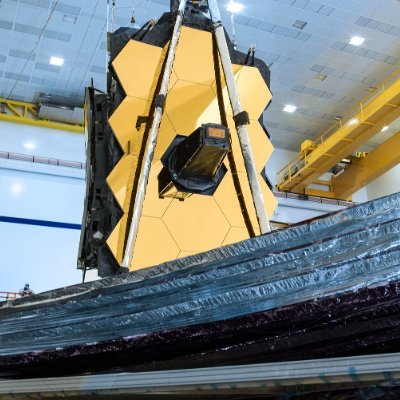
#JamesWebb micro meteroid colission inflicted surprisingly severe damage according to @NASA
Why god damn it im going to kill someone :@:@:@
1
mtv retweeted

HOT FIRE! SLS SRB (FSB-2) test - a five segment booster - begins!
Livestream:
youtube.com/watch?v=GCyEjZEr…
mtv retweeted

53 years ago today #Apollo11 inspired a generation that we could do great things. Despite the myriad of challenges we face today, I truly believe we still have the capacity to solve them.

mtv retweeted

The sun this morning 17th July, showing tge area around active region 3055.
Esprit 100 and Quark CS.
#solar #astrophotography #space #astronomy #astro

mtv retweeted

I can't stop flipping back and forth between the Hubble and James Webb Space Telescope images of the Carina Nebula. In the Hubble image the dust is just this wall that looks solid, and JWST has revealed the structure in that dust that has remained hidden for so long.


mtv retweeted
👀 Sneak a peek at the deepest & sharpest infrared image of the early universe ever taken — all in a day’s work for the Webb telescope. (Literally, capturing it took less than a day!) This is Webb’s first image released as we begin to #UnfoldTheUniverse: nasa.gov/webbfirstimages/

ALT The background of space is black. Thousands of galaxies appear all across the view. Their shapes and colors vary. Some are various shades of orange, others are white. Most stars appear blue, and are sometimes as large as more distant galaxies that appear next to them. A very bright star is just above and left of center. It has eight bright blue, long diffraction spikes. Between 4 o’clock and 6 o’clock in its spikes are several very bright galaxies. A group of three are in the middle, and two are closer to 4 o’clock. These galaxies are part of the galaxy cluster SMACS 0723, and they are warping the appearances of galaxies seen around them. Long orange arcs appear at left and right toward the center.