

Physiology & Metabolism Researcher, PhD | Performance Director at Salomon | Exploring 120 & Exolactate | Dreaming at @glut4science & @methub_es
Joined May 2011
- Tweets9.9K
- Following928
- Followers9.9K
- Likes11.2K







Pinned Tweet
Is Exogenous Lactate the "Holy Grail" of sports fuelling?
For years, we’ve been focused on >120g/h CHO intake. But how can we explore new limits?
Lactate is not a waste. It´s the most efficient and preferential fuel in the human body.
A thread on the next metabolic frontier🧵
Que orgullo verte crecer de esa manera, Jan!

Jan Torrella lidera una gran actuació catalana a la Sobrescobio Skyrace 2026
El català acaba segon a la prova reina, mentre Biel Sagués, primer júnior, i Laia Calzada, segona sub-23, destaquen a la final del Trofeo Esteban Olivero
➕INFO➡️ tuit.cat/v4l84

Aitor Viribay retweeted

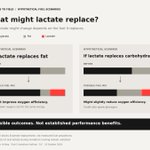
El cuerpo tiene un límite de consumo de O₂.
Los CHO generan más energía por litro de oxígeno que las grasas.
Si añadimos lactato y sustituye parte de la grasa, podríamos producir más energía con el mismo O₂ y mantener el ritmo más tiempo.
#Economia

What still limits a sub-2 marathon? And could a second fuel move it?
I wrote a technical analysis on running economy, durability and exogenous lactate. It has more questions than answers, on purpose. 🧵

That value has never been measured.
How much ingested lactate is oxidised at race pace? Can the gut take 125–140 g/h of fuel? Do PDH, H⁺ buffering and brain uptake push α towards fat?
A ¹³C-lactate tracer study would tell us.

This is a model (dreaming question really) not a prediction. It´s now on us to find the right answer to this, and we are already on it!! Thanks for reading :)
Full analysis 👇
flf.shop/blogs/journal/sub-2…

Fascinating!

Adults with mitochondrial disease burned about 195 more calories a day than healthy controls in a metabolic chamber, while moving 26% less. Yet over 10 days of normal life, their total energy expenditure looked the same as everyone else's.
A new study in Cell Press Blue, led by Evan Shaulson and Martin Picard @MitoPsychoBio at Columbia University, suggests the extra cost is real. It just gets hidden because people with these defects move less.
The study compared 10 adults with mitochondrial disease to 10 healthy controls of similar age, sex, height, and BMI.
Mitochondria carry their own small set of DNA, separate from the DNA in your cell nucleus. All 10 patients had a confirmed mutation in that mitochondrial DNA. Five had a single letter change in the genetic code (the m.3243A>G mutation). Five were missing a large chunk of the DNA entirely (a single large deletion).
Different mutations, same problem. Both damage oxidative phosphorylation, or OxPhos, the final stage of energy production where mitochondria use oxygen to make most of your ATP.
The question was simple. If the cell's energy machinery is damaged, does the whole body burn less energy, more, or the same?
Answering it is harder than it sounds, because a single measurement can mislead. So the researchers measured each person three different ways:
1. Resting energy expenditure for one hour, fasted, lying still.
2. A 23 hour stay in a whole-room calorimeter (an airtight room that measures oxygen use and CO2 output) with fixed meals, fixed lights-out, and hourly blood draws.
3. Ten days of free living, using doubly labeled water (you drink water tagged with two isotopes, and how fast they leave your body reveals total energy burned).
The findings were fairly insightful:
• Resting energy expenditure did not differ between groups (+19 kcal/day, p = 0.989), after adjusting for fat-free mass (everything in the body that isn't fat).
• In the chamber, 24 hour expenditure was higher in mitochondrial disease by 195.5 kcal/day (p = 0.016). The gap held across day and night.
• Wrist acceleration was 26% lower in patients, yet energy spent per unit of movement was 58% higher.
• During sleep, patients burned 116.7% of their resting rate versus 102.3% in controls. Heart rate variability (a marker of how well your nervous system shifts into recovery mode) was 58% lower.
• In free living, total daily expenditure was similar (p = 0.48), but patients moved 39% less.
• Plasma GDF15, a stress hormone made by cells under mitochondrial strain, was about 4.6 times higher in patients (1,840 vs 404 pg/mL). C-reactive protein, an inflammation marker, was 301% higher.
So what's happening here?
Think of a car with a worn engine. It burns more fuel per mile. If the driver cuts back on trips, the monthly gas bill looks normal, but the engine is still inefficient.
Mitochondrial defects seem to be raising the energetic cost of living, and the body appears to balance the budget by lowering voluntary activity.
This fits the constrained energy model, which holds that total daily expenditure stays within a narrow range because activity and other costs trade off against each other.
GDF15 is the candidate messenger. It acts on a receptor called GFRAL, found only in the brainstem, and in other settings it causes malaise, suppresses appetite, and reduces activity. In this study, higher GDF15 tracked with disease severity, fatigue ratings, higher energy cost per unit of movement, higher sleep expenditure, and lower free-living activity.
Some things to take into consideration:
The sample is 10 per group, with two different mutation types pooled together.
Wrist accelerometers capture movement poorly, and the energy measure includes non-movement costs like inflammation, so the study can't say how much of the extra cost is muscle inefficiency.
The chamber was a strange place to sleep, with an IV line and sensors, and both groups burned more than expected at night.
Patients also ate only 95% of their measured expenditure versus 107.5% in controls, so their lower fat burning in the chamber could reflect a calorie deficit and not the mutation.
The GDF15 data are correlations across a case-control gradient. They can't show whether GDF15 causes the inactivity, or whether inactivity, symptoms, and GDF15 all follow from the disease. Proving that would take trials that block the pathway, and the team recommends caution because GDF15 may be a useful energy-sensing signal.
For patients, the findings point to managing the downstream costs: sleep problems, anemia, heart and lung dysfunction, and psychological stress. They also suggest exercise may help partly by lowering the energy cost of everyday movement. That is an interpretation, supported by earlier training studies in this population.
There is a broader question for the rest of us. This was a rare disease, and these patients carried mutations in most of their mitochondrial DNA copies. Healthy aging looks nothing like that. But some of the same pieces show up as we get older, and what follows here is my extrapolation, not something the study tested.
• Mitochondrial DNA damage accumulates with age, though at much lower levels than in disease.
• GDF15 rises steadily with age, and in large cohorts it is one of the strongest blood predictors of mortality and age-related disease.
• Older adults tend to spend more energy per step when walking, and fatigue and falling activity are among the earliest signs of functional decline.
If mitochondrial strain raises the cost of living even modestly, and the body responds by quietly cutting activity through a signal like GDF15, that could be one route by which aging becomes self-reinforcing. Less movement means less muscle and fewer mitochondria, which raises the cost of the next trip. A hidden energy tax would be hard to see in a resting test, and most people would just call it getting older.
Training is the best-supported way to improve mitochondrial function and lower the cost of movement, and the case for staying active gets stronger if the brake is partly biological and not just motivational. Any drug aimed at GDF15 or its receptor is years from clinical use, and blocking an energy-sensing signal could carry risks.
The broader lesson is about measurement. A one hour resting test missed the problem entirely. Only the full day in the chamber exposed it, and only the free-living data showed how behavior hides it. Fatigue may be less a failure of motivation than a response to an energy bill the body can't afford.

Aitor Viribay retweeted

En 2020 Aitor Viribay (@MVAitor) publicaba su primer artículo en Fissac.
Entonces, ingerir 120-150 g/h de carbohidratos era poco habitual. Hoy se ha normalizado.
6 años después, llegará un nuevo artículo suyo.
Mientras, recuperamos aquel primero 👇
fissac.com/ingesta-de-hidrat…

Aitor Viribay retweeted

New in @PhysRep
Altitude thresholds for hemoglobin and plasma volume regulation in adult residents of different altitudes and their impact on hemoglobin concentration
physoc.onlinelibrary.wiley.c…

Aitor Viribay retweeted

"I take 80 grams in T1. Then approximately 160 grams per hour on the bike, and a little lower on the run, around 100. We’ve been pushing up, up, up, at the same time as the power is going up and the pace is going up."
Gustav Iden, 2nd place at the Ironman World Championship
Aitor Viribay retweeted

I was thinking how little research has been done on durability/physiological resilience in XC skiing. Fun fact: the first study on this topic may have been in XC skiing! In 1963, Åstrand et al. reported decreased VO2max and max workload after 85k race.
doi.org/10.1152/jappl.1963.1…

Thank you very much for the mention, India.
Why does the Kona marathon make or break athletes?
220triathlon.com/news/kona-m…

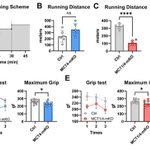
Today was a day to digest the paper I shared yesterday and to bring down all the information. To be honest, it just started.
This figure is so interesting. No lactate into the muscle meant no exercise capacity.
Thanks for the help @borjammt
journals.physiology.org/doi/…

New study describing the role of Lactate through its transporters MCT1 and MCT4 in muscular function.
journals.physiology.org/doi/…

Aitor Viribay retweeted

The greatest of all time is the fastest ever on the streets of Melbourne. 🥹❤️
Eliud Kipchoge wins the @melbmara in a new course record of 2:09:10.
#EliudsRunningWorld


