

Relive history, one magazine cover at a time.
USA
Joined March 2026
- Tweets1.7K
- Following53
- Followers180
- Likes108
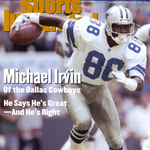




Sports Illustrated Magazine- October 25th, 1993
Michael Irvin
📸John Biever
✍️Sally Jenkins
The cover is significant mainly as a marker of Irvin’s rise to national celebrity status during the peak of the Dallas Cowboys’ 1990s dynasty.
The cover photo came from their October 17, 1993 win over the 49ers (26-17) at Texas Stadium—a high-profile matchup between contenders.

The headline “He Says He’s Great — And He’s Right” directly played on (and validated) Irvin’s famously brash, outspoken style. By fall 1993, the cover was cited as evidence of his growing marketability—alongside national ads, a Pro Bowl nod, and his own TV show. Contemporaneous coverage noted that while Jerry Rice had superior career numbers, Irvin better captured fans’ imaginations.
Irvin was a core member of “The Triplets” (with Troy Aikman and Emmitt Smith). The Cowboys had won Super Bowl XXVII the previous season (Irvin had a strong game) and would win Super Bowl XXVIII after the 1993 season.
Irvin (nicknamed “The Playmaker”) embodied the loud, confident identity of the Jimmy Johnson-era Cowboys as they reclaimed dominance. The cover and Sally Jenkins’ accompanying profile (“The Mouth That Roars”) highlighted his background, hunger, and larger-than-life presence.
xitter.cf/DakMuse4/status/204420…

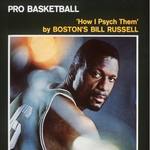
Sports Illustrated Magazine- October 25th, 1965
Bill Russell
📸Robert Huntzinger
✍️Bill Russell & Bob Ottum
Russell had already won NCAA titles, an Olympic gold medal, multiple NBA championships, and MVP awards, yet this was his debut on the cover of the country’s leading sports magazine.

In this first-person piece, Russell explains the psychological side of his game—how he and the Celtics used mind games to gain an edge. He frames it as a kind of master’s thesis on the psychology of basketball and outlines four “Russell’s Laws” he lived by:
Make the other player do what you want. Force him to think instead of react. If he’s thinking, he’s already lost, because basketball happens too fast for deliberation (“In the amount of time it takes to think through that semicolon, it is already too late”).
Have the killer instinct. Spot and exploit a weakness. (“If you sometimes wonder if you’ve got it, you ain’t got it. No pussycats, please.”) He notes practical tricks like testing rookies—if you score on one and he attributes it to your reputation, you own him.
Be cute but not cuddly. Stay polite most of the time, but don’t hesitate to use physical force (e.g., an elbow) as a last resort. This is “forceful psychology.”
Basketball is a game of habit. Once a player develops habits, disrupt them through psyching and you’ve got him.
He acknowledges that psychology doesn’t always work (citing Wilt Chamberlain brushing off attempts with something like “Don’t give me that old psych, baby”) and that the key is knowing whom and when to target.
xitter.cf/NBA/status/15545199015…

Sports Illustrated Magazine- October 23rd, 2006
Lebron James & Carmelo Anthony & Dwyane Wade
📸Walter Iooss Jr.
✍️Chris Ballard
The piece framed the 2006–07 season as the start of a generational handoff. These three young stars (LeBron at 21, Melo at 22, Wade at 24), all top-five picks from the same draft and already close friends who had played together on the U.S. national team that summer, were ready to take over from the previous generation of stars.

Wade’s post-title year: Coming off the 2006 championship and Finals MVP, he averaged 27.4 points, 4.7 rebounds, and 7.5 assists in 51 games (All-NBA Third Team) but was limited by injuries. The defending champion Heat finished 44–38 and were swept in the first round by the Bulls.
LeBron’s breakthrough playoff run: Averaged 27.3 points, 6.7 rebounds, and 6.0 assists in 78 games (All-NBA Second Team) and led the Cavaliers (50–32) to their first Finals. He had a legendary 48-point closeout performance against Detroit in the East Finals before the Cavs were swept by the Spurs.
Melo’s scoring surge: Averaged a career-high 28.9 points (2nd in the NBA), 6.0 rebounds, and 3.8 assists in 65 games (All-NBA Third Team). The Nuggets made the playoffs but lost in the first round to the Spurs (1–4).
xitter.cf/NBATV/status/127650046…

⭐️ LeBron James
⭐️ Carmelo Anthony
⭐️ Chris Bosh
⭐️ Dwyane Wade
#OTD in 2003, the NBA welcomed these iconic players into the league!
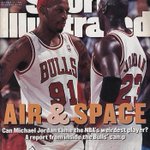
Sports Illustrated Magazine- October 23rd, 1995
Michael Jordan & Dennis Rodman
📸John W. McDonough
✍️Phil Taylor
The cover examines the Bulls’ early-October trade that sent Will Perdue to the San Antonio Spurs for the eccentric, four-time NBA rebounding champion Rodman.

Jordan had retired in 1993 to play baseball, then returned late in the 1994–95 season. The 1995–96 season was his first full campaign back in the NBA. The cover captured him at the start of that season, still building toward reclaiming his dominance after the baseball interlude and a playoff loss to the Orlando Magic the previous spring.
Just weeks earlier (October 2, 1995), the Bulls had traded for Rodman. He was viewed as a high-risk, high-reward addition—one of the best rebounders and defenders in the league, but also one of its most unpredictable personalities. The cover headline (“Can Michael Jordan tame the NBA’s weirdest player?”) framed the central question of the Bulls’ camp.
The trio of Jordan, Scottie Pippen, and Rodman became one of the most dominant and iconic groups in sports. The “Air & Space” framing (Jordan’s scoring/athleticism + Rodman’s rebounding/defense) perfectly captured the complementary skill sets that made the team nearly unbeatable.
xitter.cf/AbokwaraCHRIZ/status/2…

🚨 Jordan Demanded Him. The League Said No.
Dennis Rodman was a rebounding and defensive genius, but also a walking headache. Wild personality, off-court chaos, and attitude issues made most teams run the other way after Detroit and San Antonio.
Except Michael Jordan.
Jordan specifically pushed the Bulls to get him in 1995. He saw the dog who could dominate the boards and lock down opponents. The organization rolled the dice.
It paid off instantly.
Rodman led the league in rebounding, fueled one of the greatest defenses ever, and helped the Bulls go 72-10 then win three straight titles (1996-98). The perfect chaotic piece for Jordan and Pippen’s dynasty.
Everyone saw the drama. Jordan saw the winner. The rest is dynasty history.
#NBA #Basketball
Sports Illustrated Magazine- October 22nd, 2018
LeBron James
📸Andrew D. Bernstein
✍️Ben Golliver
The cover marked LeBron James’s formal arrival as a Los Angeles Laker for the 2018–19 season.

It was one of the major magazine covers announcing and framing LeBron’s high-profile free-agency move from the Cleveland Cavaliers to the Lakers.
The headline and subhead (“LeBron’s Latest (And Greatest) Challenge”) positioned the decision as a calculated risk—a “gambit.” At the time, the Lakers were a young, incomplete team that had missed the playoffs for several years, and LeBron had not landed another star co-star that summer. The West was stacked with the Warriors still dominant. The cover and Ben Golliver’s feature emphasized the difficulty of the new chapter versus his previous successes in Cleveland and Miami.
The Los Angeles Lakers finished the 2018–19 season with a 37–45 record and missed the playoffs. The year was widely regarded as a transitional, rebuilding campaign under LeBron rather than an immediate championship push.
The following offseason, the Lakers acquired Anthony Davis and went on to win the title in 2020 in the Orlando bubble.
xitter.cf/NBAPerformances/status…

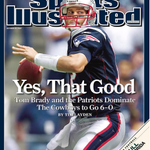
Sports Illustrated Magazine- October 22nd, 2007
Tom Brady
📸John Biever
✍️Tim Layden
This cover is an early snapshot of the 2007 New England Patriots’ historic dominance and Tom Brady’s breakout statistical season.
The cover shows Brady in action from the October 14 game against the previously undefeated Dallas Cowboys. The Patriots won 48–27 to improve to 6–0.
Cowboys coach Wade Phillips’ postgame reaction (“I guess they are that good”) inspired the cover line. By the time the issue hit newsstands, the Patriots had already beaten the Dolphins 49–28 (with Brady throwing six touchdowns) to reach 7–0.

The team finished the regular season 16–0 (the only team to go undefeated in a 16-game schedule) and reached Super Bowl XLII before losing to the Giants. They set records for points scored (589) and are widely regarded as one of the greatest teams ever assembled, despite the Super Bowl loss. The cover captured them early while they were steamrolling opponents.
At age 30, Brady elevated his game dramatically. He finished with a then-NFL-record 50 touchdown passes (along with 4,806 yards), won his first MVP, and paired with Randy Moss (NFL-record 23 receiving TDs) and Wes Welker.
Many analysts view 2007 as the season that firmly established Brady’s place in the GOAT conversation—not just as the quarterback of a great team, but as an elite statistical passer. It also helped accelerate the league’s shift toward more pass-heavy offenses.
xitter.cf/TomBradyDaily/status/2…

Sports Illustrated Magazine- October 21st, 1996
Derek Jeter
📸Al Tielemans
✍️Tom Verducci
This weekly issue is best known as Derek Jeter’s first Sports Illustrated cover. The Yankees were in the midst of their postseason run. They had advanced past the Orioles in the ALCS and would go on to defeat the Atlanta Braves in the World Series for their first title since 1978. Jeter, in his rookie season, was a key part of that resurgence (he later won AL Rookie of the Year).

Jeter was a 22-year-old rookie shortstop in 1996. He hit .314 in the regular season (with 10 HR, 78 RBI, 104 runs) and .361 in the postseason, then won the American League Rookie of the Year award unanimously.
The cover arrived amid hype about him as a potential star (comparisons to DiMaggio and others were already circulating), and it coincided with the Jeffrey Maier home-run play in the ALCS and the Yankees’ return to contention under Joe Torre.
It was the first of many SI covers for Jeter (he eventually appeared on roughly 15). In retrospect, 1996 is widely viewed as the origin story of his career — the charmed rookie season that set up five World Series rings, 3,465 hits, and first-ballot Hall of Fame induction in 2020.
xitter.cf/NYY_HR/status/18849874…

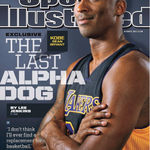
Sports Illustrated Magazine- October 21st, 2013
Kobe Bryant
📸Walter Iooss Jr.
✍️Lee Jenkins
A major profile of Bryant as he recovered from a torn Achilles tendon (suffered in April 2013). It examines his intense competitive drive, childhood influences (including a karate story from age 4), self-doubt and fears of failure, the turbulent 2012–13 Lakers season, Dwight Howard’s departure, and his framing of the comeback as “The Last Chapter.” The piece portrays him as possibly the “last alpha dog” in a more collaborative era of athletes.

Jenkins’ piece positioned Kobe as possibly the final example of a certain type of superstar—intensely driven, unwilling to share the burden, unfiltered, and showing up alone—at a time when many stars were embracing more collaborative, “superteam” models.
It also humanized him: he openly discussed self-doubt, fear of failure, physical pain, and uncertainty about how he would return from the injury, while still insisting he would “figure it out.”
It captured Kobe’s Mamba Mentality at its most reflective and vulnerable stage, rather than just the dominant prime-years version.
It tied into the broader debate about “alpha dog” leadership in the NBA—an idea frequently applied to Kobe (and earlier to players like Jordan) and sometimes contrasted with later stars.
xitter.cf/playvo_us/status/21124…

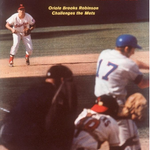
Sports Illustrated Magazine- October 20th, 1969
Brooks Robinson
📸James Drake
✍️Mark Mulvoy
This cover is a snapshot of one of the most famous upsets in baseball history: the 1969 World Series between the Baltimore Orioles and the New York “Miracle Mets.”

The 1969 World Series (October 11–16) is remembered as one of the biggest upsets in sports. The Orioles had won 109 games and were heavy favorites; the Mets were a former expansion doormat that had just become competitive. The Mets won the series 4–1, earning the nickname “Miracle Mets” and capturing the nation’s attention.
Brooks Robinson, already regarded as the greatest defensive third baseman of his era (nicknamed the “Human Vacuum Cleaner”), was the face SI chose to represent the Orioles’ challenge.
The cover positions him as the key figure standing in the way of the Mets’ improbable run. (Note: Robinson’s most legendary defensive World Series performance actually came the following year, in 1970 against the Reds, when he was named Series MVP.)
xitter.cf/nut_history/status/184…

Sports Illustrated Magazine- October 20th, 1980
Paul Westphal
📸Lane Stewart
✍️Roy S. Johnson
The cover captures the optimism surrounding a high-profile All-Star trade in the NBA preview issue. Westphal had been dealt from the Phoenix Suns to the Seattle SuperSonics for Dennis Johnson after the 1979–80 season, but injuries limited him to just 36 games with the Sonics, where he averaged 16.7 points per game.

In early June 1980, the Phoenix Suns traded All-Star guard Paul Westphal straight-up to the Seattle SuperSonics for All-Star guard Dennis Johnson (no picks or other players involved).
Westphal had been a star with the Suns (multiple All-Star appearances, led the team in scoring, known for scoring and playmaking; he had asked for a trade, partly due to differences with coach John MacLeod’s system).
Johnson was viewed as the league’s premier defensive guard (Finals MVP on the 1979 Sonics championship team) but had friction in Seattle.
It was widely seen as a win-win swap of elite guards that should strengthen both Pacific Division rivals. The Sonics, recent champions (1979) who had reached the Western Conference finals in 1980, were optimistic about adding Westphal’s offensive skills.
The season largely undercut the hype. Westphal suffered a stress fracture in his right foot that limited him to just 36 games, though he still made the All-Star team. The Sonics fell to 34-48 and missed the playoffs after years of contention.
Westphal later became a free agent and signed with the Knicks before returning to the Suns near the end of his career. Dennis Johnson, meanwhile, thrived in Phoenix and later won multiple titles with the Celtics.
xitter.cf/arhooptalk/status/1833…
