


Malleable Gold retweeted
The next phase has begun in building a bet matching engine - an exchange-style matching layer where users can post odds, take the other side, and fill available liquidity.
$102,050 has been raised in private.
Now the public pre-seed starts tomorrow 👉wannabet.you/preseed
Now, lets talk about what's already been built in the last 3 months and what's next.
What has been built
•WannaBet already has the core software for wallet-based peer-to-peer betting.
In plain English: users can connect a wallet, create a bet, have someone accept it, lock funds in USDC escrow, settle the result through a resolver system, and claim winnings or refunds back to their wallet.
The platform is currently running on Solana devnet, with funded USDC test flows, resolver-backed settlement, partial fills, wallet dashboards, homepage feeds, claims, refunds, and more than 17,000 settled devnet bets.
This is not just a UI prototype. The main backend pieces for a real-money betting platform have already been built and tested in a devnet environment.
Wallet-based betting with USDC escrow funding.
Sports, crypto, and partial-fill market infrastructure.
Resolver-backed settlement, claims, refunds, and admin tooling.
Simple version
WannaBet has already built:
• wallet-based betting
•USDC escrow funding
• peer-to-peer bet matching
• sports betting markets
• crypto betting markets
• partial-fill offers for larger bets
• resolver-based settlement
• claim and refund flows
• wallet dashboards
• homepage bet feeds
• admin health and repair tooling
• X-linked public identity
• pre-seed reservation flow
The important part: the system is built around real wallet actions and real settlement logic, not fake off-chain balances or a simulated sportsbook database.
Core betting system
WannaBet supports the full bet lifecycle all on chain:
• create a bet
• accept a bet
• cancel an unmatched bet
• lock funds in USDC escrow
• settle the outcome
• claim winnings
• claim void refunds
• track every bet from the wallet dashboard
• The wallet is the user's real account. It controls signing, ownership, claim rights, refund rights, and money movement.
The app also has separate wallet views for Open, In Play, Claims, and Resolved. That matters because users can track positions after the bet is created.
Markets already supported
Sports
• NBA winner markets
• NBA totals
• NBA team totals
• NBA spread markets
• MLB winner markets
• MLB totals
• MLB spread markets
• UFC fight-winner markets
• Crypto
• crypto threshold markets
• crypto relative-performance markets
• generic crypto market support
• Binance Spot USDT architecture for wider crypto coverage
The long-term crypto direction is not to hardcode one coin at a time forever. The architecture is moving toward a Binance Spot USDT registry, controlled activation, and policy-gated support.
Partial-fill system
WannaBet has also built partial fills. Someone can post a large bet offer, and other users can fill pieces of it instead of needing to take the whole thing.
Example:
• creator posts a $50,000 offer
• one user fills $500
• another fills $2,000
• another fills $10,000
• each fill becomes its own real child bet
• all child bets settle through the normal claim/refund system
Partial fills are not a fake UI split. They use a parent-offer and child-bet model, where each child fill keeps the same contract identity, event key, resolver family, and settlement path as the parent offer.
Settlement and resolver system
The system watches accepted bets, checks when the event or crypto market is ready to settle, verifies the bet terms, fetches the result, and moves the bet into the correct claim or refund state.
• resolver queue lifecycle
• ACTIVE, RESOLVED, VOIDED, FROZEN, and STALE states
• duplicate-settlement protection
• terminal-state reconciliation
• manual override safety
• provider mismatch checks
• recovery paths for stuck rows
• projection follow-through after settlement
• admin health routes
Contract integrity and settlement architecture
The platform is designed around the idea that both sides of a bet must be bound to the same terms.
• immutable terms payloads
• event keys
• terms-hash verification
• resolver-family based interpretation
• shared event outcome direction
• claim-time payout architecture
• fail-closed behavior when critical terms are missing or mismatched
The long-term architecture is built to avoid settling every bet one by one after an event. Instead, the target model is: finalize one event outcome once, then let many linked bets become claimable from that shared outcome.
Projection and read models
The homepage and wallet screens are backed by projection systems that turn chain and resolver truth into user-facing rows.
• homepage bet feed
• available bets
• in-play bets
• wallet bet listings
• claimability flags
• refundability flags
• projection queue
• projection repair paths
• projection freshness monitoring
• wallet latency monitoring
Operations and admin tooling
WannaBet has backend operator tooling for live system health and recovery.
• resolver health routes
• projection health routes
• projection freshness checks
• event outcome health checks
• wallet latency checks
• sports inventory sync
• crypto market admin surfaces
• projection repair routes
• queue drain and tick routes
• recovery runbooks for stale or frozen states
Product layer
WannaBet also has the user-facing product shell around the backend.
• homepage feed for available and in-play bets
• universal bet card system
• shareable bet detail pages
• shareable offer detail pages
• My Bets wallet dashboard
• X-linked public identity display
• pre-seed reservation page
• USDC transfer verification for reservations
The X identity system is intentionally narrow: the wallet remains the real account, while X is only an optional public display layer. It does not affect custody, claims, settlement, or resolver logic.
Next steps after raise:
• Build the bet-matching engine.An exchange-style matching layer where users can post odds, take the other side, and fill available liquidity.
• Improve market liquidity.Make it easier for popular games, fights, and crypto markets to attract multiple makers and takers.
• Prepare mainnet launch.Complete security review, treasury controls, monitoring, runbooks, and production checks.
• Launch paid X acquisition.WannaBet already has pre-approved X ads, so paid marketing can start immediately once the product goes live.
🤖 Made with AI

Malleable Gold retweeted

I can personally guarantee this is a PHENOMENAL opportunity

The next phase has begun in building a bet matching engine - an exchange-style matching layer where users can post odds, take the other side, and fill available liquidity.
$102,050 has been raised in private.
Now the public pre-seed starts tomorrow 👉wannabet.you/preseed
Now, lets talk about what's already been built in the last 3 months and what's next.
What has been built
•WannaBet already has the core software for wallet-based peer-to-peer betting.
In plain English: users can connect a wallet, create a bet, have someone accept it, lock funds in USDC escrow, settle the result through a resolver system, and claim winnings or refunds back to their wallet.
The platform is currently running on Solana devnet, with funded USDC test flows, resolver-backed settlement, partial fills, wallet dashboards, homepage feeds, claims, refunds, and more than 17,000 settled devnet bets.
This is not just a UI prototype. The main backend pieces for a real-money betting platform have already been built and tested in a devnet environment.
Wallet-based betting with USDC escrow funding.
Sports, crypto, and partial-fill market infrastructure.
Resolver-backed settlement, claims, refunds, and admin tooling.
Simple version
WannaBet has already built:
• wallet-based betting
•USDC escrow funding
• peer-to-peer bet matching
• sports betting markets
• crypto betting markets
• partial-fill offers for larger bets
• resolver-based settlement
• claim and refund flows
• wallet dashboards
• homepage bet feeds
• admin health and repair tooling
• X-linked public identity
• pre-seed reservation flow
The important part: the system is built around real wallet actions and real settlement logic, not fake off-chain balances or a simulated sportsbook database.
Core betting system
WannaBet supports the full bet lifecycle all on chain:
• create a bet
• accept a bet
• cancel an unmatched bet
• lock funds in USDC escrow
• settle the outcome
• claim winnings
• claim void refunds
• track every bet from the wallet dashboard
• The wallet is the user's real account. It controls signing, ownership, claim rights, refund rights, and money movement.
The app also has separate wallet views for Open, In Play, Claims, and Resolved. That matters because users can track positions after the bet is created.
Markets already supported
Sports
• NBA winner markets
• NBA totals
• NBA team totals
• NBA spread markets
• MLB winner markets
• MLB totals
• MLB spread markets
• UFC fight-winner markets
• Crypto
• crypto threshold markets
• crypto relative-performance markets
• generic crypto market support
• Binance Spot USDT architecture for wider crypto coverage
The long-term crypto direction is not to hardcode one coin at a time forever. The architecture is moving toward a Binance Spot USDT registry, controlled activation, and policy-gated support.
Partial-fill system
WannaBet has also built partial fills. Someone can post a large bet offer, and other users can fill pieces of it instead of needing to take the whole thing.
Example:
• creator posts a $50,000 offer
• one user fills $500
• another fills $2,000
• another fills $10,000
• each fill becomes its own real child bet
• all child bets settle through the normal claim/refund system
Partial fills are not a fake UI split. They use a parent-offer and child-bet model, where each child fill keeps the same contract identity, event key, resolver family, and settlement path as the parent offer.
Settlement and resolver system
The system watches accepted bets, checks when the event or crypto market is ready to settle, verifies the bet terms, fetches the result, and moves the bet into the correct claim or refund state.
• resolver queue lifecycle
• ACTIVE, RESOLVED, VOIDED, FROZEN, and STALE states
• duplicate-settlement protection
• terminal-state reconciliation
• manual override safety
• provider mismatch checks
• recovery paths for stuck rows
• projection follow-through after settlement
• admin health routes
Contract integrity and settlement architecture
The platform is designed around the idea that both sides of a bet must be bound to the same terms.
• immutable terms payloads
• event keys
• terms-hash verification
• resolver-family based interpretation
• shared event outcome direction
• claim-time payout architecture
• fail-closed behavior when critical terms are missing or mismatched
The long-term architecture is built to avoid settling every bet one by one after an event. Instead, the target model is: finalize one event outcome once, then let many linked bets become claimable from that shared outcome.
Projection and read models
The homepage and wallet screens are backed by projection systems that turn chain and resolver truth into user-facing rows.
• homepage bet feed
• available bets
• in-play bets
• wallet bet listings
• claimability flags
• refundability flags
• projection queue
• projection repair paths
• projection freshness monitoring
• wallet latency monitoring
Operations and admin tooling
WannaBet has backend operator tooling for live system health and recovery.
• resolver health routes
• projection health routes
• projection freshness checks
• event outcome health checks
• wallet latency checks
• sports inventory sync
• crypto market admin surfaces
• projection repair routes
• queue drain and tick routes
• recovery runbooks for stale or frozen states
Product layer
WannaBet also has the user-facing product shell around the backend.
• homepage feed for available and in-play bets
• universal bet card system
• shareable bet detail pages
• shareable offer detail pages
• My Bets wallet dashboard
• X-linked public identity display
• pre-seed reservation page
• USDC transfer verification for reservations
The X identity system is intentionally narrow: the wallet remains the real account, while X is only an optional public display layer. It does not affect custody, claims, settlement, or resolver logic.
Next steps after raise:
• Build the bet-matching engine.An exchange-style matching layer where users can post odds, take the other side, and fill available liquidity.
• Improve market liquidity.Make it easier for popular games, fights, and crypto markets to attract multiple makers and takers.
• Prepare mainnet launch.Complete security review, treasury controls, monitoring, runbooks, and production checks.
• Launch paid X acquisition.WannaBet already has pre-approved X ads, so paid marketing can start immediately once the product goes live.
🤖 Made with AI
Malleable Gold retweeted
We raised $102k in the private pre-seed
Now we move onto the public pre-seed which starts in two days
👇
wannabet.you/preseed


Of 238 bets there was an average settlement time of 55 seconds.
25% of them were in under 10 seconds.
Decentralised peer to peer betting with the provable settlement time of a centralised sportsbook.
Oh, and no bet limits 🤭


Malleable Gold retweeted

Welcome @wannabetyou 💰
Your application to the @BagsHackathon has been accepted.
bags.fm/apps/9a5bdea2-8314-4…
I just applied to the $4M @BagsHackathon with my project Wanna Bet? on @BagsApp
Check it out here 👇
bags.fm/apps/9a5bdea2-8314-4…
Make a bet here: wannabet.you/create
Decide whether you want it private or public
bet on crypto, equities, sports
Decide the stake, decide the odds
1v1 betting
winner takes all
It’s time to put up or shut up


New feature added 🔥
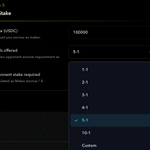
Now you can give your opponents the odds of your choosing
From 1-1 all the way to custom
People can say anything, but do they Wanna Bet?

