

Global Educator, Global Explorer, Award-winning Lecturer at ANU, Orange Cultures’ founder, Orienteer, World Top-100 Female MTBO, Twin, all views are my own.
Canberra, Australia
Joined July 2009
- Tweets2.9K
- Following1.2K
- Followers381
- Likes4.9K


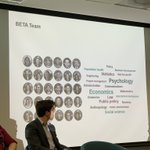


Was excellent to present our 3 the most recent projects at @AibOceania at University of Adelaide Business School with my terrific co-authors - Andrew Bradly, Dana Ott and Anna Earl. Thank you for a top leadership and a brilliant conference @HussainRammal and your Team!


Marina Iskhakova retweeted

The ANU Research School of Economics would like to proudly present our job market candidates for the 2023-2024 season. Check out their individuals profiles here: rse.anu.edu.au/research/job-…
Marina Iskhakova retweeted

🎉 Congratulations to SLLL Honorary Lecturer Dr Mandy Scott who was a nominee for the 2024 ACT Senior Australian of the Year for her work in community language learning, bilingualism and multiculturalism.
You can read more about Dr Scott's nomination here:
australianoftheyear.org.au/r…
Marina Iskhakova retweeted
Call for our Special Issue on Study Abroad/Globalizing Business Education at JIEB opens today - November, 1st 2023. You are cordially welcome to submit relevant research: emeraldgrouppublishing.com/c…

Marina Iskhakova retweeted

An excerpt of a new book on @navalny, the jailed leader of Russian opposition, by @herszenhorn, the Washington Post editor for Russia/Ukraine/Eastern Europe, does a fair job describing Alexey's attitude and positions on Ukraine: washingtonpost.com/world/202….
Navalny's moral clarity on the criminal wars against Ukraine and admiration for Ukrainian people has always been there. He has always called the annexation of Crimea illegal and has never disputed that Crimea is a lawful part of Ukraine. Navalny's imperialist thinking of "one nation" has always been accompanied by a clear statement that the 1991 borders need to be recognized. His "Crimea is not a sandwich" quote is provided with the needed context.
I have not read Herzenhorn's book yet, but I am planning to. Not looking for facts - my first newspaper column on Navalny was published in 2005, and have paid attention and stayed in touch ever since. Yet I wonder what is in the outside observer's eye. Basing on the excerpt, it is fair.

Call for our Special Issue on Study Abroad/Globalizing Business Education at JIEB opens today - November, 1st 2023. You are cordially welcome to submit relevant research: emeraldgrouppublishing.com/c…
Marina Iskhakova retweeted

Today is the Political Prisoner Day in the countries of the former Soviet Union.
On this day, please remember the ~1,500 political prisoners in #Belarus, kept in prison for fighting for freedoms and future of their country.


Being allocated with the largest Postgraduate ECON8069 Business Economics course for S1, 2024 requires some non-conventional approaches in preparation:)! @EconomicsANU

1
11
446
Marina Iskhakova retweeted
As 120 years ago, the today's pogrom in Makhachkala was fueled by antisemitic propaganda, including from Putin himself and his close subordinates such as FM Lavrov, and tacitly supported by local government. As 120 years ago, police was visibly slow to intervene.

Marina Iskhakova retweeted

Israeli bombardment of Gaza continues amid signs for the first humanitarian aid deliveries into the besieged Palestinian enclave.
🔴 Follow our LIVE coverage: aje.io/q4qx2p

Marina Iskhakova retweeted

A look into the long history of the Israeli-Palestinian conflict: trib.al/quiN8sa

Marina Iskhakova retweeted
How Israel's geography and size put it in the center of decades of conflict: trib.al/nMQMDVe

Marina Iskhakova retweeted
LATEST: About 50,000 ethnic Armenians have now fled the disputed enclave of Nagorno-Karabakh, according to local officials, as the exodus triggered by Azerbaijan's takeover of the region appeared to accelerate, with fears its entire population may leave. trib.al/IyDCDeg

Marina Iskhakova retweeted
Hungry and exhausted ethnic Armenian families are fleeing Nagorno-Karabakh after Azerbaijan defeated separatist forces in the breakaway region.
— in pictures aje.io/f39q0k


Marina Iskhakova retweeted
Yevgeny Yasin (1934-2023)
Yevgeny Yasin, one of the market reformers of the 1990s, a minister in the most difficult years of economic transition following the USSR collapse, a publicist and author of the best book about economic reforms, one of the creators, leaders and, for a long time, the main spokesperson of the HSE University, the best university in Russia in the 21st century, died yesterday at 89.
Once, when were already closer to forty, Sergei Guriev and I discussed that we had become older than the reformers Gaidar, Aven, Chubais, when they - with approximately the same experience in politics and the national economy - became ministers in the government in the midst of the economic catastrophe and the state’s collapse. Well, we decided there is still a chance to follow the example of Yasin, who first became a cabinet minister at 60. And, quite frankly, he is a better example.
Of course, no one feels any gratitude to the reforms for the fact that they saved people and the country in 1990s. The trauma caused by the economic tragedy of the USSR and the subsequent collapse was too strong. It’s like people hate a doctor in the emergency room if their efforts did not help - although what do the ER doctors have to do with a death from a long-term illness?
Still, there is gratitude for HSE University. Yes, the war with Ukraine and political repression dealt a catastrophic blow to Russian science and education, and HSE, as a leader in many disciplines - from mathematics and computer science, economics, management, sociology to humanities, history and communications - suffered more than many. But the best university in Russia changes once every hundred years, so even with all the losses in recent years, there is no threat to the place of the best university.
Yasin's clarity of thought – the word “Yasin” in Russian sounds as “clarity”, so this is world-play - was in everything. The kind of publicist he was - for many years he was a leading defender of economic freedom, liberal reforms and property rights in the Russian media. In the way he was the chairman of the main HSE councils on promotion and development of advanced scientific research. (I co-chaired some of these councils with him, but never played a towering role that he played.) A lot has been lost - in terms of economic freedom, even more has been lost, but this is not a reason not to be eternally grateful.
It might only be fair that the last years of Yevgeny Grigorievich’s life were a gradually movement towards the sunset of his life. I hope he did not know all the terrible news of recent years - the senseless and criminal attack on Ukraine - and bombings of his native Odesa, the demolition of economic institutions, the destruction of science and education, the arrests and squeezing out of the country of the most honest, most important people for Russia. Good if he didn't know this. R.I.P.

Thank you, @ourANU @CLT_ANU for starting the critical conversation about Inclusion, and what everyone of us can do to create more inclusive Community!

1
2
172
Marina Iskhakova retweeted

"Amazon has hired more than 150 PhD economists, making it the largest employer in the field behind the Federal Reserve...according to...Amazon itself, integrating economists has been critical to the company’s phenomenal growth in e-commerce." cnn.com/2019/03/13/tech/amaz…
Marina Iskhakova retweeted
Ideally, a political economist is like a surgeon. Our feelings should have as much bearing on our analysis as that of a doctor performing a surgery. None at all.
My heart breaks for Armenian people in Karabakh today - the Azerbaijan's army and police must do all they can to avoid atrocities that have often accompanied such episodes in European history. No crimes committed by either side in the past can be an excuse for any new crimes.
The cold-hearted political analysis of the situation is as follows. Armenian people, and they alone, made their choice in the June 2021 elections. At the voting booth, they gave their support to Nikol Pashinyan's party. Half a year before, after the loss of the 2020 Karabakh War, Pashinyan signed a treaty that was foreseeing the effective restoration of the Azerbaijan's sovereignty over Karabakh.
For two decades before 2018, when Pashinyan came to power in a non-violent "velvet revolution", Armenia was led by veterans of the successful First Karabakh war, 1988-1994. Both the upheaval of 2018 and even more so the vote of support for Pashinyan in June 2021 were basically the signal that the majority of Armenians want to move forward.
Russia, for all its imperial glory, is not the prime driver of what happens in this part of the Caucasus region. Putin is interested in the continuation of the Karabakh conflict as this forces Armenia to rely more on Russia's support. Yet even in 2020, when the Russian army was not yet mauled and pinned down in Ukraine, it was not able to help.
Today, Russian propaganda is in over-drive by blaming Pashinyan for "betraying Karabakh". They hate Pashinyan and his supporters for the course they've chosen, to move forward. They probably hope to instigate a military coup against the Pashinyan's government, which I think is unlikely. Again, Armenian people made a very tough choice in 2021, but they did make it.


Marina Iskhakova retweeted
This graph tells a lot. At the beginning of the transition 30 years ago, Russians were richer than people in all newly-market East and North European countries. Now, they are poorer, on average, than all of them. For two major reasons: first, the depth of the 1990s crisis, and, no less important, second, the failure to grow after 2009. Putin first failed economic development, then started a war.

Marina Iskhakova retweeted

The Call for Papers is officially out for #AIB2024 Seoul! Follow the link for in-depth info on next year's conference tracks, as well as the overarching Annual Meeting theme. Submissions open 1 November. aib.to/3sQryPq