

Founder & Managing Partner @11TribesVC. capital + care for founders. Through the Valley Podcast → https://xitter.cf/t.co/jl7hfjWJtX
Chicago
Joined September 2018
- Tweets198
- Following118
- Followers450
- Likes1.1K




I got on a call with a founder a few years ago to hear his pitch. Before we ever got into his company, I remember asking him about his family.
He went quiet for a second. Then he said: “I've had 137 calls with VC firms in the last three months. You're the first person who asked about my family.”
This is not to toot my own horn… but to show you that genuinely caring about the person on the other end of the line really means something. I think about this constantly.
Every one of those 137 calls was a professional doing their job. Nobody was cruel. He got asked about his TAM, burn, pipeline, moat, you name it. He got asked about the business 137 times… but about the human being running it zero times.
That's the gap I want to close with this podcast.
We built the entire ecosystem around the outcome of the company. Almost nothing around the outcome of the founder. And then we wonder why so many of them end up in the valley alone, convinced that nobody wants the real version of how it's going.
2 things I try to do now:
1. Ask a question that has nothing to do with the business, and let the silence sit
2. Assume the person in front of me is carrying something they haven't said out loud
You really don't have to be anyone's therapist. You just have to be the first person who asked. Be human first, then dive into the business side of things.
New episodes of Through the Valley every week.

"A number I still will not ever say out loud."
Michael Dermer turned down a life-changing offer in 2007. A year later the financial crisis took his three biggest clients, and the sentence "I could have sold the company" showed up every time something broke.
This is what what he had to kill to keep going.


He closed the biggest deal of his life in October 2008. Ten days later it was worth nothing.
Michael Dermer left Willkie Farr, one of the most prestigious law firms in the world, to build the first company in America that paid people to be healthy. Everyone told him it would never work. He built it anyway, to nearly 900 employees, and closed the private equity investment that was supposed to be the reward for a decade of work.
His 3 biggest clients were Washington Mutual, Countrywide Financial, and General Motors. Within a month, two of them no longer existed.
What followed was three years of 20-hour days with no finish line. Nobody tells you it'll be over in 700 days.
What he learned in those three years became The Lonely Entrepreneur.
Here’s what we got into:
• The offer he turned down in 2007, and the 30 days it took him to stop replaying it
• The only two rules he gave his team once the math stopped working
• What his dad said to him on the steps of the New York Public Library when he put his odds at 1 in 10
• Why he insists he never felt lonely, and what he thinks loneliness actually comes from
• Why he believes AI is this generation's October 2008
Thanks to Michael for going there with me. New episode of Through the Valley is live now. Links below.
Listen to Through the Valley everywhere you get your podcasts!
Spotify: open.spotify.com/episode/3zD…
Apple: podcasts.apple.com/us/podcas…
YouTube: youtu.be/Bt1H9JaXVws
Sometimes the seemingly worst moments of your life wind up being the best thing that ever happened to you. On the worst day of his career, the best thing Jordan Fliegel did was run down the street and bang on a door…
His board had just told him they were replacing him as CEO with zero warning.
He left the office, ran through Boston's Seaport, walked into Paul English's office with no appointment, past people looking up from their computers, and asked what to do. He was crying. They were not even close friends yet.
Paul was calm. It got him through this moment.
12 years later, we asked Paul to write Jordan a letter for our recent episode, and Jordan heard it for the first time on camera. Paul wrote about watching him at his low points and about the friends and family who carry him when it is needed.
What I keep taking from these conversations:
• The person you run to does not have to be your closest friend. It has to be someone who won't panic.
• You do not need an appointment. Founders talk themselves out of asking for help by turning it into a scheduling problem.
Do it the same day. The instinct to go handle it alone first is the instinct that keeps people in the valley for years.
• Ask the people who walked with you what they saw. Most of us have never heard it.
Who is your Paul? If you cannot name one, that might be the thing to fix this month.
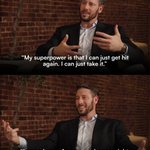
"My superpower is that I can just get hit again. I can just take it."
Jordan Fliegel was an amateur heavyweight before he was a founder, where he learned how to quite literally roll with the punches.
New episode of Through the Valley with Jordan. You’re going to love this one. youtu.be/t3dO5KtHEdc


"One of the best things that ever happened to me was getting pushed out of the CEO role."
At 28, Jordan F. was the founder and CEO of CoachUp, Inc, roughly $15M raised, 30 employees, living across the street from the office. His board wanted to fund the next round and replace him. They also offered him a president title and asked him to help pick his own successor.
He walked me through the math of why that happened, and it had almost nothing to do with him. Preferred stock, fund returns, the gap between a good outcome and a grand slam. He experienced an economic decision as a verdict on his worth. Most founders do.
What he learned in that valley:
• Why the seed and the very late rounds align, and why the middle is where founders get replaced
• What he did with the year he spent as a title with no job
• The two words he now says to himself whenever bad news lands
• Why he came back years later and reversed all of it
• Where CoachUp sits today, fourteen years in
Thanks to Jordan for going there with me! NEW episode of Through the Valley, live now. Links below.
Listen to Through the Valley everywhere you get your podcasts!
Spotify: open.spotify.com/episode/0vC…
Apple: podcasts.apple.com/us/podcas…
YouTube: youtu.be/t3dO5KtHEdc
There's one thing we do on my podcast that I've never seen another show do… and it’s always my favorite segment.
Weeks before we sit down to record, I ask someone who loves the guest to write them a letter. A spouse, a parent, a co-founder, a best friend. What was it like to walk with them through their hardest season?
The guest never sees it beforehand.
Halfway through the conversation, I read it to them out loud. Last week I read one to Brandon Aversano from his friend of twenty years. I got about four sentences in, and he said "I'm crying," and then told me the real thing: that he struggles to accept praise at all. We'd been talking for 40 minutes. That was the first fully unguarded moment.
There's a leadership lesson in here that I think about a lot. Most of the people you lead have never heard, out loud, what they mean to someone. YOU have probably never heard this enough either. But the truth is that we all crave an actual accounting of who we are to another person.
You can give someone that this week. It costs you 5 minutes and it could completely change their month or year.
Who in your life would write that letter about you? And who are you overdue to write one for?
"I would not trade cancer for anything."
Brandon Aversano knows how that sounds and he said it anyway.


Through the Valley, episode with Brandon Aversano, out now. youtu.be/Y9P7AAFjzso
“I would not trade cancer for anything…”
Every guest on my show is proof of the same thing: the chapter people skip in public is usually the chapter that made them.
Brandon Aversano is one of the clearest examples I've seen up close.
At 30 he had the résumé everyone wants and a trajectory nobody would question. Then testicular cancer, disability leave, and medical debt his father's voice in his head told him he should never carry. To create cash he sold his grandmother's jewelry, and the industry treated him like a mark.
4 years later he runs one of the fastest-growing precious metals platforms in the country, built entirely around the idea that nobody should stand at that counter alone.
He told me something I haven't stopped thinking about. Cancer created space for him. He'd been at JPMorgan for years with no room to ask whether he was on the right path at all, and the diagnosis handed him the first real pause of his adult life.
What you'll take away in this conversation:
- The difference between a valley that stops you and a valley that equips you
- Why he says the achiever version of him "came back with a vengeance," and what changed underneath
- How a bad experience at a jewelry counter became a company thesis
- What he'd say to himself on the worst night, which is the answer I ask every guest for
New episode of ‘Through the Valley’ with Brandon Aversano is out everywhere.
Listen to Through the Valley everywhere you get your podcasts!
YouTube: youtu.be/Y9P7AAFjzso
Apple: podcasts.apple.com/us/podcas…
Spotify: open.spotify.com/episode/7Go…
The most loving thing anyone anyone can do for you when you’re in deep in the valley: refusing to keep quiet.
Justin Gurland, told me the week before he checked into rehab was harder than actually walking into rehab. His little sister figured out what was happening, sat him down, and told him she couldn't take it anymore. He had until the end of the day to say something or she would.
He says she saved his life. And he was clear-eyed about the alternative: people who don't have someone willing to wake them up usually don't get a better ending.
I've been thinking about how much that applies well outside of addiction. On a team, in a marriage, on a board, in a friendship, most of us can see the thing and say nothing for years.
What I took from him:
• The conversation you're avoiding is the one that matters.
• Waiting for the right moment is usually just waiting.
• You don't need the perfect words. His sister's words were "I can't take this anymore."
• The person may not thank you that day. Justin's honest answer was that he wasn't grateful in the moment, he was just done.
• Saying nothing is also a decision, and it has a cost you don't get to see.
Someone in your life is waiting for you to be the person who says the hard thing out loud.


He walked into rehab at 25, thousands of miles from everyone he knew, certain his life was over.
The next morning was Super Bowl Sunday, 2008. He watched the Giants beat the undefeated Patriots. Then the staff turned off the game, walked everyone into a group room, and asked what each of them believed in.
Justin Gurland, LMSW had no answer. No community or sober person anywhere in his life to point at. What he said was that the Giants had just won and he could hold onto that for now.
18 years later he's the founder of The Maze NYC, NYC's first alcohol-free members club, where a few hundred New Yorkers pay to belong to a building with no alcohol in it.
My biggest takeaways from this powerful conversation with Justin:
• Why the thing you survive on can be almost meaningless and still be enough
• What his sister said to him the week before rehab, and what happens to people who never get that conversation
• The Godfather scene he read a month before everything came apart
• Why he says the amends isn't a conversation, it's how you live
• What his father wrote about Justin's lowest moment, read out loud for the first time on camera
So grateful to Justin for sitting down with me. This episode of ‘Through the Valley’ is live everywhere you get your shows. Links below.
Listen to Through the Valley everywhere you get your podcasts!
Spotify: open.spotify.com/episode/0jV…
Apple: podcasts.apple.com/us/podcas…
YouTube: youtu.be/vmvAVOO_-rM
Founders: pitch me.
I’m Mark, founder of @11TribesVC. We’re actively investing out of Fund II.
Who we’re looking for:
• Seed / Series A
• Checks around $1.5M–$2M (we often lead)
• ~$500K–$2M revenue
• Capital efficient, path to real profitability
• Happy to win at $75M–$300M
What makes us weird (in a good way): we put real dollars into founder resilience. Coaching, therapy, organizational health. Capital and care, not capital and a board deck.
Don’t send the deck first.
Reply with one sentence on what you built + one number that moved.
Or DM me the same.
If you know a founder in the zone, tag them.