

Trauma Recovery Coach I Speaker I Survivor of Sexual Abuse I Navy Veteran; I help survivors heal, regulate, and reduce shame; grounded in personal experience.
Subscribe to my Newsletter 👇
Joined May 2024
- Tweets72.5K
- Following545
- Followers1.8K
- Likes83.3K




Pinned Tweet
You may not be happy with the decisions you made when you were at your lowest point. However, you did the best you could at the time.
You were making survival decisions, not character decisions. Remember that. You're worth healing.
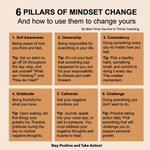
Stay positive and take action!
It’s going to take time to find out who you were before the trauma.
If you never knew who you were before the trauma because it started so young, you’re going to be able to find out who you are.
This can be scary.
However, it’s a journey.
Don’t worry about not knowing, just focus on taking another step forward today.
You’re not broken, you’re meant to heal.
3
115
Sometimes I think about what happened more than others.
I try to process anything that hasn’t been processed.
I don’t run from it anymore, but try to be there for the 15-year-old that didn’t know what was happening or why it happened.
It was never his fault.
He was never meant to go through that.
You’re not broken, you’re meant to heal.
Feeling overwhelming emotions isn't the same as processing them.
For years, I thought if I cried harder, hurt more, or relived every painful moment, I was healing.
I wasn't.
From an Interpersonal Neurobiology perspective, genuine processing happens when our nervous system is regulated enough to stay present without becoming overwhelmed or shutting down.
Intensity isn't the goal. Integration is.
Sometimes the most healing thing you can do is slow down enough for your nervous system to stay with the experience safely.
You're not broken, you're meant to heal.
It's not that I was bad at intimacy. I was taught to believe that being known was dangerous.
Sexual abuse taught me that allowing someone to get close could lead to pain.
I trusted the man who violated me. I allowed him to see parts of me that I didn't know how to protect. And he used that trust against me.
What I didn't understand at the time was how deeply that experience would affect my ability to let other people truly know me.
I didn't realize how much I had learned to protect myself by keeping people at a distance.
And I didn't fully understand the impact it had on me for years, even decades after the abuse ended.
I'm still learning what it means to be intimate. To open my heart. To let the people I love see more of who I really am. To trust that being known doesn't have to lead to being hurt.
I've come a long way. But I also know there's more of myself I want to be able to give to the people I love. And I'm learning that healing doesn't mean pretending what happened didn't affect me.
It means recognizing how it affected me and slowly learning that I don't have to live by the rules trauma taught me.
Being known doesn't have to be dangerous. Being vulnerable doesn't have to end in pain. And I believe I'll continue learning how to open my heart.
There is still more I want to give. And I believe I'll get there.
You’re not broken, you’re meant to heal.
Practicing gratitude is not about learning to be thankful rather than focusing on your “problems,” or trying to get over your trauma, or reminding yourself that “other people have it worse.”
Practicing gratitude is about intentionally firing new neurons in our brain that are going to help us continue to heal and be the person we were meant to become.
It’s a tool to use during our healing journey. It’s about repetition.
You’re not broken, you’re meant to heal.
Sexual abuse is a violation of our most intimate self. It’s one of the worst things one human being can do to another. It disturbs our growth and development as people on every level. It hits every layer of who we are and it changes our view of everything.
You’re not broken, you’re meant to heal.
Our brain is a predictive organ. It’s using what’s happened to us in our past to predict what’s going to happen next. It’s trying to protect us. One part of healing is about creating new experiences that our brain can start pulling from. Every time we take another step forward in our healing journey, new experiences are created.
You’re not broken, you’re meant to heal.
One of the best gifts you receive during healing is when you start liking who you are and who you’re becoming.
You’re not broken, you’re meant to heal.
Personal growth doesn’t only happen in the big moments.
It happens each day in the small things we do when we don’t want to do them.
Doing the dishes when you don’t feel like doing them is growth.
Making your bed when you don’t feel like it, is growth.
We can find growth every day in the little things we do when we don’t feel like doing them.
You're not broken, you're meant to heal.
I didn't understand grief for the 20 years I struggled with trauma from sexual abuse.
I lost a lot because of sexual abuse, but told myself I can't get back that time and I must move on.
When I started my healing journey for the final time, I realized that I needed to make space for grief.
I had to grieve who I could have become if I hadn't experienced sexual abuse.
I had to grieve all that I lost because of the abuse.
Grief is important because:
🔲It releases what the body has been holding. It allows the body to exhale after years of holding everything in.
🔲Grief makes space for what's next. Healing requires space and grief clears emotional clutter.
🔲Grief helps us tell the truth. Grief forces us to acknowledge "This affected me," "This hurt," and "I lost something important."
🔲Grief breaks the shame cycle. When you grieve, you honor your emotions instead of judging them which reduces shame.
You're not broken, you're meant to heal.
I spent more than twenty years disconnected from myself.
I didn't know what I thought. I didn't know what I felt. I didn't know what I wanted. I didn't know what I needed. I dissociated. I shut down emotionally. I distracted myself. I used alcohol to escape a reality I didn't know how to survive.
At the time I judged myself harshly for all of it. Today I understand those behaviors differently. They were attempts to survive pain I didn't have the tools to process.
That is not weakness. That is a human being doing the best they could with what they had.
You're not broken, you're meant to heal.
Children don't get to choose the beliefs they develop. We learn what is safe. Who we can trust. What we're worth. What love looks like. From the adults and environments around us.
That's why childhood trauma often becomes an adult identity.
The good news? Beliefs are learned. And learned beliefs can be unlearned.
You're not broken, you're meant to heal.
One of the hardest things I've had to accept about my past is something that should have been obvious:
I was 15. I was a kid. But for decades, I carried shame for what another person chose to do to me.
I asked myself: “Why didn't I stop it?” “Why didn't I fight back?” “What does it say about me that it happened?”
Those questions kept me trapped in shame.
But today I understand: The responsibility belonged to the person who abused me. Not me.
I survived something I didn't have the ability to fully understand or control at the time. There is no shame in surviving. There is no shame in the ways your mind and body tried to protect you.
And there is no expiration date on healing.
If you're still carrying shame for something someone else did to you, I hope you eventually give yourself permission to put some of that weight down.
You didn't cause it. You didn't deserve it. And what happened to you doesn't determine your worth.
You're not broken, you're meant to heal.
When, how, and if you decide to forgive is up to you. You get to make that decision. I believe we should focus on our own healing first. You should be the main focus.
You're not broken, you're meant to heal.
One of the biggest parts of my healing journey has been learning something I didn't realize I needed to learn: How to feel safe.
For years, my mind and body were constantly looking for danger.
A look. A question. A tone of voice. A change in someone's behavior.
Anything could make me wonder: “What's about to happen?”
But healing has taught me that feeling threatened doesn't always mean I'm actually in danger.
Today, I can notice the reaction without automatically obeying it.
I can pause. I can breathe. I can feel my feet on the ground. I can look around my environment.
I can remind myself: “That was then. This is now.” “I'm here.” “I'm safe right now.”
The old response may still show up. Healing doesn't necessarily mean you never get triggered again.
Sometimes healing means: You recognize the trigger sooner. You understand what's happening. You respond differently. That's progress. That's healing.
You're not broken, you're meant to heal.
Have you ever had a reaction that seemed bigger than the situation in front of you? Sometimes our present experiences can activate feelings and expectations shaped by the past. Your mind and body may recognize something familiar, even when the current situation is different. This doesn't mean your reaction is wrong. It means there's an opportunity to pause, become curious, and understand what's happening. The power is in the pause.
You're not broken, you're meant to heal.
From an IPNB perspective, shame collapses the sense of self, activates neural circuits identical to physical pain, and creates a desperate need for external validation to regulate the internal collapse.
Shame plays a major role in trauma bonding. It makes the abuser's intermittent approval extraordinarily neurochemically powerful.
You're not broken, you're meant to heal.
I would say one of the worst parts about trauma for me was not realizing it influenced the way I thought, how I acted, and my relationships with myself and others.
I tried to "get over it" for years and leave it in the past not knowing it doesn't work that way. Not knowing that it was a HUGE influence in my life.
Healing allows your trauma to be a part of your story, but not the entire story.
You're not broken, you're meant to heal.