

CMO @kungfuai | Team @_solfoundation | xCMO: @KrakenFX | @BitTorrent | @sonypictures
Joined May 2008
- Tweets12.8K
- Following1.8K
- Followers9.3K
- Likes73.6K


Mason retweeted

Join the Sol Foundation’s 2027 Symposium and be part of history in the making. Confirmed speakers this year include Tim Gallaudet, Mike Gold, Avi Loeb, Karl Nell, Garry Nolan, Hal Puthoff, and Peter Skafish. For more information and registration, click below. thesolfoundation.org/2027-so…

Proud of the crew behind MoDDA for making this happen!

The Proof of Culture exhibit is now open at MoDDA: The Museum of Diasporan Digital Art.
From 2020 to 2023, Black artists across the diaspora used digital tools to make art, tell stories and build new spaces for their work.
Walk through that moment:
modda.org/proof-of-culture
Mason retweeted
Participate in history in the making. Register now for the 2027 Sol Foundation Symposium and have a front row seat for Disclosure. (Click below.) thesolfoundation.org/buy-tic…

Can’t think of a better place for Sol 2027

Registration is now open for The Sol Foundation’s 2027 symposium, which will take place on March 11-13, 2027 in Washington DC. Register now and take advantage of early bird pricing for the event that brings together the best of the UAP community and its leading voices, now in the epicenter of NHI disclosure: Washington DC. Participate in history in the making.
thesolfoundation.org/buy-tic…
Mason retweeted
The White House's PURSUE initiative has brought new momentum to UAP disclosure, but major challenges remain. Sol's Peter Skafish and Marik von Rennenkampff discuss the state of the effort, recent records releases, and what must happen next.

Mason retweeted
New York Times coverage today of the UAP Science Advisory Council, with @GarryPNolan, Peter Skafish, and @ProfAviLoeb. Thanks to @dannyhakim for his engagement with the Sol Foundation and the council. nytimes.com/2026/10/02/us/tr…

Mason retweeted

Happy 9/27! 🫡 to the @Broadside2037 fam! @StratfordRex
@MattMason @VectorMeldrew
@cincodollazz
Bones up! ☠️🆙


👏👏👏🛸

RELEASE: Department of War Issues Legal Waiver to Authorize UAP Disclosures to PURSUE
"This waiver establishes an authorized, legally protected disclosure mechanism for current and former personnel to provide UAP-related National Defense Information (NDI) to designated representatives of the PURSUE effort.
Under this directive, all current and former DOW service members, civilian personnel, and contractors holding or previously granted access to UAP-related National Defense Information (NDI) are authorized to disclose protected information directly to official PURSUE representatives.
The waiver supersedes civil and administrative enforcement provisions contained within Non-Disclosure Agreements (NDAs) and Special Access Program Indoctrination Agreements (SAPIAs) previously executed within the United States, strictly for communications directed to the PURSUE team."
war.gov/News/Releases/Releas…


Mason retweeted
British MP Clive Lewis recently shared with the Sol Foundation the UK Ministry of Defense’s answers to his inquiries about UAP, stating that the openness of other Five Eyes governments about the phenomena raises questions about whether the UK government is being transparent and democratically accountable.
Mason retweeted
The Sol Foundation is launching a scientific study that will provide crucial guidance to both the President and Congress on how to conduct disclosure successfully and with minimal harm. To learn more and support this research, visit thesolfoundation.org/fund-th…
This innovative study, led by epidemiologist Dr. Christopher Salazar and Dr. Peter Skafish, will help us understand, for the very first time, how Americans are likely to respond to different aspects of UAP disclosure announcements, including who delivers the news, what evidence is presented, how that evidence is verified, and how the message is framed.
Using a research method known as a “discrete choice experiment,” a nationally representative sample of individuals will be asked to compare realistic disclosure scenarios. This will allow us to understand which combinations of evidence, messengers, and safeguards make disclosure feel credible, reassuring, confusing, or alarming. We will also investigate how reactions differ according to age, race, ethnicity, religion, family situation, prior UAP interest, and trust in government and science.
The study's findings can be used to develop an evidence-based plan to execute and communicate disclosure in ways that build public trust, ease fear, and safeguard well-being. Additionally, the methods we employ could transform the study of encounters with UAP by broadening the focus to include not only individual reports and testimony but population-level data and mass, societal perception.
Please consider supporting the study, which could seriously impact how the U.S. government executes disclosure: thesolfoundation.org/fund-th…

I'm joining @kungfuai, the premier management consulting and engineering firm focused on artificial intelligence, as Chief Marketing Officer.
Their focus on creating positive outcomes for humanity speaks for itself.
Since 2017 they have:
- Built an FDA-authorized AI system to predict breast cancer risk up to five years in advance
- Worked with the DoD to detect Foreign Object Debris on airfields, improving identification sensitivity by as much as 60%
- Partnered with a Fortune 10 tech company to measure the true impact of digital advertising on e-commerce sales, reducing error rates by 50%
The list of amazing case studies is long. I’ve been fortunate to be an early contributor to a few world-changing companies. I’ve never seen a firm do this much transformative work, this early, across so many categories.
This is how I want to see AI exist in the world.
I’m grateful to Stephen Straus and the entire KUNGFU.AI team for trusting me with this.
At Basejump we were working with five communities in the Peruvian rainforest who had critical aid cut off thanks to DOGE, which prevented us from being able to work with them.
Mason retweeted
We applaud the President’s new policy allowing former officials and contractors, for the first time, to bypass NDA restrictions to share confidential UAP information through authorized channels—including, finally, with Congress. Like a wide range of high ranking military and intelligence professionals have said (sometimes under oath), the American people deserve transparency about UAP, and an end to government censorship and stonewalling. Expanding opportunities for responsible disclosure about our national security is an important step toward a more open and informed conversation about UAP. We hope this action encourages greater transparency, reduces unnecessary stigma, and encourages constructive dialogue among government, scientists, journalists, and the public.

Fifty-nanometer resolution analysis of the 1977 Council Bluffs UAP incident found no anomalous isotopes, and no explanation either. Meteorite, satellite debris, aircraft debris, a deliberate dump, a hoax: all five ruled out by the physical evidence.
Successful disclosure depends on excellent science as much as government transparency. Take research on a 1977 event in Council Bluffs, Iowa, when witnesses to a UAP observed a red mass falling from the sky and then found a pool of molten metal on the ground, still boiling twenty minutes later. Peer-reviewed analysis led by the Sol Foundation’s Dr. Garry Nolan and Dr. Jacques Vallée ruled out five prosaic explanations for what the metal might be, lending substance to the possibility that it was not manufactured by human beings.
Four of the 16 people named to the US Governments new UAP Science Advisory Council are from Sol. Amazing to see the good work Sol does plugging in at the highest levels.
1/ The Office of the Director of National Intelligence has assembled a UAP Science Advisory Council to provide guidance to the U.S. government on UAP using scientific methods. Sol cofounders Dr. Garry Nolan and Dr.Peter Skafish have been named to the council and will bring their unique expertise and insight to its work. 🧵
Mason retweeted

Dr. Peter Skafish on UFO's: "There is a part of the intelligence community that certainly knows this is real. There are technologies not of human origins that are in our atmosphere under the sea and coming down from space." 👽🛸
In the On Balance discussion Skafish and retired Marine fighter pilot Lieutenant Colonel Tom Oltorik reviewed the account of an F-15 pilot who saw a swarm of synced drones in a jellyfish like formation over Iran before his plane was shot down in April. This represents the first U.S. aircraft downed over Iran in the conflict in years.
The pilot had been concussed from the downing and this marked his second ejection in recent weeks after surviving friendly fire over Kuwait.
Oltorik considers the pilot's account credible given the violent ejection process which he survived on both occasions.
Skafish pointed out the sighting matches historical jellyfish like reports from before drone swarms existed suggesting it may be a UAP or non anthropogenic vehicle not of human origin.
Oltorik explained airborne drone mesh networks are realistic as thousands coordinate in fireworks displays and similar coordination in battle would not be unexpected.
Intelligence officials are assessing whether this indicates Iranian or other adversarial drone technology or something unexplained.
Mason retweeted

Why do we need a UAP Scientific Advisory Board?
As has been widely reported, the US government has asked Professor Avi Loeb, of the Department of Astronomy at Harvard University (see the main announcement at the end of this posting), to create a UAP Advisory Council. The members of this advisory group span a range of disciplines from astronomy, psychology, physics, biology, data analytics, psychology, entrepreneurs, and more. I am thrilled to have been invited alongside a notable list of scientists, academics, entrepreneurs, and others.
What follows are my personal thoughts and are not any official position of the UAP Advisory Council. Dr. Loeb has already elaborated on the formation of this Council, along with his views through postings on his blog and in public interviews.
Importantly, no one on the Council has been asked to sign any non-disclosure agreements. We are told that we are free to discuss matters that come before the Board, but without attribution of the source (Chatham House rules). By the same token, I am not obligated to answer any questions either. I plan to treat this effort like I do my day job in cancer immunology—not talking publicly about results until I am sure the answer is as close to correct as I can determine.
So, how did this Advisory Council come to be? Well, one answer is simple—through the dedicated action of thousands of individuals across decades, the coming forward of credible military and government officials in public testimony (sometimes under oath), the work of members of Congress and the Senate, along with testimonials of public witnesses, and much more.
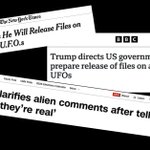
Collectively, those actions have led to the extraordinary and courageous decision by President Donald J. Trump and his administration to release to the public US government-owned UAP-related files and information as vetted by a UAP Governance Board and other government agencies. As publicly announced, our group will report to the UAP Governing Board, which is under the direction of the Executive Branch.
Many people have openly wondered, “Why create a new Board when elements of the government or even commercial institutions already (allegedly) know the answer?” The UAP Advisory Council doesn't have any funding, and we don’t have subpoena power. We are all volunteers. We advise. Given that, there are some straightforward answers to the criticisms and commentary I have seen.
First, appreciate that the complexity of what UAP might represent is not definable in a single technological or cultural framework. It is so complex that even I, who have been steeped in the matter for over 15 years, have a hard time encompassing the breadth of explanations from “it’s real, and it’s here” to “it’s all misidentification”. My mind spins trying to make sense of it all.
What is clear is that the data released so far is not enough. The anecdotes are not enough. Sure, interesting videos, but where’s the metadata? What are the parameters of how the data was collected? Why are there extreme redactions of files and data? Why the incredible pushback? Where are the alleged retrieved technologies? There’s simply not enough to convince me when I put on my serious scientist’s hat.
Yet what I do know is that the question of what it might be will not go away while the data remains locked up. The answers to what any data might mean will require a comprehensive effort across disciplines that expand well beyond “nuts and bolts” science. Hence, the broad makeup of the team that comprises the UAP Advisory Council. Every person on the Board is, I believe, devoted to taking a logical and deeply skeptical approach to this matter. We will let the data guide us and cross-check each other.
For me, despite my widely known bias that I think there’s something deeper to the matter than misidentification, I remain like any scientist a trained sceptic at heart. I am terrified of making a mistake, but I’ve yet to reach a formal conclusion despite my public musings. I can believe a thing might be true, but as a scientist, I must believe enough in the possibility of an idea being true to justify my time and effort to prove it to myself— and more so to prove it to colleagues or the lay public.
There is data that, when contextualized as a hypothesis, becomes evidence that invites us to wonder whether the answer to “Are We Alone?” might be sitting right in front of us, but we choose to ignore it or let others tell us it should be ignored. Remember, data is only evidence towards supporting a conclusion when you pose a question (hypothesis) around what the data means. But evidence is not a conclusion. Evidence is what you put in front of a jury, where the data has been sufficiently scrubbed of doubt to allow one to decide what it means.
So, back to “Why do we need a UAP Scientific Advisory Board?” Well, we all want objective, and even subjective, expertise to interpret whatever data comes our way. Even if tomorrow a saucer landed in Times Square, we would still need a swath of expertise to interpret what opens the door, how it got here, and what might be the intent. Better to be prepared, in my opinion.
We obviously risk that this is a misdirection from some essential truth or that we might be being used in some elaborate disinformation campaign. We are also aware that we might be in for the possibility that there is simply nothing there but elaborate stories and misidentifications.
But I can tell you this—the risk is worth it. We have come further than ever before to open the door (or Pandora’s Box) to a potentially incredible opportunity. “Are we alone?” might be answered as “We are one of many.” Coming to know what others might have already learned about the nature of reality is, for me, well worth the effort to ask the question.
One way or the other, I believe humanity can handle the answer.
avi-loeb.medium.com/more-det…
