

RWA MAXI | Researcher & Advisor | @MANTRA_Chain Ambassador #MANTRA #RWA #Tokenization #HomeOfRWAs
Joined February 2018
- Tweets4.9K
- Following868
- Followers4.5K
- Likes25.1K








Matt May retweeted

Two different things both get called tokenized stocks.
A token that represents a share.
A market that tracks a share's price.
One is ownership. The other is price exposure. Know which one you're holding.
NIFTY 50 on MF Markets is big.
India's benchmark index, 50 of the largest companies, now tradeable onchain, permissionlessly, with just an email.
For the Indian market this is a genuinely different kind of access.
LFG! 🇮🇳

New market on MF Markets: NIFTY 50 ($NIFTY).
An index market that tracks 50 of the biggest companies in India.
Open your wallet with just an email.
Permissionless trading at mfmarkets.io

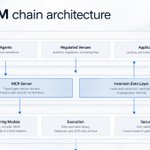
The hard part was never moving markets onchain. It's making the data underneath them verifiable.
That's what @NVNM_Chain is building toward:
- Verification built into the chain
- Private data, portable proofs
- Persistent onchain identity for every agent
Read the whitepaper👇


400 financial institutions targeted by chained AI agents. The real risk is agents without verifiable identities.
@NVNM_Chain’s KYA ties every agent to a persistent onchain identity and beneficial owner.
Agents at scale need accountability built in.
Hackers chained AI models into an agent network that targeted more than 400 financial institutions, per The Information. At that scale, defense starts with identity. Under Know Your Agent, each agent on NVNM Chain holds a persistent onchain wallet used by that agent alone. The wallet, not the model or the vendor, is the unit of identity.
Matt May retweeted
MF Markets is on the App Store.
Perps, spot, outcomes and vaults. Over 100 markets. Self-custody by default.
Download on iPhone.
apps.apple.com/app/id6761247…


Matt May retweeted
Week ahead on $MANTRA:
Trade → mfmarkets.io
Community → mantra.zone · onchainomies.com
Privy rolling wider. Trillions will be tokenized.

Three worlds are starting to overlap in a big way.
1) Institutional capital needs verified, sovereign data.
2) Decentralized finance needs reliable collateral.
3) AI agents need both to make decisions people can trust.
@InveniamIO is working at the intersection of these three.

The architecture decision made at day one shows up years later.
- Most chains add RWA features as an afterthought
- @MANTRA_Chain started from permissionless rails built for RWAs
- Composability over patches means front ends that actually work
That gap compounds over time.
General chains bolt RWA features on later. MANTRA starts from permissionless rails for real-world assets, plus front ends people can actually use. Composability over patches. $MANTRA
Identity & payments are just the start.
- Agents need verifiable evidence of what an asset actually represents
- DGML + @InveniamIO make private market data traceable
- @NVNM_Chain anchors proof of origin, process & state
Decisions built on data anyone can independently verify.

Protocols like x402 enable machine-to-machine payments, while ERC-8004 lays the groundwork for agent identity and reputation.
But in Agentic Finance(AIFI), knowing who an agent is and paying for an asset isn't enough. Agents need verifiable evidence of what that asset represents, where its data came from, and whether the underlying claims can be trusted.
This is where @InveniamIO and DGML come in: DGML structures complex documents into machine-readable information, while Inveniam works to make private-market data more accessible, traceable, and usable. With @NVNM_Chain anchoring cryptographic evidence of origin, process, and state, Agents can build decisions on data that others can independently verify.

Matt May retweeted

Buying a real world asset the old way:
→ Brokers and custodians
→ Subscription windows
→ Paperwork at every step
→ Days to settle
Settling it in mantraUSD:
→ Backed by short-term US T-bills
→ Trades against tokenized assets directly
→ Open whenever you are
→ Settled in seconds
Matt May retweeted
Every model here ends at the same dispute: did you buy this, or did your agent? Settling it takes a record of which agent acted, for whom, and under what approval. Know Your Agent starts with that record. NVNM Chain is where it gets anchored onchain.

So there are basically 3 ways an AI agent can pay with a card today. Where do each of these break?
(1) You hand the agent your 16 digit PAN. It works everywhere, but the merchant and your bank can’t tell a bot is buying, your full credential is sitting in someone’s system, and disputes get messy fast (“did you buy this, or did your agent?”)
(2) A network agent token. Visa Intelligent Commerce or Mastercard Agent Pay swap your card number for a token tied to that specific agent, with spending limits and a clear “an agent did this” signal. It’s the cleanest model, but it only works where issuers, acquirers and merchants have switched it on. A ton to be figured out here still
(3) A card the agent platform issues. Either stored value (you prefund a balance with the agent) or card fronting (the platform’s card pays the merchant, then it charges your real card behind the scenes). This works today and seems to be gaining steam as a preferred mode, it lets agents monetize payments as well

5/ The Community Connects sessions with @jp_mullin888 & @Profoneur have been among the most candid product updates from any team.
The MANTRA genesis validator on $NVNM, routing fees into mantra:native buybacks through the MAF, was a big one. Two networks, one economic bridge.
6/ @InveniamIO managing $200B+ in private assets.
A new deal covering 6% of global commercial real estate. @jeanpaoli, co-creator of XML, betting his next standard on this stack.
IMO, Sentiment is still nowhere near the fundamentals. That gap usually closes eventually.
Very interesting. One of the cleaner breakdowns of onchain carry I’ve read.
Collateral quality, valuation, provenance, and liquidity determine whether tokenized assets can work in lending markets.
That's the infrastructure @NVNM_Chain and @MANTRA_Chain are building.

