

A quarterly Asia-focused literary magazine.
- Tweets3K
- Following830
- Followers7.6K
- Likes2.5K

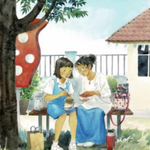






ALT Letter from the mudflats by Hai-Dang Phan Read more at mekongreview.com

ALT For the past few days, Ba and I have been on a meandering road trip through the Mekong Delta. He wanted to show me some of the places where he was stationed and fought during the war, some fifty years ago, as an officer of a patrol boat unit in the South Vietnamese Navy. Today, we return to our primary mission: to experience Vietnam through its birds. Whenever we returned to Vietnam in the past, we usually spent all our time visiting family. For once, I wanted to see the country itself. On this matter, Ba and I found common ground. While he’s no avid birdwatcher like me, Ba likes a good challenge and wants to see as much of Vietnam as he still can.

ALT Just over a decade ago, the spoon-billed sandpiper was on the brink of extinction, their global population plummeting to an estimated 100 breeding pairs in 2011. Ongoing international conservation efforts are slowing steep population declines caused by habitat loss, illegal trapping, and climate change. But they still remain critically endangered. Before the idea of this trip took hold, I didn’t even know this bird existed. Now, I’m searching for this rare thing on the dull edge of extinction, as if it might show me a way back to a country I might have called my homeland, had life not taken us altogether elsewhere.


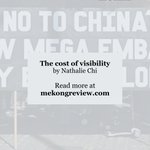
ALT The cost of visibility by Nathalie Chi Read more at mekongreview.com

ALT Face covered, recognisable features hidden. A back-up phone in hand, location services disabled. No recent travel plans. No recent contact with family members in Tibet. Avoid cameras. Avoid interviews. At political protests against the Chinese government, including recent demonstrations against the planned Chinese mega-embassy in London, some Tibetan participants arrive with these calculations already made.

ALT In January 2026, the UK government approved China’s plan to redevelop the Royal Mint Court in central London into its largest diplomatic mission in Europe. The plan has faced sustained opposition from local residents, campaign groups, and politicians, who have raised concerns over national security, surveillance, protest safety, and the impact on surrounding areas. For the Tibetan community, the mega-embassy is a concrete reminder that the state they fled, or inherited exile from, can still feel close. Their activism in Britain is shaped by political protests and cultural preservation, with the constant fear that visibility can lead to repercussions elsewhere.

ALT Read more at mekongreview.com

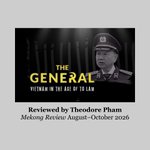
ALT Musashi: The Novel Reviewed by Simon Rowe Mekong Review August–October 2026

ALT Miyamoto Musashi was a real person who lived from 1594 to 1645. His name is known to all Japanese—if not as ‘Kensei (sword saint)’, then as a folk hero whose legendary strength and skill are still revered. Kids emulate his Niten Ichi-ryū (Two Heavens as One) style of swordsmanship with chanbara foam swords; brands of kitchen knives, health supplements, home security systems, and even automotive parts are named after him. My local hardware store is called “Musashi”. Eiji Yoshikawa has been instrumental in all of this, of course, popularising historical fiction with his reimagining of the lives of famous samurai figures in works like Taiko and The Heike Story—inspiring countless movies, TV dramas, and manga.

ALT Told over three volumes, Musashi: The Novel comes in at a hefty 1,696 pages. But there are plenty of reasons to make the commitment. For one, it is a rollicking yarn with a cast of colourful characters. The settings are ever-changing; from rural hamlets, snowy mountain passes, and bamboo forests, to hectic city streets with brothels, boozy taverns, temples, and dojos, the reader is whisked along at a lively clip. This is feudal Japan in the early Edo Period—about 400 years ago—a time when the country was transitioning from civil war to an era of peace, order, and artistic freedom. Alongside martial arts, Yoshikawa also gives us cultural practices such as tea ceremonies, calligraphy, and flower arrangement—arts which samurai of yore engaged in to strengthen their mental discipline and build character.

ALT Read more at mekongreview.com


ALT Unease: Life in Singapore Families by Teo You Yenn Reviewed by Kirsten Han Mekong Review August–October 2026

ALT Setting out to understand how parents navigate the much coveted but often elusive work–life balance, Teo finds that it isn’t basic childcare that occupies the most real estate in parents’ minds—it’s education. “Education systems or policies are rarely considered, by scholars or policymakers, as a source of work-life conflict; yet, my research shows that education has become a big component of ‘care labour’,” she writes. “Contemporary demands on parenting go well beyond baths and burps and fevers and sleeplessness, to supervision and nagging and strategising and conflicts of an entirely different, arguably more stress-inducing, level.”

ALT “No one owes you a living.” Teo hears this repeatedly during her interviews. It’s a deeply internalised mantra: Singaporeans are expected to be “self-reliant” and families are the “first line of support” if needs arise. Teo’s interviewees know that “everything they need, for themselves and their families, must come from income they and/or their spouses can generate”, even as they observe that the future might become “more difficult, more expensive, more competitive”. When we recognise this anxiety as the context that informs people’s behaviour, we realise parents aren’t pushing their children to study hard and ace exams out of vanity or pride—they put immense amounts of effort and resources into their children’s education because there are real, long-term costs to falling short or falling behind.

ALT Read more at mekongreview.com