
Machine Learning PhD student at @AmlabUva
Amsterdam, Netherlands
Joined July 2011
- Tweets51
- Following430
- Followers213
- Likes3K




Super fun project that shows that even (masked) discrete dLLMs can generate multiple tokens in-parallel just fine!

Diffusion LLMs are meant to be fast ⚡️: they can decode many tokens in parallel in a single step.
The catch: push the parallelism too far and generation quality drops sharply.
We introduce a simple fix: Temporal Self-Distillation (TSD): the model learns from its own later, more-confident predictions, using only the rollout a verifier marks correct 👇🧵

Presenting today at @NeurIPSConf from 11am-2pm (poster number #3904)👇👇

TTA Monitor is coming to #NeurIPS2025!
Our monitor flags risk increase of a continuously adapting model without any labels and with false-alarm guarantees.
Let’s dive in! 🧵 1/6
📄 Paper: arxiv.org/abs/2507.08721
📌 Poster: neurips.cc/virtual/2025/loc/…

This was a super fun project with @monaschir, see you all at NeurIPS soon! ✈️
TTA Monitor is coming to #NeurIPS2025!
Our monitor flags risk increase of a continuously adapting model without any labels and with false-alarm guarantees.
Let’s dive in! 🧵 1/6
📄 Paper: arxiv.org/abs/2507.08721
📌 Poster: neurips.cc/virtual/2025/loc/…
2
176
Great too see that our Generative Uncertainty won the best paper award at the ICLR QUESTION workshop (uncertainty-foundation-model…). If you're interested in what Bayesian/ensembling methods can bring to the world of diffusion models, check out the paper 👇
arxiv.org/abs/2502.20946


🥇 3 Best Paper Awards for AMLab members!
1. Towards Variational Flow Matching on General Geometries by @olgazaghen @FEijkelboom
2. Generative Uncertainty in Diffusion Models by @MetodJazbec
3. SDE Matching by @GrigoryBartosh
Congrats to everyone! 🔥
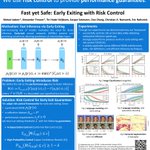
Come say hi to me, @AlexTimans, and @eric_nalisnick today between 11am-2pm in East Exhibit Hall A-C #4505 . We'll be presenting our Fast yet Safe paper on efficient inference and risk control 👇

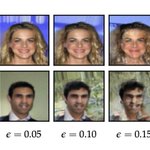
Hey! Catch me next week at @NeurIPSConf where we’ll be presenting our Fast yet Safe paper. We show how to equip efficient AI methods like early-exiting or soft speculative decoding with performance guarantees using risk control!
arxiv.org/abs/2405.20915
🧵🔽

I will also be presenting 3 workshop papers at @NeurIPSConf , all related to the efficiency of LLMs/diffusion
🧵👇
1
11
359
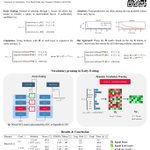
In “Dynamic Vocabulary Pruning”, we show how to make uncertainty estimation in early-exit LLMs more efficient, by demonstrating that mapping to the full vocabulary space at every layer is not necessary at all
arxiv.org/abs/2410.18952

1
1
51
Hey! Catch me next week at @NeurIPSConf where we’ll be presenting our Fast yet Safe paper. We show how to equip efficient AI methods like early-exiting or soft speculative decoding with performance guarantees using risk control!
arxiv.org/abs/2405.20915
🧵🔽
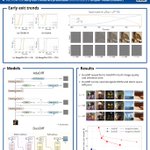
Tired of overthinking decisions in your life? I can't help you with that, but come to our NeurIPS poster #514 tomorrow (Tue, 12th Dec) between 5-7pm to see how to prevent your early-exit neural networks from overthinking

This was an awesome collaboration with
@JamesAllingham, @isDanZhang and my supervisor @eric_nalisnick
If you want to endow your (awesome) VAEs with (even more awesome) Gaussian Processes, have a look at our new AISTATS paper (arxiv.org/abs/2010.13472) where we present a scalable version of such models! More info in thread. 1/7

Recently proposed GP-VAEs (arxiv.org/abs/1810.11738) have been shown to lead to favourable performance on tasks ranging from conditional generation to learning interpretable latent embeddings. Their use, however, has been hitherto hindered by the intrinsic complexity of GPs. 2/7
1