



Pinned Tweet
Back with the legend @joerogan to talk history & ancient civilizations!
Thanks for having me again Joe, this one was WILD


Michael Button retweeted
🚨 New Fossil Confirms Human Ancestor Appeared 200,000 Years Earlier Than Expected
A new analysis pushes back the emergence of Homo Erectus beyond 2 million years ago

What if civilisation has trapped us inside the very thinking that made it possible?
We’ve become extraordinarily good at measuring, categorising and controlling the world. But understanding something intellectually isn’t the same as experiencing it.
Our brains interpret the world through expectations, memories and beliefs. These models help us navigate reality. But they can also limit what we notice and what we’re willing to believe.
Perhaps we’ve become so attached to our picture of reality that we mistake it for reality itself.
Some ancient contemplative traditions approached this problem through silence, stillness and the quietening of thought.
We can’t prove they accessed a deeper reality. But they took seriously something we often overlook: clearer understanding might sometimes require loosening our assumptions.
Rational thought gave us modern civilisation. It needn’t be the limit of human experience.
Perhaps our next great advance will involve learning how to step outside the thinking that brought us here.
And perhaps ancient humans already knew this
🚨 New Fossil Confirms Human Ancestor Appeared 200,000 Years Earlier Than Expected
A new analysis pushes back the emergence of Homo Erectus beyond 2 million years ago

Michael Button retweeted
Realistically, what would actually survive of our civilisation after 100,000 years?
Michael Button retweeted
Divers Just Found an Ancient Image of The Lighthouse of Alexandria.
Beneath the sea at Alexandria, archaeologists found a bronze ring engraved with one of the Seven Wonders of the Ancient World.
For centuries, the enormous tower guided ships into Egypt’s busiest port. Earthquakes eventually reduced it to ruins.
But this tiny image survived.
Found among the submerged remains of a royal palace, it is the first known signet ring depicting the lighthouse.
But who wore it, and what they used it to seal, remain unknown.
We may have found a 75,000-year-old murder victim.
A Neanderthal was buried with a circular hole through the shoulder blade, probably the exit wound of a wooden spear driven through the chest.
The strike likely caused rapid death and may be the earliest known evidence of lethal conflict involving a wooden spear.
But researchers cannot rule out a hunting accident.
Was this Neanderthal murdered?


Michael Button retweeted
In 2018, researchers scanned more than 2,000 square kilometres of northern Guatemala using lasers fired from aircraft.
They were looking for traces of the ancient Maya beneath the forest.
But the results revealed something staggering: more than 60,000 structures.
Homes. Palaces. Roads. Fortifications. Vast areas of modified farmland.
Familiar archaeological sites turned out to be parts of a much larger, interconnected landscape.
The trees had hidden the scale of what was there.

Michael Button retweeted
Divers just found Aboriginal stone tools beside a drowned freshwater spring, in landscapes swallowed by the ocean at least 9,000 years ago.
Some stone originated approximately 23 kilometres away, demonstrating movement of valued materials across what is now seabed.
Researchers believe this is part of a much larger submerged cultural landscape whose true scale remains unknown
In 2018, researchers scanned more than 2,000 square kilometres of northern Guatemala using lasers fired from aircraft.
They were looking for traces of the ancient Maya beneath the forest.
But the results revealed something staggering: more than 60,000 structures.
Homes. Palaces. Roads. Fortifications. Vast areas of modified farmland.
Familiar archaeological sites turned out to be parts of a much larger, interconnected landscape.
The trees had hidden the scale of what was there.
Michael Button retweeted
In 1890, workers digging in a Russian peat bog uncovered a wooden figure covered in strange faces and geometric markings.
It became known as the Shigir Idol.
But nobody realised just how old it was.
More than a century later, scientific dating placed it over 12,000 years in the past. Thousands of years before the pyramids, someone had carved this extraordinary object using stone tools.
We still don’t know exactly what its markings meant.
But its survival raises a bigger question.
Stone survives. Wood usually rots.
How much of the prehistoric world looks simple to us because its most extraordinary creations have disappeared?

Michael Button retweeted
In 1542, Francisco de Orellana took a small Spanish party down an Amazon tributary looking for food.
But the current was too strong to return. They ended up travelling all the way to the Atlantic.
What they encountered was extraordinary.
Their chronicler described huge settlements, roads leading inland, abundant food and riverbanks so densely populated that one settlement seemed to follow another for miles.
This was a landscape full of people.
But later explorers found a very different Amazon. The enormous populations described in the account were nowhere to be seen.
It was just jungle.
For centuries, scholars dismissed the story as exaggeration or fantasy.
But European diseases and colonisation had devastated Indigenous communities. The later explorers were seeing the aftermath.
Now archaeology is revealing vast ancient settlement networks beneath the rainforest.
Orellana’s expedition had glimpsed a world that was about to disappear.

In 1890, workers digging in a Russian peat bog uncovered a wooden figure covered in strange faces and geometric markings.
It became known as the Shigir Idol.
But nobody realised just how old it was.
More than a century later, scientific dating placed it over 12,000 years in the past. Thousands of years before the pyramids, someone had carved this extraordinary object using stone tools.
We still don’t know exactly what its markings meant.
But its survival raises a bigger question.
Stone survives. Wood usually rots.
How much of the prehistoric world looks simple to us because its most extraordinary creations have disappeared?
Michael Button retweeted
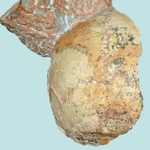
This fossil is casting serious doubt on the Out of Africa theory.
It’s part of a skull discovered in a Greek cave in the 1970s. Researchers initially thought it belonged to a Neanderthal.
But a later analysis reached a startling conclusion.
It appeared to be Homo sapiens. And it was at least 210,000 years old.
Our species, in Europe, more than 150,000 years before the major migration out of Africa traced in our DNA.
So how does that make sense?
Well, we already had evidence of earlier journeys. Human fossils in Israel showed our species had ventured beyond Africa long before that major migration.
But Greece was much further away. And this skull suggested a much earlier arrival.
There is, however, a possible explanation.
Your DNA tells the story of people who passed their genes down to you. But it can’t reveal every population that ever existed.
Some may have travelled far, survived for thousands of years, then disappeared without leaving descendants alive today.
Fossils can reveal those missing people. And perhaps that’s who this skull belonged to.
An early wave of humans who left Africa, reached Europe…
And became a branch of our family with nobody left to remember them.

In 1542, Francisco de Orellana took a small Spanish party down an Amazon tributary looking for food.
But the current was too strong to return. They ended up travelling all the way to the Atlantic.
What they encountered was extraordinary.
Their chronicler described huge settlements, roads leading inland, abundant food and riverbanks so densely populated that one settlement seemed to follow another for miles.
This was a landscape full of people.
But later explorers found a very different Amazon. The enormous populations described in the account were nowhere to be seen.
It was just jungle.
For centuries, scholars dismissed the story as exaggeration or fantasy.
But European diseases and colonisation had devastated Indigenous communities. The later explorers were seeing the aftermath.
Now archaeology is revealing vast ancient settlement networks beneath the rainforest.
Orellana’s expedition had glimpsed a world that was about to disappear.