

Retired police officer-served 42yrs in the West Midlands Police, Sovereign Bases Police-Cyprus & British Transport Police-now writing fiction& non-fiction books
United Kingdom
Joined May 2014
- Tweets19.9K
- Following1.9K
- Followers1.3K
- Likes4.2K



Pinned Tweet
'The Night The Owl Cried-A Taste of Cyprus' - history, true-life,food,culture,places - kindle amazon.co.uk/dp/B071ZZJN2G/ the beauty of Cyprus


Michael Layton QPM retweeted
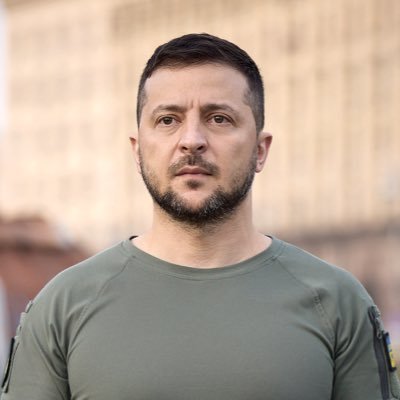
This past week alone, Russia has launched around 1,600 guided aerial bombs, 48 missiles of various types, including ballistic missiles, and nearly 2,300 attack drones against Ukraine. Unfortunately, almost every day, these brutal strikes leave people killed and injured. In the evening, Russian strikes on the Dnipro region killed four people. My condolences to their families and loved ones. Another 22 people were injured, including an 11-year-old girl. In Vinnytsia, a Russian drone struck a high-rise apartment building. Six people were injured. In Kharkiv, the Russians first struck a home improvement hypermarket and then carried out a cynical double-tap strike on the emergency services that arrived at the scene. First responders were injured. There were also strikes overnight on a thermal power plant, substations, coal mines, grain storage facilities, shopping malls, and a postal logistics hub. Damage has been reported in nine regions.
This is how Russia responds to diplomacy and deisolation. And it is very important that support for those who protect lives not diminish alongside the negotiation process. We need to unblock the deliveries of Patriot interceptors already approved by European countries. We need to continue supporting Ukrainian combat aviation to defend against jet-powered “shaheds.” Every such defense package, especially ahead of winter, helps save lives. I thank all partners who provide this kind of support.
Michael Layton QPM retweeted

🇺🇦🇺🇦🇺🇦
According to CNN, Zelensky’s workday begins between 3 and 4 in the morning, when the first battlefield reports arrive.
He drinks strong black coffee, no sugar, to push through the early hours.
Even under constant pressure, he has not lost his sense of humor and still finds brief moments to reset.
The years of war, strain, and emotional weight are visible on him. No one carries that kind of burden without it showing.
And yet he remains standing.
Respect to Volodymyr Zelensky.

Michael Layton QPM retweeted

I am a perfectly ordinary person. I am simply a human being. Perhaps not as great a humanist as Putin—but, in any case, I try to do everything in my power. — Zelenskyy.
Michael Layton QPM retweeted

**You need to watch Zelenskyy's interview with Steven Bartlett.**
Sitting in front of the camera is an utterly exhausted, at times visibly broken man who has spent almost five years personally managing a war, making critical decisions day and night.
From the very first minutes, you can see just how drained he is. When asked the routine question, "How are you?" he replies that he barely sleeps because he spends his nights in military group chats, moving the last remaining air defense systems from one region to another.
Two stories are particularly heartbreaking.
The first is about a missile that struck a children's playground within seconds, while parents watched from their apartment windows as their children were torn apart.
The second is about presenting posthumous military awards to the families of fallen soldiers:
"You present an award to a father, feel his strong hand, and then he quietly asks, 'Can we hug?' At that moment, I simply cease to exist inside. These people are gone. They will never be the same again."
When the host tries to take him back into his past, showing old photographs from Kryvyi Rih, his student comedy performances, his voice acting as Paddington Bear, and scenes from *Servant of the People*, Zelenskyy looks at them with detachment, almost as though he is watching someone else's life.
He also recalls February 2022 without any attempt to portray himself as a hero.
He says that for the first 20 days, he simply ran from office to office on adrenaline, calling everyone he could and trying to organize deliveries of water and food to Kyiv.
Fear and the full realization of what had happened only caught up with him three weeks later, when Bucha was liberated and mass graves containing hundreds of murdered civilians were discovered.
Using Bucha as an example, he explains why advice from outsiders to simply negotiate a quick deal causes him such deep frustration:
"Imagine that in the United States or Britain, a mass grave is discovered containing 500 tortured people with their hands tied. How could you simply forgive everything after that?"
The rest of the conversation revolves around the deadlock in which Ukrainians, and indeed everyone involved, now find themselves.
Zelenskyy explains the causes of the war in simple terms: Moscow is trying to forcibly rebuild the Soviet empire because Ukraine's integration into Europe would finally bury that project.
But when the conversation turns to the present, there is unmistakable bitterness in his words.
Almost one-fifth of Ukraine's territory is occupied. The east is under relentless bombardment. Cities are left without electricity. People are dying every single day.
Meanwhile, every discussion about a ceasefire runs into the same demand: Kyiv must withdraw even farther from its fortified positions, without any guarantees that Russia will not launch another offensive a year later.
Toward the end, the conversation turns to Trump and Ukrainian strikes on Russian oil facilities.
Trump publicly reprimands Zelenskyy over attacks on Russian refineries because he fears rising diesel prices for American farmers ahead of the elections.
And this is where you can see just how deeply that approach affects Zelenskyy.
His country is burning.
Moscow has rejected his proposal for a mutual halt to attacks on energy infrastructure.
Patriot missiles paid for by Europe are being redirected by the Americans to the Middle East.
And somehow, Zelenskyy is the one being blamed for fuel prices in the United States.
The entire interview leaves you with a profoundly bleak feeling.
Here is a man trapped between the daily deaths of people in his own country and the pragmatic bargaining of allies who have their own elections, their own interests, and their own political calculations.
And yet, he can no longer step away from this responsibility.
**Watch it.**

Michael Layton QPM retweeted
The most important thing today is that Starlink and Starshield operations have been restored to the speeds we had before the restrictions. The speeds are now where they need to be. The restoration began overnight, and by this morning, speeds were already sufficient. This matters: for our frontline logistics, for defending Ukraine against jet-powered “shaheds.”
I thank all Americans and all our partners who took this seriously and truly helped – members of Congress, senators, all the media, the State Department, and the President. Protecting lives matters.
Michael Layton QPM retweeted
I really want our relations – between Ukraine and America, and with all our other partners – to be strong, truly friendly, and without misunderstandings. Because without a strong America that cares about what happens in the world, the world would definitely be a worse place.
These days, people ask why Ukraine is speaking more openly and directly to the world. The answer is simple. We want others to understand us – societies, nations, as many people as possible. When people understand what is really going on, political leaders can take a stronger path – the one that can really bring peace closer. And peace is what we want more than anything.
From an address at the Hudson Institute. (3/3)
Michael Layton QPM retweeted
The speed limits on Starlink and Starshield are still there. The speed has not been restored. And the delivery of interceptors to protect us against Russian ballistic missiles is still delayed. We’re waiting for interceptors that were already agreed on. But they are still not coming. This is a real problem, because the Russians attack us almost every single day.
All of this is happening while we continue our quite successful operations on the front. We keep defending positions. Things have become harder – partly because of the Starlink and Starshield policies and speed limits. But our frontline is still holding and I am proud of how strong our people are.
From an address at the Hudson Institute. (2/3)
Michael Layton QPM retweeted
Seventy years ago, Europe and the entire world faced a very important and, in many ways, decisive crossroads, when the people of Hungary rose up for freedom and against the Soviet system. The courage and love of freedom shown by Hungarians proved remarkably strong, and they still amaze all of us in Europe.
Unfortunately, the world did not make the strong decisions needed to help them at that time. This led to further decades of totalitarian rule across much of Europe, which ended only with the revolutions of the 1980s.
The year 1956 could have changed a great deal. This lesson now gives us grounds to say with absolute certainty: when people show courage and love of freedom, it is worth supporting. It deserves support everywhere in the world, so that freedom grows.
I thank everyone who remembers history, honors people's courage and love of freedom, and does not shy away from decisions when decisions are needed. We honor the heroes of the Hungarian Revolution of 1956!
Michael Layton QPM retweeted

Im Plenum des Europäischen Parlaments habe ich über Angelina gesprochen. Sie war ein Jahr alt. Am 19. Oktober wurde sie in einem Park in der Ukraine von einer russischen Drohne getötet. Ihre Mutter Ina starb kurz darauf im Krankenhaus.
Das ist die Realität in der Ukraine. Das ist der mörderische Krieg des Kriegsverbrechers Wladimir Putin. Er will die Ukraine vernichten, Ukrainerinnen und Ukrainer töten und die Zivilbevölkerung vertreiben.
Und der US-Präsident sieht nicht nur ungerührt zu, er nimmt Putin auch noch in Schutz.
Ich habe im Plenum klargemacht: Europa steht an der Seite der Ukraine, humanitär, wirtschaftlich, technologisch und militärisch. Wir halten an den Sanktionen fest, bis Putin das Töten beendet.

Michael Layton QPM retweeted
When President Trump says we need to find a compromise – we live with this. A ceasefire and sitting down at the negotiating table – it is a huge compromise.
Nobody can step into the shoes of all these people whose children were tortured. And you can't force people to forgive. How can you force them when their child was tortured? How do you forgive? It's impossible. I desperately want justice. I just really want. I know so many people had their hearts ripped out, and there won't be a new heart.
That's why we say a ceasefire is the only step, because people’s hatred isn't going anywhere. It takes time and justice. And that's why it's a huge compromise. I've tried many times to tell the President of the United States: understand us. This is a huge compromise just to hold the lines where we are. Trump can bring Putin to the negotiating table very easily. The way President Trump talks about me, he needs to adopt that kind of rhetoric about Putin.
From The Diary of a CEO podcast with Steven Bartlett. (3/3)
Michael Layton QPM retweeted
Bucha. It was a genocide, recognized by everyone. They buried hundreds of people. They tortured people. We found the grave. There were, I believe, around 500 people. When we liberated those towns near Kyiv, there emerged this, you know, this kind of hatred for the Russians, right at that moment. Not even at the moment when they started the full-scale war. Back then nobody understood what it really was yet. People understood what this war was and what Putin did personally when we found those mass graves of tortured adults, children. I mean they didn't just kill them, they tortured and killed them.
When we liberated Bucha, I said, bring every journalist here. Don't touch anything, just bring the journalists. The whole world simply has to see this. Imagine finding a mass grave in the U.S. or in Britain, God forbid, with 500 tortured people, adults, kids, dogs, animals shot dead. I mean, they held hunting sprees there from military vehicles. People were running, they were shooting, just hunting, playing games. They literally just played with people, like slavery. So how, after this, can you listen to Putin? And how, after this, can you forgive?
From The Diary of a CEO podcast with Steven Bartlett. (2/3)
Michael Layton QPM retweeted
Trump has decided to hold me—rather than Putin—responsible for all the problems. He claims to his supporters that diesel prices in America are rising because of us, — Zelenskyy.
I find it wrong and unacceptable that Trump blames me for Russian aggression and the crimes committed by Russia. He is distorting the context, and that is unfair. In my view, this is merely an attempt to divert attention from the situation in Iran and events in the Middle East. The Strait of Hormuz is blocked—that is the true core of the problem. Yet, all of this is being pinned on us, and I, as head of state, am being made a target.
Michael Layton QPM retweeted

WTF, Steve? Look up the definition of “humanitarian.” What an embarrassing and outrageous thing to say. You should go back to Ukraine and ask the families of the children Putin has kidnapped and murdered whether they agree your friend Putin is a “humanitarian.”


Michael Layton QPM retweeted

President Putin is a murderer.
His soldiers use rape as a weapon.
He has launched wars costing thousands of lives.
His agents have stolen children and destroyed families.
Russia today is what President Reagan correctly called it: the evil empire.
Michael Layton QPM retweeted
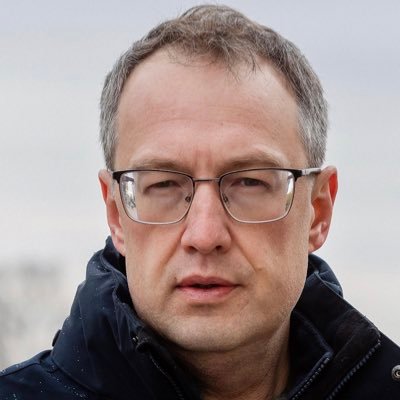
Witkoff called Putin a humanist as he thanked him for Stephen Hubbard’s release. Russian troops seized the elderly American in Izium, and former fellow prisoners reported that he had been beaten, tortured with electric shocks, burned and attacked by dogs. This is a punitive system created and endorsed by Putin, who is himself a product of that system.
Let us recall some examples of the “humanism” displayed by Putin and the system he created.
Wars. Chechnya, Georgia, Syria, Ukraine—a succession of military campaigns involving mass civilian casualties. In Novye Aldi in Chechnya, Russian forces executed at least 60 people. In Georgia, the European Court of Human Rights (ECtHR) established Russia’s responsibility for killings, torture and the burning of homes. In Syria, human rights organisations documented unlawful strikes by Russian and Syrian forces on hospitals, schools and markets.
His personal decision to invade Ukraine. On 24 February 2022, Putin himself announced the start of the full-scale war. As early as 2014, he publicly spoke of using civilians to shield Russian troops: standing “behind them, not in front, but behind” and challenging Ukrainian soldiers to “try shooting at women and children.”
Killings of civilians and the destruction of shelters and hospitals. Bucha, with its extrajudicial executions; the Mariupol Drama Theatre, marked with the word “CHILDREN”; and the missile strike on Okhmatdyt Children’s Hospital are specific instances of violence committed by the army Putin sent into Ukraine. They have been documented by the UN and international human rights organisations.
The deportation of children. The International Criminal Court (ICC) issued an arrest warrant for Putin over his suspected personal responsibility for the unlawful deportation and transfer of Ukrainian children. The UN Commission of Inquiry classified these practices as crimes against humanity.
Torture and the hunting of human beings. The UN Commission of Inquiry found that the Russian authorities’ systematic use of torture constituted a crime against humanity. It reached the same conclusion regarding systematic drone attacks on civilians in the Kherson region.
Depriving millions of the basic necessities of life. Strikes on energy infrastructure left Ukrainians without electricity, heating and water, and threatened the operation of hospitals. In connection with this campaign, the ICC issued arrest warrants for Shoigu and Gerasimov, including for suspected attacks on civilian objects.
MH17 and the concealment of responsibility. All 298 people aboard the passenger aircraft were killed when it was shot down. The ECtHR established Russia’s responsibility for the disaster and for violations of the rights of the victims’ relatives.
Poisonings abroad. A British inquiry found that Putin had probably approved Litvinenko’s murder with polonium. Another inquiry concluded that he had authorised the assassination attempt on Skripal. Novichok left behind by the perpetrators killed a member of the public—Dawn Sturgess.
The persecution of Navalny. After being poisoned with Novichok, the opposition politician was imprisoned; he died in a penal colony. In 2026, five European countries reported detecting epibatidine in samples taken from him and held the Russian state responsible for his poisoning.
Impunity for those who ordered political killings. Nemtsov was shot dead near the Kremlin. Politkovskaya was murdered on Putin’s birthday after investigating crimes in Chechnya.
Personal support for a state assassin. A German court established that Krasikov had killed Khangoshvili in Berlin on orders from Russian state agencies. Following a prisoner exchange, Putin personally met the convicted murderer at the airport and embraced him.
“Kursk”: 118 dead and “It sank.” In the first days of the disaster, Putin remained on holiday while Moscow delayed accepting foreign assistance. All 118 sailors died. Later, when Larry King asked what had happened to the submarine, Putin replied: “It sank.” His initial response to a question about the deaths of an entire crew took just two words.
“Nord-Ost” and Beslan: contempt for hostages’ lives. In the Nord-Ost case, the ECtHR found that the rescue operation following the use of gas had been inadequately organised. In Beslan, the authorities failed to take appropriate measures despite having information about the threat of an attack. During the operation, security forces used tank guns, grenade launchers and flamethrowers—the court found that this had contributed to the hostages’ deaths.
Children as hostages to political revenge. In retaliation for the US Magnitsky Act, Putin signed a law banning US citizens from adopting Russian children. Even nearly completed adoptions were halted, including those involving children with serious illnesses. The ECtHR found the ban discriminatory and disproportionate. The Kremlin demonstrated its power to Washington at the expense of children who could have found families.
The 1999 apartment bombings: questions the Kremlin cannot brush aside. Hundreds dead, another war in Chechnya and the rapid consolidation of Putin’s power. Litvinenko, Felshtinsky and Satter accused the FSB of organising the bombings. In Ryazan, the FSB later claimed that a device initially regarded as a bomb in an apartment building was part of a “training exercise with sugar.”
Torture, coerced confessions and years of imprisonment—this is how Putin’s government punishes disobedience. Ukrainians, Crimean Tatars and Russian opposition figures have received prison sentences of 10, 20 and 25 years in politically motivated cases.
By calling Putin a humanist, Witkoff grants moral absolution to a ruler who starts wars, presides over a state that practises systematic torture, and personally welcomes a convicted murderer.

Michael Layton QPM retweeted
Of course, we are not losing this war. But we are losing people. Because of the Russian attacks, we're losing people and time. It's such a pity, because our children don't have a real life and childhood. Not only children, but all people. That's why we need to end this war as quickly as possible. I hope that our partners, Americans and Europeans, will help us. God bless, our strong soldiers stay strong on the battlefield. It helps me stay strong during any kind of negotiations.
Michael Layton QPM retweeted
Today, five children killed by a Russian attack - 13-year-old Zakharii, 14-year-old Viorika, 16-year-old Dominika, 9-year-old Federika, and 18-month-old Artem - were laid to rest in Radushne, Dnipropetrovsk region.
A Russian missile struck the Voronov family's home on the night of July 29-30.
For more than two months, the children had been listed as missing. Their bodies were finally identified after extensive DNA testing.
Ten members of the Voronov family were killed in that Russian attack: 47-year-old Artem, his 41-year-old wife Olena, seven of their children, and their 18-month-old grandson.

A farewell ceremony for the Voronov family in Radushne, Dnipropetrovsk region.
Dad Artem (47), Mom Olena (41), their sons Mark (17) and Azarii Ilai (11), and their youngest daughter Emiliia (6), were killed by Russia.
A Russian missile strike completely destroyed their home. Five more children, including their 1.5-year-old grandson, Artem, remain missing.
"He called me and said, 'Our son is gone...' Those words hit me like a stone. I'll remember them for the rest of my life," Artem's mom shared.
My heart breaks for this family.
Deepest condolences...
R.I.P.
📹: Svoi Kryvyi Rih
Michael Layton QPM retweeted
There is a lot of Russian propaganda in Europe. They have invested as much money in it as in weapons during this war. This is a massive financial program spanning decades. Russia has been waging a hybrid war against Europe, including Italy, France, Britain, and Germany, for a long time. It just isn't waging a full-scale war against them as it is against us. Because we had the same thing – a hybrid war. Russian narratives across absolutely all television and media platforms, on the internet, and on social media.
People should not be pierced through and brainwashed by waves of narratives from the Russian Federation. Because it is up to France, Ukraine, Italy, and Spain to decide how to live and whom to elect. Russia cannot influence Italy's choices and freedom. Italy is a free country, just like Ukraine.
The Russians will seek to exploit far-right movements, religious movements, faith, migration, and gender. Russia doesn't care what issue can divide society: from religion to language, Russia will always find it and strike there. We are seeing this now not only in Europe – they also have influence in the United States of America. They have a very significant wave going on there, and their network is operating.
From an interview with Corriere della Sera. (3/3)

Michael Layton QPM retweeted
Baby Anhelina and her mom Inna were killed by Russia yesterday.
Anhelina was just over a year old. Her mom, Inna Mariukhna, was a primary school teacher. They were in the park in Nova Vodolaha, Kharkiv region, when a Russian drone attacked.
Little Anhelina was killed in her stroller. Her mom died of her injuries in hospital.
Another girl killed in the strike was just 11 years old.
Six people lost their lives from that Russian strike. All of them had simply been spending time in the park. At least 15 more were injured, including seven kids.
Deepest condolences...


Michael Layton QPM retweeted
We have always had important, strong strategic relations with the United States of America. Our bilateral relationship began developing particularly actively during the full-scale war. I am grateful for all the support.
But we have always built our relationship on honesty, fairness, and, most importantly, transparency. Because when you lie while your people are at war, it is very painful. That is why I have always wanted to hide nothing and never lie to the President of the United States. In any case, we have more in common than America does with Russia. Most people in Ukraine and the United States of America understand this. We would like to continue having the same open, honest, and pragmatic relations with America that we have today.
The position is very simple. We support a mutual energy ceasefire. If we are talking about the idea that we should not strike back at Russian energy facilities after they strike our gas, electricity, oil – everything. The Russians are striking. America cannot stop them. Let's believe that America really wants to, but cannot. Then, as a partner, I am willing to meet President Trump halfway: if they strike us and we cannot strike back – that is neither honest nor fair – but if this is what you need, if you cannot rein Putin in, then give us interceptor missiles so I can protect our energy infrastructure. You couldn't stop Putin – but you helped Ukraine.
From an interview with Corriere della Sera. (2/3)