

Rebuilt my mind after years of addiction. 🧠 Systems for those who keep failing to change ADHD | Sobriety | Mental Toughness
Canada
Joined May 2022
- Tweets469
- Following395
- Followers52
- Likes1.2K
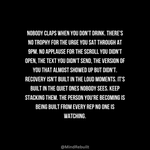





Don’t chase goals. Have standards instead and live by them.
You will have a much better time going through the journey of life.
14
Struggling do achieve your goals?
That was me for decades!
Last week I walked into a book store with the intention of picking up “The Almanack of Naval Ravikant”.
I walk over to the computer and type it into the search field. One copy left.
As I rushed over and grabbed it, there was another book beside it.
“Easy Discipline” by @JiaJiang .
As I opened it and read the first few pages I was hooked!
“This guy is speaking my language,” I said to myself.
In the first chapter he talks about how there are two types of disciplines .
Hard and Easy:
Hard: is the type that we glorify in our hustle culture today. Enduring pain, working harder, just “grind”.
Then there’s Easy: this is the type that is rooted in love, joy of the craft and finding pleasure in it.
The first might get you quick results but it does have costs in the form of burnout or mental/physical ailments down the line.
While the second is more sustainable and will not carry those negative side effects.
Once I understood this everything changed for me.
Go check out his book. You won’t regret it.
19
Your worst cravings don't live in the moment. They live in the future.
"We suffer more often in imagination than in reality." Seneca, Letters 13.4
The urge itself peaks and passes in minutes. What wrecks you is the horror trailer your brain plays right after: "you'll feel like this all night."
It's lying. An urge is a wave, not a life sentence. It rises, it crests, it breaks.
So tonight, when it hits: set a 10-minute timer and do nothing. Don't fight it, don't feed it. Just watch the wave pass.
You don't need more willpower. You need to stop believing the trailer.
Save this for the next urge.
12
If you are to add anyone on X today, make sure it’s @thedankoe. But only do it if you are serious in improving your life!


11

5 systems that beat willpower:
(the ones I actually run every single day). Willpower is a fight you eventually lose.
Systems mean you never show up to the fight.
1
10
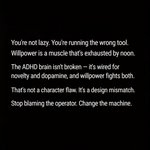
Your brain isn’t underpowered.
It’s tuned to a different station. The ADHD brain chases novelty, urgency, and dopamine,
and runs quiet on “important but boring.”That’s not a flaw.
It’s a setting. You don’t fix a setting with shame.
You build systems that work with it.
👇
1
9

Five years ago I admitted the patterns were running my life.
Five months ago I got sober.
Not cured. Rebuilding. There's a difference.
Starting today I'm running a public 30-day Rebuild. One system a day, logged here, in the open.
If your willpower has failed you 100 times, follow along. Systems don't.
@MindRebuilt
4
I spent 6 years failing at sobriety before I realized I was the problem. Not my willpower.
Not my circumstances. Me.
The pattern I kept repeating. Here’s what finally broke it:
2
17
Most people don't fail because they lose.
They fail because of what they do after they lose.
Here's the reconstruction framework most people never figure out:
1
1
29
"I'll start on Monday."
Those four words have killed more change than addiction ever did.
The Stoics saw this coming 2,000 years ago. Seneca wrote an entire letter about it. He said people don't have a short life. They waste a lot of it. And the biggest waste is the belief that you'll start living soon.
Here's what he actually said:
"You act like mortals in all that you fear, and like immortals in all that you desire."
Translation: you're terrified of dying but you act like you have infinite time to change.
Monday is a seductive lie. It lets you feel like you're making progress while doing nothing. You get the relief of the decision without the discomfort of the action.
Marcus Aurelius was sharper about it:
"Waste no more time arguing what a good person should be. Be one."
Not tomorrow. Not next week. Not on the first of the month.
Now.
I spent years waiting for the perfect Monday. The perfect month. The perfect version of myself that would finally have enough discipline.
That version never came.
What finally worked was accepting that the person who needs to change is the person who exists right now. Not the future version who has it all figured out.
The future version doesn't exist. The only one who does is the one reading this sentence.
And that one has a choice right now.
Not on Monday.
Now.
1
1
21
I signed up for an acting/voiceover workshop over the weekend.
Did it tonight and had a blast!
Here's what I realized: Done are the days of overthinking.
1
1
43
Someone at a meeting tonight had 8 years sober. 8 years! They said there are 4 pillars that make it possible to stay clean.
As I listened, I realized every single one of them has a name in Stoic philosophy.
1. Honesty.
Epictetus said the first rule of philosophy is to stop lying to yourself. Not to others. To yourself.
Most people fail at recovery not because they can't stop using. They fail because they can't admit what's really going on underneath the using. The boredom. The resentment. The fear. The belief that you're different, that the rules don't apply to you.
Honesty isn't a moral lecture. It's a survival mechanism. If you can't tell yourself the truth about where you are, you can't build a system that works.
2. Love.
Marcus Aurelius wrote about this constantly. Philanthropia — love of humanity. Not the romantic kind. The kind where you decide to care about other people even when you don't feel like it.
Addiction isolates you. It convinces you that you're alone, that nobody understands, that connection is dangerous. The opposite of addiction isn't sobriety. It's connection.
The person at the meeting said: "I tried to stay sober alone for 7 years before this. I couldn't do it until I let people in."
3. Humility.
Seneca said: "It's not that we have a short time to live. It's that we waste a lot of it."
Humility in recovery means admitting you don't have this figured out. That you're one bad day away from a relapse. That your willpower is not enough. That you need a system, a community, and a practice.
The ego wants to believe you're cured. Humility says: "I'm not cured. I'm just not using today."
4. Service.
The Stoics believed in duty. Kathēkon — doing what is required of you as a human being. Marcus Aurelius said: "What is not good for the swarm is not good for the bee."
Service is the final piece because it breaks the cycle of self-obsession. Addiction is a disease of the self. You become obsessed with your own pain, your own cravings, your own story. Service forces you to look outward.
Those 4 pillars aren't from a book. They're from 8 years of showing up. But it turns out the ancient philosophers knew them all by different names.
Honesty. Love. Humility. Service.
That's the system. Everything else is just repetition.
1
25
I tried going cold turkey on vaping for 90 days.
Failed spectacularly.
Here's what actually worked instead.
(The First Lesson - Environment):
First thing I did: stopped going to social events.
For 90 days.
Why? Because in the beginning, those environments are TRIGGERS.
You can't willpower your way out of environmental design.
You need to change your environment FIRST.
(The Mistake Most Make):
Most people try to change their behavior while staying in the same environment.
That's like trying to diet at an all-you-can-eat buffet.
Your environment is stronger than your willpower.
So step 1: Remove yourself from trigger environments.
(The Second Lesson - Identity):
Then I changed how I saw MYSELF.
I stopped saying "I'm trying to quit vaping."
I started saying "I don't smoke."
Past tense. Identity shift.
I wasn't someone struggling to quit.
I was someone who didn't do it at all.
(Why Identity Works):
Your brain believes what you tell it about yourself.
If you tell yourself "I'm trying," you stay in the struggle.
If you tell yourself "I don't," you embody that identity.
The second version is 10x more powerful.
(The System):
So here's the actual system that worked:
1. Change your environment (remove triggers)
2. Change your identity (tell yourself the new story)
3. Watch the behavior change automatically
It's not about willpower.
It's about system design.
Most addiction recovery focuses on willpower.
They're missing the point.
Environment → Identity → Behavior.
That's the actual formula.
Design your system, not your discipline.
1
17
If you are looking to change your life, you cannot simply just "think" your way into it.
You MUST take action. Doing something even as small as waking up 30 minutes earlier so you can read 5-10 pages before you start your day on a topic that interests you.
Do that over 30 days and it starts to compound.
Tell yourself: "I am the type of person that loves to read early in the morning instead of doomscrolling".
1
4
"I want to change. So why don't I?"
That question lived in my head for so many years.
I'd read countless books. I'd set the goals. I'd genuinely want to be different. And then I'd get to bed at 8am after a night out of drinking and drugs.
Not because I didn't want the change enough. Because my brain had a broken bridge between wanting and doing.
Here's what nobody told me about that gap:
The ADHD brain doesn't lack motivation. It lacks access to motivation in the moment. The desire to change lives in your prefrontal cortex. The impulse to relapse lives in your limbic system. And when those two systems are at war, the limbic system wins every time because it's faster.
The Stoics had a name for this: Prohairesis: the faculty of choice. Epictetus said it's the one thing we fully control. But here's the part that gets left out of the quote: he also said it's a muscle that atrophies when you don't use it, and it's a muscle that gets stronger with deliberate practice.
You don't need to want it more.
You need to train the muscle of choosing in the moments when you still have a choice, so it's strong enough to fire when you don't.
That's what the first 30 days of my rebuild looked like:
I stopped trying to "not do the thing." Instead, I focused on the 3 seconds before I did the thing. That's where the choice lives.
I made the first right choice so small it felt stupid. Drink water instead of fight the craving. Step outside. One breath. Not "change your life." Just "change this second."
I removed the shame from failing. Shame doesn't teach discipline. It teaches hiding.
The gap between wanting and doing isn't a character flaw. It's a skill gap. And skills can be built.
#addiction #change #mindset #stoicism #philosophy #personaldevelopment
1
20
"Defeat is a choice" sounds nice when you've never been defeated by your own brain.
Here's what I actually learned after hitting rock bottom at 35:
The people who say "just choose to be better" have never watched themselves make the same destructive decision 50 times in a row while screaming at themselves to stop.
Choice isn't the problem. It's that your brain is running different software.
For years I thought I was broken because I couldn't "choose" my way out of addiction. Turns out I was trying to use willpower on a brain that runs on impulse.
The Stoics understood this better than the self-help gurus.
Epictetus didn't say "just choose not to be angry." He said separate what you control from what you don't.
And here's the part nobody quotes: the ability to make that separation is a skill you build, not a switch you flip.
You don't get better at choosing by wanting it more.
You get better at choosing by:
1. Building awareness of the gap between impulse and action.
2. Making the first right choice so small it feels stupid.
3. Removing the friction that leads back to the old pattern.
Most self-help tells you to try harder.
The truth is harder to hear: you don't need more willpower. You need a system designed for the brain you actually have, not the one you wish you had.
That's what Mind Rebuilt is about.
#Youvsyou#personaldevelopment#growth#mindset#addiction#adhd
1
20
Diamandis & Kotler's "We are as Gods" has one concept that changed how I see addiction and ADHD.
They call it truth filters: Framing, Mindset, Bias.
Most people think their brain is broken. Wrong.
Their filters are broken.
Here's how this works:
Framing = how you name the problem.
You say "I'm lazy" or "I'm weak-willed." Your brain accepts that frame as law. You stop trying.
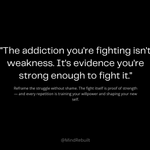
Reframe: "My brain is wired for dopamine-seeking. That's not weakness, it's wiring.
Now I design for it.
Same brain. Different frame. Different outcome.
Mindset = what you believe is possible.
"I can't beat this" becomes a self-fulfilling prophecy. Your actions align with your belief.
Mindset flip: "I can't use willpower. But I can build a system." Now you're not fighting your brain, you're redesigning it.
Bias = what you're blind to. This goes on a deeper level
ADHD brain? You're biased toward short-term reward. You don't see the long-term cost. That's not a character flaw, it's a blind spot.
The system: name it. Account for it. Build around it.
You can't control the bias. You can control the environment. That's the whole game.
Framing + Mindset + Bias audit = your operating system.
Do this weekly. Watch behaviour follow belief.
#Framing#Mindset#Growth#Selfdiscovery#PersonalDevelopment
1
16
To quickest way to change your life is to find and surround yourself with people who are already doing the thing.
Want to run more? Join a run club!
Want to cycle? Join a cycling club.
Want to read more? Join a book club.
It's also just more fun when you are doing things with others. It really does open up new possibilities and the doorway to connection.
This can be applied to anything you are trying to achieve.
#PersonalDevelopment #Change #MindsetShift #ChangeyourthinkingChangeyourlife #NewBeginnings #Growth
1
7