

Founder, MitochondrialHealth | 40+ years in rehabilitation | Metabolic Health • Brain Health • Strength • Healthy Aging
Clermont, FL
Joined April 2024
- Tweets4.2K
- Following152
- Followers364
- Likes2.6K





Pinned Tweet
I’m Ted Langdon, founder of MitochondrialHealth.
This didn’t start with social media, a podcast, or the latest longevity trend.
My journey in health, exercise, physical therapy, and rehabilitation began more than 40 years ago.
As a teenager in the early 1980s, I began volunteering and observing in hospitals, rehabilitation settings, and sports medicine. That early exposure eventually became a lifelong career working in physical therapy and rehabilitation.
Along the way, I studied exercise, fitness, prevention, rehabilitation, strength, nutrition, and metabolic health. I had opportunities to learn in respected clinical and academic environments, including UNC Chapel Hill and Duke, and to work across different areas of rehabilitation and healthcare.
But some of my greatest lessons did not come from a classroom.
They came from people.
For more than four decades, I have worked with and learned from people dealing with weakness, pain, injury, neurological conditions, chronic disease, falls, loss of mobility, and the difficult process of trying to regain function and independence.
I have watched people fight their way back after illness and injury.
I have also seen what happens when years of declining muscle, poor metabolic health, inactivity, inadequate recovery, and loss of physical capacity finally catch up with someone.
That experience changed the questions I began asking.
What if we focused more attention on preserving health before people lost it?
What if we protected muscle and strength earlier?
What if we paid more attention to metabolic health, movement, nutrition, sleep, recovery, and the cellular processes that help support human energy and resilience?
What if the goal of healthy aging was not simply living longer, but remaining strong enough and capable enough to keep living your life?
Those questions eventually helped lead me to create MitochondrialHealth.
Mitochondria are an important part of that story, but they are not the entire story.
Human health is complex.
Muscle matters.
Strength matters.
Movement matters.
Metabolic health matters.
Nutrition matters.
Sleep matters.
Recovery matters.
Brain health matters.
And the ability of our cells to produce and manage energy matters.
MitochondrialHealth brings those pieces together through evidence informed education focused on metabolic health, mitochondrial function, strength, movement, recovery, brain health, and healthy aging.
My perspective is not that of a laboratory scientist or physician.
It comes from more than 40 years around rehabilitation, physical therapy, exercise, prevention, recovery, and real people trying to remain strong or regain their independence.
That is the perspective I bring to MitochondrialHealth.
I will continue studying the research, learning from physicians, scientists, researchers, clinicians, coaches, and other experts, and translating that information into practical education people can understand and use.
No miracle promises.
No single explanation for every disease.
No one size fits all approach.
Just a continuing effort to understand the science, ask better questions, share what the evidence shows, and help people think earlier about the health and physical capacity they want to preserve for the future.
Because after decades in rehabilitation, one lesson has stayed with me:
It is much easier to protect strength, mobility, and independence than to try to rebuild them after they are gone.
That is why MitochondrialHealth exists.
Build strength.
Protect muscle.
Improve metabolic health.
Prioritize recovery.
Preserve mobility.
Protect independence.
And keep learning.
MitochondrialHealth
Education for a Healthier Tomorrow.
MitochondrialHealthLLC.com
General education only. Not medical diagnosis or treatment.
What if taking more antioxidants actually reduced some of the benefits of exercise?
Your mitochondria need more than protection. They need the right signals to adapt, strengthen, and become more resilient.
Sometimes the stress is what makes us stronger.
MitochondrialHealthLLC.com


Exercise works partly because it's a stressor, and blocking the stress can block the benefit. In a 4-week training study in healthy young men, exercise improved insulin sensitivity on a clamp only in the men who weren't taking vitamin C and E, and the men taking the antioxidants also missed the rise in their own antioxidant defenses. The reactive oxygen species from a workout are part of the signal that tells muscle to adapt, so a person who wants the full metabolic payoff of training should think twice about mega-dose antioxidants around it.
One night of poor sleep can reduce insulin sensitivity by roughly 25%. But here’s the fascinating part: Exercise may help protect your metabolism from the damage. Your skeletal muscle is powerful metabolic medicine!
A bad night of sleep matters more for metabolism than most people think, but movement can offset a lot of it. A single night of 4 hours of sleep cut insulin sensitivity by about 25% in healthy adults, in both the liver and muscle. When young men were held to 4 hours a night for five nights, their glucose tolerance worsened, but three sessions of high-intensity interval exercise during that stretch prevented the drop. A short night isn't a reason to skip the workout, and it may be the best day to do it.
We’ve been told for decades that eating meat shortens our lives. So why did a study of 175 populations find that higher meat consumption was associated with LONGER life expectancy? Maybe it’s time to question the narrative and follow the science.

You W, et al. Total Meat Intake is Associated with Life Expectancy: A Cross-Sectional Data Analysis of 175 Contemporary Populations. Int J Gen Med. 2022.
pmc.ncbi.nlm.nih.gov/article…
My videos on this:
11 LIES about Red Meat They Want You to Believe: youtube.com/watch?v=U6n9BR2I…
The Blue Zones Are a $78 million dollar LIE [with Dr Saul Newman]: youtube.com/watch?v=hdEKEyGq…

We’ve been told meat shortens our lives. So why do countries consuming more meat often have longer life expectancies?
A study of 175 countries raises some serious questions about the anti-meat narrative.
Correlation isn’t causation, but that argument works both ways.
MitochondrialHealthLLC.com
Umm, meat shortens your life? The countries eating the most meat tend to live the longest.
This 2022 paper ran UN data from 175 countries. More meat went with longer life expectancy, and the link held after the researchers controlled for wealth, total calories, obesity, and urbanization.
The part nobody quotes: carbohydrate crops (cereals, starchy roots, sugars) showed a weak, negative link with life expectancy.
This is population data, so it can't prove meat adds years. But it's the same kind of data the Blue Zones story was built on, and it points the other way. I've made videos on this for years (see below).
If meat really shortened lives, we surely need to explain why the heaviest meat-eating countries aren't dying first, right?
Study and my videos below...
Your body was designed to burn fat and produce ketones long before anyone invented the ketogenic diet.
Ketosis isn’t a metabolic malfunction. It’s a natural human capability we’ve largely forgotten how to use.
MitochondrialHealthLLC.com
Ketosis isn't a fringe state, and the body moves toward it whenever insulin comes down. Human babies are born unusually fat, with body fat making up about 11 to 14% of their weight, and that fat is both a fuel store and the source of ketones a growing brain uses to build its own lipids. Low insulin lets fat cells release fat and lets the liver turn it into ketones, and eating carbs all day keeps insulin high enough to hold that switch off.
What if we’re overlooking one of the most important metabolic signals involved in breast cancer?
Insulin doesn’t just regulate blood sugar. It also signals cellular growth.
Research linking elevated fasting insulin with breast cancer risk and poorer outcomes raises an important question:
Why aren’t we paying more attention to insulin resistance in cancer care?
Breast cancer cells are LOADED with insulin receptors. That's important to know for preventing/treating it. Why? Read on...
In 159 breast tumors, insulin receptor content was more than 6 times higher than in normal breast tissue. And the receptors worked: they bound insulin and switched on.
Many cancer cells favor a form of the insulin receptor (IR-A) that acts mainly as a growth signal, not a sugar-handling one. Insulin tells these cells to grow.
So what happens when insulin runs high?
512 women with early breast cancer had fasting insulin checked. Highest vs lowest quarter: 2x the distant recurrence, 3.1x the death rate.
In the Women's Health Initiative, researchers measured insulin in about 1,650 postmenopausal women drawn from a cohort of 93,676. In women not on hormone therapy, the top quarter of insulin had 2.4x the breast cancer risk. And the obesity link mostly faded once insulin was accounted for.
Few doctors check fasting insulin. Fewer still know that Low-carb/Keto/Carnivore is the most direct way to bring it down. I've made videos on this (see below).
If high insulin goes with more breast cancer AND worse outcomes, why isn't fasting insulin part of every breast cancer workup?
Studies and my videos below...

Your muscles are one of your body’s most powerful tools for controlling blood sugar.
Just 10 minutes of walking after a meal can improve glucose regulation, even without increasing insulin.
Don’t underestimate the metabolic power of muscle contraction!
A woman can eat the same foods at 55 that she ate at 40 and experience a completely different metabolic response.
Menopause changes more than hormones. It can change where fat accumulates, how efficiently the body uses energy, and how well it responds to insulin.
Protect your muscle. Prioritize protein. Build strength. Metabolic health matters more than ever.
MitochondrialHealthLLC.com
Weight gain at menopause isn't just about age, and the fat goes somewhere specific. In a 4-year study that followed women through the menopausal transition with CT scans, all of them gained fat under the skin, but only the women who became postmenopausal gained visceral fat inside the abdomen. Their estradiol fell, their sleeping energy expenditure dropped more, and their fat burning fell by about a third. Falling estrogen lowers insulin sensitivity, which is why carbs a woman tolerated at 40 can work against her at 55, and why protein and lifting matter more than ever in this window.
Same calories. Different insulin responses. Different hunger.
Your body responds to more than a calorie count.
MitochondrialHealthLLC.com
PMOS (formerly PCOS) isn't a disease of being overweight, and lean women get it too because the core problem is insulin resistance. On a clamp, the gold-standard test, insulin resistance showed up in 75% of lean women with PMOS and 95% of overweight women with PMOS, after three months off insulin sensitizers and the pill. High insulin pushes the ovary to make more androgens and tells the liver to make less SHBG, so more testosterone circulates free, and that's why lowering insulin, not just losing weight, is the real target.
Same calories. Different hormonal responses. Dramatically different hunger.
Dr. Benjamin Bikman highlights research showing 81% greater food intake after high-glycemic meals.
Maybe the problem isn’t simply how much we’re eating. Maybe it’s what we’re eating and how our metabolism responds.
MitochondrialHealthLLC.com
Carbs don't just add calories, they change how much a person eats afterward. When obese teenage boys ate breakfast and lunch with the same calories but a different glycemic index, they ate 81% more over the next five hours after the high-glycemic meals than after the low-glycemic ones. The fast carbs drove insulin up and glucagon down, then blood glucose and fatty acids fell and epinephrine rose, which left the body hungry again while sitting on plenty of stored fuel.
A HIP FRACTURE CAN CHANGE THE REST OF YOUR LIFE.
A major Oxford study found more than twice the hip fracture risk among vegans compared with meat eaters. That’s an association worth understanding, not ignoring.
Strong bones, strong muscles, and proper nutrition are foundational to healthy aging.
MitochondrialHealthLLC.com
Shawn is right. And the numbers are worse than most vegans want to hear.
EPIC-Oxford, run out of the University of Oxford. Nearly 55,000 people followed for an average of 17.6 years.
Compared with meat eaters, vegans had:
More than DOUBLE the risk of hip fracture (hazard ratio 2.31).
43% higher risk of any fracture.
About double the risk of leg fracture.
That works out to about 15 extra hip fractures for every 1,000 vegans over 10 years.
They adjusted for income, lifestyle and BMI. The gap held. They adjusted for calcium and protein intake. It shrank a little and still held.
A hip fracture in an older person is not a bruise. It's often the start of the end.
Your bones are built from protein, minerals and fat-soluble vitamins. Meat and eggs bring all of them, ready to use. I covered the research on meat and bone strength in a video.
Meat is a health food. For your bones too...
Read the actual study. Link below...
🥩 THE GLOBAL BEEF INDUSTRY IS CHANGING. BUT ARE WE PRIORITIZING HUMAN NUTRITION?
Cattle production tells an economic story. The nutritional value of beef tells a much more important story about protein, muscle preservation, metabolic health, and healthy aging.
MitochondrialHealthLLC.com

YOUR MUSCLES DO MORE THAN MOVE YOUR BODY. THEY HELP KEEP YOUR BLOOD VESSELS HEALTHY.
Every time you walk, lift weights, or contract your muscles, you stimulate physiological processes that support nitric oxide signaling, circulation, oxygen delivery, and mitochondrial health.
One more reason maintaining muscle strength and staying physically active are essential for healthy aging.
MitochondrialHealthLLC.com

Just Dropped a 24m Masterclass on Nitric Oxide (NO)
🫀How it supports your heart health
7⃣ Free ways to boost it naturally (in your kitchen🍳, in your bathroom🚽, and even in your car🚗)
Full video: youtu.be/NlarD_GAgNY
Here's a 70 sec clip explaining how exercise can improve blood flow.
🥩 THE UNCOMFORTABLE TRUTH ABOUT VEAL AND DAIRY
People condemn veal while consuming dairy products without realizing the two industries are closely connected. What happens to male dairy calves when they cannot produce milk?
The answer might challenge everything you thought you knew about animal agriculture.
Know where your food comes from. Understand the entire process before passing judgment.

Customer: "No veal, thanks. I know what happens to the calves."
Butcher: "So do I. Which bit do you know?"
Customer: "Crates. Taken off the mother, kept in the dark, can't turn round."
Butcher: "Banned here in 1990. This one had straw, a shed, and other calves to annoy for eight months. Rose veal, we call it. Pink, not white."
Customer: "It's still a baby cow."
Butcher: "It's a dairy bull calf. Where do you think they went before people bought veal?"
Customer: "Reared for beef?"
Butcher: "A Holstein bull doesn't make beef worth the feed. For years the answer was a bolt in the head at a day old. Tens of thousands a year, in this country, shot in the pen because nobody would eat them. The industry only promised to stop that a couple of years ago."
Customer: "That's horrific."
Butcher: "That's the price of a latte. Every pint of milk needs a cow in calf every year, and half the calves are boys."
Customer: "So eating the veal..."
Butcher: "Gives him eight months in a shed instead of eight minutes. The customer who won't touch veal and buys a flat white has made a choice. She just didn't get told what it was."
Customer: "I'll take a kilo."
Butcher: "Good. And the next person who tells you veal is cruel, ask them what they take in their coffee."

What if the biggest thing holding you back isn’t your circumstances, but the identity you’ve built around struggling?
Stop defining yourself by what you haven’t achieved. Build the mindset, habits, faith, and discipline that reflect who you want to become.
You don’t have to reach the finish line to start living with purpose today.

One of the most dangerous traps in life is spending YEARS trying to achieve a goal.
You spend years trying to get lean. Years trying to make money. Years trying to meet your dream partner.
You make progress. You fall back. You try again. You struggle. You chase.
And somewhere along the way, something strange happens.
You become addicted to WANTING the goal, not HAVING it.
Your identity becomes the person who’s trying to get lean. The person who’s trying to become successful. The person who’s still searching for love.
You’ve spent so long chasing that you don’t even know how to be the person who already has it.
And this is where you can become trapped.
Your mind keeps pulling you back into the familiar state of struggling, striving, and wanting.
So what’s the solution?
Stop wanting. Start having.
Drop the excessive importance you’ve placed on the goal.
Stop telling yourself life will finally be amazing WHEN you get there.
Recognize how you’re already winning. How you’re already living parts of your dream reality.
And start spending time mentally occupying the state of someone who already has what they want.
Not “I’m desperately trying to get lean.”
“I’m lean. It’s handled.”
Not “I need to make more money so I can finally relax.”
“Money is handled.”
Not “I need to find an amazing partner before my life is complete.”
“My life is already full. Love is handled.”
Visualize the end result. Feel that calm certainty. Then take action from that state.
Desire + action. Without desperation.
The goal isn’t to stop pursuing what you want.
It’s to stop identifying as the person who doesn’t have it.
You’ve spent enough time practicing wanting.
Now practice having.
Are pregnant women getting enough choline to support their babies’ developing brains?
New research is raising important questions about prenatal nutrition, cognitive development, and whether current choline recommendations are sufficient.
Eggs, beef, and liver provide this essential nutrient naturally. It’s time to take maternal nutrition and the science behind it seriously.
Trial (Am J Obstet Gynecol 2026, PMID 42896815): doi.org/10.1016/j.ajog.2026.…
Trial registry (dose equals about 1,250 mg choline/day): clinicaltrials.gov/study/NCT…
NIH choline fact sheet (food amounts; 90 to 95% of pregnant women fall short): ods.od.nih.gov/factsheets/Ch…
My video on this:
CHOLINE: Symptoms, Sources & Benefits: youtube.com/watch?v=RqZ2Uds8…
COULD SOMETHING AS SIMPLE AS CHOLINE INFLUENCE A CHILD’S BRAIN DEVELOPMENT?
A randomized clinical trial involving 206 pregnant women reported that children in the phosphatidylcholine supplementation group scored nearly 8 IQ points higher at ages 3 to 4.
That’s an intriguing finding, although further research is needed.
Meanwhile, eggs, beef, and liver provide naturally occurring choline, an essential nutrient involved in fetal brain development, cellular health, and nervous system function.
Are we paying enough attention to nutrient density during pregnancy?
Healthy development begins with adequate nutrition.
MitochondrialHealthLLC.com
Education for a Healthier Tomorrow.
This is big news, and it's really about food.
The trial (University of Colorado, 206 pregnant women) gave 9,000 mg/day of phosphatidylcholine from 16 weeks until delivery. At ages 3 to 4, their kids averaged 7.78 IQ points higher than placebo. The authors call phosphatidylcholine "the form of choline occurring naturally in food."
The best sources of choline (NIH):
Beef liver, 3 oz: 356 mg
Eggs, 1 large: 147 mg
Beef top round, 3 oz: 117 mg
Ground beef, 3 oz: 72 mg
Chicken breast, 3 oz: 72 mg
Compare broccoli: 31 mg per 1/2 cup.
The authors suggest about 900 mg of choline a day in pregnancy. That's about 6 eggs, or a serving of liver plus a few eggs. Or about 29 half-cup servings of broccoli.
Meanwhile NIH says 90 to 95% of pregnant women don't even reach the basic 450 mg/day, and most prenatal vitamins have little if any choline.
(Yes, they used a supplement. Attention problems didn't change, and a third of the moms dropped out before the 4-year visit. The IQ result was still significant.)
For decades we told pregnant women to fear egg yolks and red meat. I covered choline in a video (see below).
I suspect Choline is conditionally Essential in pregnancy. So why are we still steering moms away from the foods richest in it?
Study and my video below...
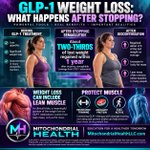
WHAT HAPPENS WHEN THE WEIGHT-LOSS INJECTIONS STOP?
A published study found that participants regained approximately two-thirds of their lost weight within one year of stopping semaglutide.
The bigger question isn’t just how much weight you lose. It’s how much muscle you preserve, whether your metabolic health improves, and whether those improvements last.
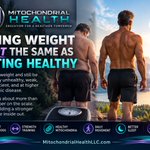
Weight loss and metabolic health are not the same thing.
pubmed.ncbi.nlm.nih.gov/3544…
MitochondrialHealthLLC.com

Wilding et al., Diabetes Obes Metab 2022 (STEP 1 extension, 327 participants). Weight loss 17.3% at week 68; 11.6 percentage points regained by week 120 after stopping.
pubmed.ncbi.nlm.nih.gov/3544…
My videos on this:
Stopped Ozempic? Here's What You NEED to Know: youtube.com/watch?v=HXtt9cgO…
Why are Processed Carbs So Habit-Forming? (Carb-Cravings are REAL!): youtube.com/watch?v=dqg7cG1K…
If a medication reduces your appetite, cravings, and desire for alcohol, what happens when you stop taking it?
The real conversation about GLP-1 medications needs to go beyond weight loss. We should be discussing metabolic health, muscle preservation, nutrient-dense nutrition, and sustainable long-term results.
Weight loss is not the finish line. Metabolic health, strength, and independence are the real goals.
MitochondrialHealthLLC.com
Heineken is worried Ozempic is killing beer sales. Think about what that means. A drug that turns down appetite also turns down the urge to drink. The craving was always the problem.
But the drug only works while you take it. In the STEP 1 extension, people lost 17.3% of their weight on semaglutide. One year after stopping, they had regained 11.6 points of it, and most of the metabolic gains went back toward baseline.
You can turn down cravings without a weekly shot. Cut the sugar and starch, eat meat and eggs, and hunger settles down on its own. I've covered what happens when people stop Ozempic in a video.
If the drug only works while you're on it, what's the plan for the rest of your life?
Study and my videos below...
One large egg provides approximately 147 mg of choline, yet most pregnant women aren’t getting enough of this essential nutrient. Why aren’t we talking more about the importance of animal-based nutrition for fetal brain development and lifelong health?
NIH Office of Dietary Supplements, Choline fact sheet: 1 large hard-boiled egg = 147 mg; 90 to 95% of pregnant women fall short of the adequate intake.
ods.od.nih.gov/factsheets/Ch…
My videos on this:
Eggs Cause DIABETES!!! (Wait, What?) Doctor Explains 2026: youtube.com/watch?v=0IkXbaoX…
Can You Actually Overeat Steak & Eggs?: youtube.com/watch?v=6QQbLbRZ…