

“All fortune is good fortune; for it either rewards, disciplines, amends, or punishes, and so is either useful or just.” Catholic 🇻🇦
Joined May 2023
- Tweets25.3K
- Following1.1K
- Followers5.4K
- Likes29.3K
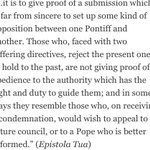


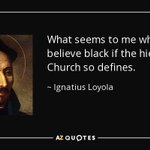


This obviously true. There has been development of doctrine since the Crusades.
The Catholics denying this and saying they’re obeying the medieval popes are mistaken. They should listen to Pope Leo XIII’s warning below:


Call me a woke liberal but I don’t think there’s anything Christian about mocking a teenager and her deported father.
It’s quite scandalous to read the comments.

“It feels really empty without him,” says 16-year-old Corey Diawara, whose father was deported in July.
His father had lived in the U.S. for 25 years and had no criminal record. Moussa Diawara says he was deported without being able to speak to his lawyer or a judge. He was eventually sent to Mali, a country a U.S. immigration judge ruled he could not be deported to.
In a statement, the Department of Homeland Security told 60 Minutes that Ghana had provided the U.S. with “diplomatic assurances for his safety.” DHS also questioned the credibility of Diawara’s arguments for fearing persecution in Mali. cbsn.ws/4etdVdW
Moral of the story: Rome always wins.

As is often the case in breaking news, the truth slowly comes out.
Today we learn directly from the organizers of the TLM pilgrimage that when they could not get Saint Peter’s basilica… “permission was sought and gained for a Prelatial (Pontifical) Low Mass in St Mary Major.”
So unlike what so many bloggers, podcasters, journalists, and rage baiters claimed, this was NOT a last-minute change but something that was known since August.
Respect to those who have already corrected what they previously posted and shame on those who have not.
I’ll also note, since I shared early on that events on their official website were still incorrect a day before the pilgrimage began (and many of these same people, including a priest involved said I was lying about that when it was updated the following day) the organizers also said this… “The SP website was based on what happened last year. The problem was that as things were confirmed, very late in the day, they were contirmed as being different trom what they expected, and the website was not updated. So I now understand.”
If you haven’t yet woken up to the trad media machine raging against the pope, this latest manufactured “scandal” might be a good time to do so
Good grief.
Again, I attend the TLM in Rome with the ICKSP and with the FSSP when I'm in the States. I have attended this TLM pilgrimage many times over the years. I am NOT a journalist or blogger who gets paid to rage. I am, however, someone who has been organizing pilgrimages like this for decades and knows exactly how the Vatican and the churches work.
The news over the last few days is that the TLM pilgrimage Mass was not allowed in Saint Peter's Basilica, that the Vatican threw together an event to block them, that the group was denied entry into the basilica to pray, and that they were only allowed one hour at Saint Mary Major at the last minute, with no photos.
Let me break this down...
Celebrations for the 800th anniversary of the death of Saint Francis were being planned as early as 2021. Meetings took place with Pope Francis in 2022 to discuss the events. In January 2025, the Italian government met with Vatican officials to plan the events. In January 2026, Vatican News referenced planned events to take place throughout the year. So despite what some are saying, the Franciscan event that is happening today was not thrown together to block this Mass at the last minute. In fact, this event coincides with a huge event that starts tomorrow in Assisi, where 5,000 people have registered and which Pope Leo was originally scheduled to attend.
When the organizers requested the Mass for this day, they were told the altar was already reserved and offered another day or another location. They chose another location, Saint Mary Major. No scandal.
As for the procession, the group was not banned from entering. They were not allowed to process in. They could not carry their flags and banners and would have to enter through security like everyone else. If you check the photos, you'll see that the line at that time was over an hour long. So if they arrived at their scheduled time of 1 p.m., it would have been difficult to get through security and across town in time for their 3 p.m. Mass.
👏🏻 Props to the PR people who positioned the group for a photo in front of the walls set up for construction of the Nativity scene instead of moving them over a few feet for an unobstructed view of the basilica! 👏🏻
Last year, we were able to process in because there was a dedicated entrance for the Jubilee with very little wait. Anyone could process in (unfortunately), which is why we ended up with some inappropriate processions. But that was an exception during the Jubilee. Normally, groups cannot just process beyond the piazza, as was the case today.
As for the Mass at Saint Mary Major, they allow one hour for Mass. I have been here with cardinals leading pilgrimages of hundreds of people. Do you know how much time they were allowed for Mass? One hour. Saint Mary Major says on their Mass reservation form and in their confirmation emails that private groups are allowed one hour. Could they have made an exception? Sure, but they don't usually for cardinals bringing busloads of people, so why would they here?
And for the photos during Mass, permission to use a professional photographer has to be requested well in advance. Did the organizers know this and make the proper request? I don't know. Professional photos on Vatican property, including Saint Peter's Basilica, Saint Peter's Square, Saint Mary Major, Saint John Lateran, Saint Paul Outside the Walls, and the Scala Santa, require special permission. I've been making these requests for years. It's simple, but getting a reply takes time. It is the Vatican, after all. So perhaps they did not have permission or even ask for permission.
There is plenty to question in the Church, but if you're not looking for clicks, this looks more like poor planning and poor communication, possibly on both sides, than some grand conspiracy.
The Modern Boethius retweeted

Turns out the whole "Vatican banned the TLM procession" thing was fake. They asked for a date and were told it was unavailable and didn't try to reschedule.
When will people stop lying about the church?
Let me know if any of this is incorrect…
But first, I mostly go to FSSP in the US and ICKSP in Rome. I’ve also spent the last two decades organizing pilgrimages and know all the ins and outs of planning group pilgrimages.
Ok, so the Summorum Pontificum pilgrimage NEVER had permission for Mass in Saint Peter’s Basilica this year?(Yet they still advertise it on their site.)
Their requested date interfered with an already scheduled Mass and lecture on the 800th anniversary of the death of Saint Francis. So they were given the choice between another day or having the Mass at Saint Mary Major. But only yesterday, or maybe today, they told those on the pilgrimage the church had changed?
Part of this pilgrimage has always been to visit the tomb of Saint Peter. So when they asked for permission to have the pilgrimage visit the tomb of Saint Peter, they were still told they could not AT THE REQUESTED TIME because of the planned event. This is also still on their website, although they knew months ago? Back in August?
And now everyone who likes clicks and controversy is saying the Vatican BANNED them, but really they asked for a date that wasn’t available and wouldn’t agree to change their date, which I completely understand is not easy to do.
Last year’s Mass with Cardinal Burke was glorious, but if the basilica is already booked, the basilica is already booked. Right?
I also think we should have a high TLM weekly in Saint Peter’s Basilica. ✌️

The media doesn’t want to tell you this but you can actually be totally chill and have low cortisol every time a new Vatican document comes.
You can even read it and learn something from it.

JUST IN: The Vatican’s Dicastery for the Doctrine of the Faith today released a new document titled “VENITE AD ME [COME TO ME]: Considerations on the Transmission of the Faith in an Epochal Change” — vatican.va/roman_curia/congr…
Signed by DDF Prefect Cardinal Víctor Manuel Fernández, the section on Liturgy (n. 90-94) states:
90. The second consideration linked to the rediscovery of the centrality of the proclamation of the kerygma concerns the liturgy. If the heart of the Christian proclamation is the encounter with God’s saving love in Christ, the liturgy constitutes the privileged place in which this mystery is celebrated and communicated sacramentally. For this reason, it plays a central role in handing on the faith, serving as the beating heart of ecclesial life, where the community is nourished by the Word of God and the Bread of eternal life. In this regard, we must move beyond a reductive view that regards the liturgy as merely a ritual framework for ecclesial life. The liturgy, in fact, is first and foremost an experience of faith, even before it is a teaching, in that it allows the faithful to participate in gestures, words, silences, and symbols, thereby experiencing the mystery of Christ in a living way. As stated in Evangelii Gaudium, “the Church evangelizes and is herself evangelized through the beauty of the liturgy”[94]; precisely through its symbolic power and its ability to engage the whole person fully, the liturgy becomes an authentic place of proclamation and encounter with the Lord. In the liturgical action, and particularly in the Eucharist, we are drawn ever more deeply into the Paschal Mystery, while the sacramental character of the Church—called to be a sign of God’s love for humanity—is made visible. In this sacramental event, the encounter with the Risen One becomes a shared and vital act that educates believers not only by “informing” them, but by shaping them from within so that they may become participants in the mystery being celebrated. For this reason, in the liturgy, faith is transmitted in a performative way: we do not merely speak of God but enter into a relationship with him. The liturgy is living memory and tradition, generating and shaping Christians capable of bearing witness to the salvation they have encountered: by participating in liturgical prayer, one enters, in fact, into a history, into a shared memory that spans the centuries. Therefore, to celebrate means first and foremost to receive a faith that has been believed, lived, and prayed by others before us.
91. Furthermore, this dynamic highlights the eminently communal dimension of the liturgy. Faith, in fact, is not transmitted solely through individual proclamation or teaching, but within a people who celebrate together. In the liturgy, the believer is never isolated but is part of a “we” that precedes, accompanies, and transcends him or her. This communal dimension serves as a powerful antidote to the allure of a selfish and individualistic lifestyle, which, as we have already seen, is so widespread today in many contexts. Precisely because it is an ecclesial and communal experience, the celebration of the faith is closely linked to processes of inculturation—that is, to the effort “to communicate more effectively the truth of the Gospel in a specific context, without renouncing the truth, the goodness and the light which it can bring whenever perfection is not possible.”[95] Applied to the liturgy, this perspective requires preserving the richness of the Church’s symbolic tradition, while at the same time making it accessible and meaningful to the men and women of our time, within a healthy and fruitful tension between fidelity to tradition and the comprehensibility of the message being celebrated.
92. From the perspective of the transmission of the faith, therefore, the liturgy is of crucial importance, in accordance with the ancient adage lex orandi, lex credendi. [96] It follows that the liturgical celebration cannot be reduced to a mere formal performance, but must be an action in which the signs truly speak to the minds and hearts of the faithful, expressing in a vivid and concrete way the one faith of the Church and strengthening in each believer the awareness of being a member of the Body of Christ. Only through fully conscious participation, which presupposes an adequate education in liturgical language, can faith be transmitted not as an abstract doctrine, but as a new life that is communicated by attraction in daily life. The young Augustine also bore witness to this power of the liturgy; years after that experience, he was able to write: “How greatly I wept at your hymns and canticles, how deeply was I moved by the sounds of your Church sweetly singing! Those voices flowed into my ears, and your truth melted into my heart until the feeling of devotion surged up from within; my tears ran down, and I was the better for them.”[97] Through the beauty of the signs and the power of the Word, the liturgical action thus becomes the generative source of the Church’s mission, enabling the community to give an account of the hope that dwells within it, through the credibility of a life transfigured by grace. For this reason, special care must be taken in the celebrations, and a mystagogical accompaniment of the younger generations is necessary, so that they may fully understand and live out what they celebrate in the liturgy.
93. In addition, the liturgy can be experienced in different ways. Indeed, popular piety also has its own way of expressing a liturgical sensibility, which takes different forms according to the various cultures. To understand this, we can cite a beautiful account by Romano Guardini, in which he recounts his visit to Sicily: “Today I saw something magnificent: Monreale. […] When we arrived—it was Holy Thursday—the solemn Mass had proceeded beyond the consecration. […] What should I say about the splendor of this place? […] The crowd sat and watched. […] Almost no one was reading. All were living in the gaze; all were intent on contemplation. Then it became clear to me what the foundation of true liturgical piety is: the ability to perceive the ‘sacred’ within the image and its dynamism. Monreale, Holy Saturday. […] Every now and then a ray of sunlight pierced through the vault, and then a golden smile spread through the space above. […] Yet the most beautiful thing was the people. […] The sacred ceremony lasted more than four hours, but there was a lively participation throughout. There are different ways of prayerful participation. One takes place through listening, speaking and gesture, and the other through seeing. The first way is a good one, and in Northern Europe it is the only way we know. But we have lost something that was still present in Monreale: the capacity for living-in-the-gaze, for dwelling in the act of seeing, for welcoming the sacred in the form and event, by contemplating them.” [98]
94. Particular care should also be taken to enable the faithful in every diocese, as well as those who are approaching or returning to the community of believers, to encounter the various liturgical sensibilities present within the tradition of the Catholic Church. With due respect for the liturgical norms currently in force, pastors are called to highlight the richness of the Catholic liturgical heritage—consider, for example the variety of musical styles that characterize it—in such a way as to enter into contact with the different sensibilities of their contemporaries. Specific attention should also be given to accompanying the significant stages of human life with the Church’s blessing. Especially in the West, there is a progressive loss of the collective memory of rites and ritual practices in favor of a highly radical form of individualism; yet this does not eliminate the anthropological need for rituality, to which human beings have always responded in different ways. The Christian community grows and is built up through ritual practices, and in this regard, the Church’s rich spiritual heritage represents a precious and inexhaustible resource.

The Modern Boethius retweeted

“The Church does not tell us for whom to vote. Rather, she offers the moral principles that guide our consideration of the issues and candidates before us.”


Bishop of Brownsville : letter to the Diocese encouraging voter participation in the upcoming elections:
files.ecatholic.com/30330/do…
The Modern Boethius retweeted

I know we've become desensitized to it, but I really want you to pause and reflect on the fact that a congresswoman cannot post a picture with anyone of Indian ethnicity without getting blown up with hateful comments. – at Irving, TX
This quoted post is unavailable.
1. As the community note says this was not a strict order but a suggestion to which Father agreed.
2. The propensity of eCatholics to angrily attack a bishop of Christ and side with celebrity Catholics is disturbing. Especially falling for rage bait from LifeSite News

BREAKING: Fr. Chad Ripperger silenced by his bishop for a year.
Denver Archbishop James Golka has ordered Fr. Ripperger to cease all public ministry — no talks, no preaching, no writing.
lifesitenews.com/news/breaki…

Readers added context they thought people might want to know
The Archdiocese of Denver states Archbishop Golka asked Fr. Ripperger to consider a one-year fast from public speaking and interviews to focus on his society; Fr. Ripperger readily agreed.
lifesitenews.com/news/breaking-…


The Modern Boethius retweeted

I would like to thank all those who have prayed for me in recent days. I wish to express my particular gratitude to the doctors, nurses and all the staff of the Gemelli Hospital. This experience has made me feel particularly close to all those who are living with illness or infirmity. Now that I have overcome this delicate phase I will gradually resume my activities, always with God’s help and your prayers.
“Do we really want our children, who will inevitably view it, exposed to the pornography of a state-sponsored slaying?”

The Modern Boethius retweeted

Excited to announce that my first authored book, To His Face: Indefectibility & the Problem of Dissent, is finally out! 📚🎉
“But when Cephas came to Antioch, I opposed him to his face.” (Galatians 2:11)
When may a Catholic withhold assent from the teaching of the Church? Progressives appeal to conscience, traditionalists to Tradition. In To His Face, I argue that both can fall into the same error of making themselves the final judge of the Church’s teaching. The book examines the authority of the Magisterium, the limits of theological dissent, and the Church’s indefectibility as the foundation of trust in her teaching office. Theologians may raise difficulties and seek clarification, but they cannot claim the authority to overrule the Church’s doctrinal judgments.
The book grew out of a 10,000-word exchange with Dr. Matthew Levering about the Church’s teaching authority and the problem of dissent. It examines what Christ’s promises to the Church mean for questions of conscience, obedience, and fidelity to the Magisterium.
I’m especially grateful to Dr. Robert Fastiggi, who wrote the foreword and provided detailed notes on the manuscript, and to Emmett O’Regan, who wrote the afterword and offered suggestions that strengthened the argument. 🙏
My thanks also to Mike Lewis and Where Peter Is, where I’ve been grateful to write, and to Dr. Sebastian Mahfood, OP, and En Route Books and Media for bringing the book into print. And a special thank-you to my parish community at the Baltimore Basilica, where my faith has been nourished and I’ve made many good friends.
Available in print, on Kindle, and as an audiobook. Purchase links are here. 👇
📚 Print edition
a.co/d/0fTt86Dm
📱 Kindle edition
a.co/d/0jfK8aLR
🎧 Audiobook
a.co/d/0aJTyK4s
Thank you for reading and supporting my work!
Here’s what a few scholars and authors had to say in recommending the book. 🙌
⸻
“Andrew Likoudis here takes up one of the most important topics facing the Church. … Likoudis, along with scholars such as Robert Fastiggi and Emmett O’Regan, has staked out a constructive position that requires careful consideration by all who seek the good of Christ’s Church as obedient spiritual sons and daughters of the pope.”
Matthew Levering, PhD
James N. Jr. and Mary D. Perry Chair of Theology, Mundelein Seminary
⸻
“Andrew Likoudis offers a penetrating and comprehensive exposition of the principles governing the relationship between the theologian and the Magisterium.”
Rocco Buttiglione
Friend and trusted collaborator of Pope St. John Paul II, member of the Pontifical Academies of Social Sciences and St. Thomas Aquinas
⸻
“Andrew Likoudis offers a masterful analysis of the very issue that concerned St Paul VI in the aftermath of the Second Vatican Council, namely dissent against the teaching authority of the papal Magisterium.”
Stephen Walford
Author of Pope Francis, the Family and Divorce: In Defense of Truth and Mercy (Paulist Press), with a preface by Pope Francis
⸻
“A clear, concise, and measured contribution to the pervasive discourse on obedience in today’s ecclesial atmosphere.”
Andrew Mioni
Author of The Sacrifice of Praise: Liturgical Debates and the Fundamentals of Worship
⸻
“Andrew Likoudis offers us careful analysis of assent and dissent within the Church, mindful of the interaction between the different levels of the Magisterium, as discerned in the lives of the faithful. He does this in full consciousness of the presence of the Word Incarnate, the face of Him whom we seek in all discernment and in every act of assent.”
Very Reverend Canon Francis V. Tiso, PhD
Former Associate Director, USCCB Secretariat for Ecumenical and Interreligious Affairs
⸻
“It is remarkable how Likoudis has produced a text accessible to the layperson, rich enough for the seasoned theologian, and, above all, timely for our situation.”
Suan Sonna
Director of Apologetics, Diocese of Bridgeport, CT


People really thought the next pope would reverse Pope Francis’s theological errors that allegedly contradicted Tradition.
Turns out the next Pope Leo has just doubled down and reaffirmed them, like the death penalty revision.
The popesplainers were right. Rome always wins.
The Modern Boethius retweeted
Breaking: Pope Leo will undergo surgery for a growth on his lung. He requests our prayers.
Pray for pope Leo!

The Modern Boethius retweeted
Twitter/X is becoming the new Reddit except instead of extreme wokeness, the user base don’t realize how unpopular their extreme right wing opinions are in real life


