

Gen X + 80s Kid GoFundMe: https://teapaw.org/t.co/ZuFMOwW7OO Venmo: stonecoldmomo Zelle: 2108795936
United States
Joined May 2017
- Tweets25.2K
- Following4.3K
- Followers849
- Likes22.5K


Momo Knows retweeted

We shot the aftermath first. Then redressed everything to shoot the 'before times' after. The ace steadicam operator was Paul Edwards. It was the first day of the shoot on the film too!

Momo Knows retweeted

The 77-year-old Indigenous actor kept forgetting his lines. The director stopped the filming and said something that would change the performance completely: “Tell it your way.”
It was 1976, and they were filming *The Outlaw Josey Wales*. Chief Dan George was struggling. At 77, memorizing long sections of scripted dialogue was no easy task. Clint Eastwood noticed. Rather than demanding he repeat the lines exactly, Eastwood stepped back.
“Forget the exact words,” he told George. “Tell the story the way you would tell it.”
Chief Dan George was born Geswanouth Slahoot in 1899 on the Burrard Reserve near North Vancouver. For most of his life acting was never part of his plans. He worked as a longshoreman, raised a family, and in 1951 became chief of the Tsleil-Waututh Nation. He did not begin acting until he was in his sixties.
His breakthrough came in 1970 with *Little Big Man*, opposite Dustin Hoffman. The performance earned him an Academy Award nomination for Best Supporting Actor, making him the first Indigenous performer ever nominated for the award.
In *The Outlaw Josey Wales* he played Lone Watie, a Cherokee survivor who develops an unlikely friendship with Eastwood’s outlaw. When Eastwood gave him space, George delivered the dialogue in his own natural rhythm. His pauses became longer. His humor came quietly. The scenes still remembered feel less like lines written by a screenwriter and more like stories told by a man who had earned the right to tell them.
The film became one of the most respected Westerns ever made. Chief Dan George’s performance remains one of its greatest strengths. He saw acting as a responsibility—to show Indigenous people as complete human beings, funny, thoughtful, and contemporary.
*The Outlaw Josey Wales* was one of his final major film roles. Chief Dan George died in 1981 at the age of 82.
When Clint Eastwood told him, “Tell it your way,” he was recognizing that some voices carry histories far deeper than any written dialogue. Nearly fifty years later, those scenes still resonate because what you are watching does not feel like an actor pretending. It feels like an elder telling a story that matters.


Momo Knows retweeted

At the Nordhausen concentration camp, an American soldier named Lee Davis found a prisoner so thin that he could not lift his head. The man blinked, barely alive. Davis knelt down, broke off a piece of his chocolate ration, and gently stuffed it into his mouth.
The man burst into tears, unable to chew, but holding the chocolate as if it were gold. "He hadn't spoken in weeks," another soldier said, "but he whispered 'thank you,' in English." Private Davis remained by his side all night. The man survived. For years, he wrote to Davis, calling him "the man who brought flavor back to the world."
It's always good to be good.

Momo Knows retweeted

If you want to see your work on screen, it's not enough to believe in yourself or for other people like you to believe in you.
You need someone with money and/or decision-making power to believe in you too.
It helps if that person is you, but if it's not, you need someone else.

Momo Knows retweeted

In 1995, doctors told a family to say goodbye.
Brielle was fading fast. At barely two pounds, her oxygen was plummeting, her skin was turning blue, and every machine in the ICU screamed that her tiny heart was giving up.
Then a nurse broke the rules.
Ignoring hospital protocol that strictly separated premature twins, she trusted instinct over machinery. She gently picked up Brielle’s stronger sister, Kyrie, and laid her into the same incubator. Two fragile bodies, side by side, just as they had grown together in the womb.
What happened next silenced the entire room.
Within minutes, the alarms stopped. Brielle’s oxygen levels surged. Her frantic pulse steadied, her ragged breathing slowed, and the warmth flooded back into her skin.
Then came the moment that brought veteran doctors to their knees: Kyrie slowly lifted her tiny, fragile arm and wrapped it entirely around her dying sister—anchoring her to this world.
That single embrace didn’t just save a life. It shattered standard medical protocol forever, pioneering the practice of "co-bedding" twins across neonatal units worldwide.
Science couldn’t save her that night. A sister’s touch did.
Never underestimate the power of simply refusing to let go.

Momo Knows retweeted

Absolutely. I always tell me clients, there are only two things you can control: the quantity and quality of your writing.


Momo Knows retweeted

Rob Lowe joins Rich Eisen in-studio where he reveals who won when he boxed Tom Cruise while on location filming The Outsiders.
So crazy to think they all are friends and have known each other that long. Tom staying at Emilio's, must be close with Charlie and Martin Sheen. The 80s were the best. Rob is a great story teller; he is so detailed that he brings you into the moments like you are there experiencing it when it happened. via @RichEisenShow

In his appearance in 2019, Rob Lowe explains why working with a young Tom Cruise and an old Wilford Brimley both resulted in equal amounts of laughs in our latest version of "Celebrity True or False."
Actually Wilford was even younger! He was born in 1934; Cocoon came out in 1985! 😳 Brimley was only 49 when he started filming Cocoon. He turned 50 during filming. Tom Cruise was 56 years old when filming and releasing Mission: Impossible – Fallout, the sixth installment in the franchise.
via @RichEisenShow
Momo Knows retweeted

This woman right here is an American icon and God's gift to this earth. Everything that she touched was absolute hilarity. I've seen her in so many different things and she never fails to crack me up. Here are some awesome clips of the legend, Betty white. Try not to laugh. 🤣🤣

Momo Knows retweeted
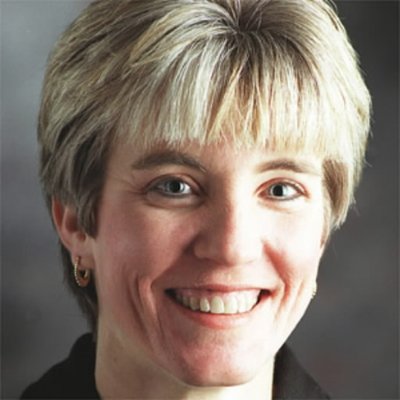
My dad died Wednesday at 91. It’s never long enough. In his final hours, we took him from the hospital back to memory care so they could be together. Two months shy of 67 years of marriage.


Momo Knows retweeted

This is superb.
The lesson begins with the usual catechism: J.K. Rowling has “bigoted opinions”.
Then someone makes the unforgivable mistake of reading what she actually wrote.
Suddenly, certainty requires definitions. Slogans require evidence. “Everyone knows” requires rather more than everyone saying it.
Critical thinking really is murder on a fashionable consensus.
Momo Knows retweeted

At Ground Zero, after the last living person was pulled out, the search dogs stopped eating.
So the police did something nobody had written down in any manual.
They climbed into the rubble, lay down, and pretended to be alive.
More than 300 dogs worked the World Trade Center site. They came from every corner of the country, on trucks and in cargo holds, with handlers who had been trained to do one thing. Find people who are still breathing under the ground.
That is what a search and rescue dog is built for. Not bodies. Life. They are trained on live human scent. When they find it, they bark, they dig, they light up, and the handler rewards them, and the whole thing means something.
The last living person recovered from Ground Zero was a woman named Genelle Guzman-McMillan. She had been buried for 27 hours. A dog found her.
She was the last.
After that, the dogs kept going out on twelve-hour shifts, across sixteen acres of smoldering steel, at temperatures that burned their paws, and they found nobody.
Nobody.
Day after day.
The handlers noticed it first. The dogs were changing. Their tails were down. They were not eating. They would come off the pile and lie flat and not look at anyone.
A veterinarian named Cindy Otto, who spent ten days there working night shifts to care for the animals, put it plainly. The dogs had been sent to find life, and every day they were finding the opposite.
It was breaking them.
An NYPD officer named Famiglietti described what happened next.
They pulled everybody off the rubble. Then they asked for volunteers.
The volunteers, police officers, went out into the debris and hid themselves. Under beams. In voids. Curled up in pockets of concrete. They were told to lie down like they were hurt. Then the handlers sent the dogs in.
Picture that.
A grown man with a badge, a man who had spent the last week pulling friends out of that same pile, lying down in it on purpose. Face down. Holding still. Waiting for a dog.
And the dog comes over the top of the wreckage, and catches the scent, and barks, and digs, and finds a person who is warm and moving and alive.
And the handler says good girl, good boy, and the whole team celebrates.
They called them mock finds.
They did it for the dogs.
They did it so the dogs would remember what they were for.
One of those dogs was a two-year-old golden retriever named Bretagne. She came from Texas with her handler, Denise Corliss. It was her first deployment. They worked ten days at Ground Zero. They found no survivors.
But firefighters would come off the pile, stone-faced, not speaking, and see the dog, and something would break open in them. They would kneel down. They would put their face in her fur.
One day a man walked up to Bretagne and started petting her. He told Corliss his best friend loved golden retrievers.
Corliss asked where his friend was.
The man pointed at the pile.
"He's in there somewhere."
He kept petting the dog.
Bretagne went on to work Hurricane Katrina and Rita. She retired at 10. She was the last known surviving search dog of 9/11.
On June 6, 2016, at age 16, she was carried into a veterinary office in Texas to be put to sleep.
Outside, a dozen firefighters from her fire department stood in a line in their dress uniforms, in the heat, and saluted as she went past.
They draped her in an American flag on the way out.
Three hundred dogs went into that pile looking for the living.
They found one.
And when they could not find any more, the men they worked beside laid down in the rubble and let themselves be found, so the dogs would not lose heart.
That is the whole story of Ground Zero, really.
Nobody could save the dead.
So they saved each other. 🇺🇸
Momo Knows retweeted
This is a really sad week.
But we just have to be grateful for so many years of joy we got from Dolly Parton, Tim Curry, and so many others no longer with us ♥️
Momo Knows retweeted

In 1986 a guy got kicked out of every casino in Vegas for counting cards. So he flew to Hong Kong with $180,000 and started betting on horses instead. He walked away with almost $900 million.
It's Bill Benter. He figured horse racing was just another counting problem. Same math, more moving parts.
He and a partner showed up with $180k and a computer. Benter spent years teaching that computer to guess one thing, the real chance each horse had to win. If his number was better than the odds the bookies gave, he bet. If not, he skipped it.
That's the whole trick. Expected value.
EV = p · b − (1 − p)
Only bet when your win chance p, at odds b, is worth more than your chance of losing.
This recording was never meant to be some hidden gem. Nobody expected Professor Tsitsiklis to hand the whole foundation away in 45 minutes, but that's exactly what happens on the board. Students in that room pay over $80,000 a year to sit through it. It's free right here. It's free right here.
Every quant, every professional bettor, every hedge fund analyst started with this exact hour. Benter just watched it and actually did the homework.
Almost nobody knows this lecture even exists. Watch it before it gets taken down.
The answer is in this video.