

We seek to understand the forces driving us apart, find common ground, and help bring Americans together to tackle our shared challenges.
New York, NY
Joined September 2018
- Tweets1.8K
- Following702
- Followers3K
- Likes313



More in Common US retweeted

TUE | More in Common's (@Moreincommon) Stephen Hawkins discusses his research on political divisions within political parties and how that could affect the midterm elections.
Watch live at 8:00 am ET!

More in Common US retweeted

More in Common (@Moreincommon_) global director of research Stephen Hawkins talked about his research on divisions within political parties and how that could affect the midterm elections.
For more, visit: c-span.org/classroom/documen….
#Campaign2026 #Republican #Democrat
More in Common US retweeted

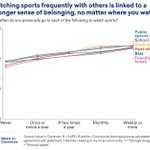
I went semi-viral over the weekend when I decided to become a Saints fan after reading @MoreInCommon_US's research that fans are happier and more connected to their communities. Follow me there to join my journey into fandom!!
instagram.com/reels/DdPBgfyI…

More in Common US retweeted

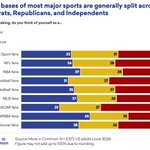
More than a billion fans around the world turn to America for Sunday’s World Cup Final. ⚽️
Research from @MoreInCommon_US shows how sports can bridge partisan divides: fair rules, fierce competition, and respect for rivals.
And as always: Go USA! 🇺🇸
moreincommonus.com/publicati…

More in Common US retweeted

When we asked Americans how to respond to AI job loss, they prefer earning support through national service over UBI by 7 to 1. Nearly 8 in 10 back it, including 80%+ of Trump voters. The public is ahead of Washington on this. @MoreInCommon_US moreincommonus.com/publicati…

More in Common US retweeted

This may be true of Trump’s rally attendees, but if so, that just means they’re massively unrepresentative — not just of the electorate, but of Trump’s voters specifically.
Per @MoreInCommon_US polling, 60% of Trump 2024 voters say cost of living is a top priority of theirs. Only 7% say the same about election law.


Trump told GOP senators in that testy meeting last week: "Nobody cares about the housing bill at my rallies. But when I mentioned the SAVE America Act, I can’t get them to sit down," according to a person familiar.
Plus, the White House is strategizing additional ways to pressure the Senate....
puck.news/how-trumps-voter-i…

More in Common US retweeted

Yes, polling routinely identifies this as a fairly large segment of the country. @MoreInCommon_US calls them the “exhausted majority,” and as of 2017 this included 67% of Americans. (They will be updating their study later this year, but I imagine the number will be similar.)

“There’s reason to think the constituency for this politics already exists. Its members are the people both transgressive poles have left behind: economically moderate but culturally traditional, socially liberal but wary of state power, pro-market but unwilling to abandon the vulnerable. They’re not centrists in the sense of splitting every difference. They’re cross-pressured voters whose combinations of views no longer fit neatly into either coalition.
There are more of these people than our politics suggests. They appear smaller than they are because modern politics rewards intensity more than numbers. In low-turnout primaries and highly polarized environments, organized factions routinely defeat diffuse majorities. The result is a politics that systematically overrepresents the intense and underrepresents those whose primary desire is simply to get on with their lives.
That’s the paradox at the centre of this coalition. The people who most want politics to occupy a smaller place in life are the least inclined to organize their identities around it.”
More in Common US retweeted

Daniel Yudkin, Founding Director of the Beacon Project explains its origins in More in Common's Hidden Tribes report, explaining how the notion of potentialism might just be the "secret sauce" that gives people a sense of civic agency and hope. beyondintractability.substac…
More in Common US retweeted

After the Knicks ended their 53-year NBA championship drought, New Yorkers poured into the streets on Saturday, embracing strangers in shared joy. Social science tells us that instinct is good—both for us and the nation.
“As a happiness specialist, one thing I have seen in the studies and data over the past decade is that sports fandom is one of life’s unalloyed sources of joy,” @arthurbrooks writes.
Sports fans are much better citizens, according to recent data from the nonprofit More in Common. Compared to nonfans, they are on average more likely to be registered to vote, participate in local elections, support democratic norms, donate blood, and donate to a place of worship.
“So, do you want to unify America and make us better citizens?” Brooks asks. “Then, get us cheering for our team and enjoying games together, regardless of other particular loyalties.”
Read the full story here: bit.ly/4vMWETf

More in Common US retweeted

View from the 2026 #WPLNSummit:
"Leading Across Differences: Pluralism in Practice," with our panelists —
🎤 @DanielleRugoff of Purple Lexicon
🎤 @JorgeALima of @StandTogether
🎤 Kate Carney of @MoreInCommon_US

More in Common US retweeted
🆕 2026 #WPLNSummit Speaker Announcement:
We're thrilled to welcome Kate Carney of @MoreInCommon_US, @DanielleRugoff of Purple Lexicon, & @JorgeALima of @StandTogether, for a session on "Leading Across Differences: Pluralism in Practice"!
🎫 hubs.la/Q04jmq1q0
📅 June 4-5

More in Common US retweeted

The group @Moreincommon_ highlights the generational gap between young Trump voters and older ones, calling it an "emergent new traditionalism" -- not your grandpa's GOP, with all the opportunities and challenges that are associated with that

More in Common US retweeted

OP-ED: AI is eliminating the bottom rung. National service can replace it trib.al/NsQNE0Y
More in Common US retweeted
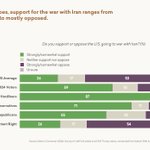
NEW: @MoreInCommon_US has created a typology of Trump voters — and found vast differences in how they view the war in Iran.
87% of MAGA Hardliners support the war. But only 26% of the Reluctant Right — the swing voters who drifted into Trump’s coalition in 2024 — say the same.

More in Common US retweeted

The full conversation digs into what each segment actually believes and where the openings are.
theunpopulist.net/p/not-all-…
More in Common US retweeted
More In Common surveyed nearly 19,000 Americans across six surveys and broke Trump's coalition into four distinct groups. Only 29% are "MAGA Hardliners" who see Trump as a near-religious champion. The other 71% have very different motivations.
More in Common US retweeted
Less than a third of Trump's 2024 voters are actual MAGA true believers. The rest? They don't wear the red hat. They don't think they're in a battle between good and evil. They just think nobody on the other side is listening to them.

More in Common US retweeted
SAT | Stephen Hawkins, Global Director of Research at More in Common, discusses President Trump's MAGA coalition and reaction to the war in Iran.
Watch live at 9:15 a.m. ET!

More in Common US retweeted

🇺🇸Raport Beyond MAGA oferuje jak dotąd najdokładniejszy obraz wyborców Trumpa. Wbrew pozorom nie jest to ruch wyłącznie „biednych i gniewnych”, lecz szeroka koalicja ludzi, którzy czują się kulturowo obcy we własnym kraju i postrzegają Trumpa jako jedyną barierę ochronną - pisze Paweł Farbisz
klubjagiellonski.pl/2026/03/…

More in Common US retweeted
I had a fascinating conversation with @DrTedJ, Senior Fellow at @NewAmerica and columnist at @washingtonpost , on civic bravery and how its incumbent on us as ‘moral patriots’ to call out our nation’s institutions when they fall short.
Full conversation: open.substack.com/pub/thebea…