

investing in the future of biomedicine partner @BreyerCapital + medical geneticist @harvard editorial @NEJM_AI @decodingbio | bayesian
Brooklyn
Joined October 2016
- Tweets4.6K
- Following1.7K
- Followers14.2K
- Likes14.9K





Pinned Tweet
excited to share @breyercapital's latest healthcare thesis with my partner, @jimihendrixlive.
healthcare is at an inflection point. scientific discovery is accelerating, but systems of translation remain structurally stagnant. the result is a widening chasm between what’s possible in principle and what’s practiced.
we invest where scientific discovery, clinical necessity, and institutional transformation converge. computation, precision, and prevention are shaping the future of medicine, but only when anchored by economic models that reward long-term value.
the next era of human health won’t be inherited. It will be engineered.
if this vision resonates, we’d love to connect.

Morgan Cheatham, MD retweeted

Five years ago, Breyer Capital was proud to back @colossal in its inaugural $15 million seed financing. When @BenLamm and renowned Harvard geneticist @geochurch founded the company, their ambition to bring back the woolly mammoth captured the world's imagination.
But what excited us just as much was the potential for breakthroughs in genomics, gene editing, and computational biology to transform conservation and advance biotechnology more broadly. Since that first investment, it has been remarkable to watch Ben and the Colossal team turn an extraordinarily ambitious vision into tangible scientific progress.
In just five years, Colossal has pioneered genetically engineered woolly mice and dire wolves, and cloned critically endangered red wolves. Its work now extends to the dodo, Tasmanian tiger, and numerous endangered species, including a new partnership with the U.S. Fish and Wildlife Service to preserve genetic material from thousands of threatened and endangered species.
This week, Warhound, founded by Ben Lamm and Palmer Luckey, emerged from stealth. I'm excited to announce Breyer Capital's investment in Warhound and proud to continue supporting Ben and his team's remarkable work. It's gratifying to see technologies we believed in five years ago finding new applications in conservation, biotechnology, and now national security.
Morgan Cheatham, MD retweeted

Over 85% of oncologists at Memorial Sloan Kettering Cancer Center use OpenEvidence.
Together, @MSKCancerCenter and OpenEvidence have built OncoKB, MSK’s expert interpretation of a tumor’s genetics, directly into OpenEvidence, putting it in the hands of oncologists across the United States.
As Dr. Anaeze Offodile puts it: “Our mission is to end cancer for life.” As of today, we are widening OncoKB’s reach so that patients everywhere benefit from the same rigor as patients at MSK. Watch the story.
the greatest to ever do it. congratulations, Jim 🙏🏽

Honored and humbled to be included in @Forbes' 250 Greatest Living Optimists alongside so many visionary friends and colleagues.
I’ve long believed that optimism is fundamental to entrepreneurship and investing. It gives us the conviction to take the long view, back extraordinary people, and believe that tomorrow can be better than today.
My thanks to Forbes for this recognition and for celebrating those who are working to build a better future. #Forbes250

Morgan Cheatham, MD retweeted
Honored and humbled to be included in @Forbes' 250 Greatest Living Optimists alongside so many visionary friends and colleagues.
I’ve long believed that optimism is fundamental to entrepreneurship and investing. It gives us the conviction to take the long view, back extraordinary people, and believe that tomorrow can be better than today.
My thanks to Forbes for this recognition and for celebrating those who are working to build a better future. #Forbes250
one of the central paradoxes of genetic medicine is that our ability to elucidate the molecular basis of disease has advanced far more rapidly than our ability to intervene therapeutically with comparable precision.
the central bottleneck is increasingly not target identification, but the ability to deliver the right modality to the right tissue.
Soufflé's receptor-mediated delivery platform represents a compelling approach to bridging that divide, with initial applications in facioscapulohumeral muscular dystrophy (FSHD) and heart failure.
we are excited to invest again in Amir Nashat and the Soufflé team as they work to translate advances in delivery biology into a broader repertoire of genetic medicines. congratulations on an oversubscribed $135M Series B financing!
@jimihendrixlive

more on the Soufflé platform here: souffletx.com/news/press-rel…
i love this time of year!
congratulations to Karl Deisseroth, Peter Hegemann, and Georg Nagel on the Nobel Prize in Physiology or Medicine for their work on optogenetics.
optogenetics has changed how we study the brain by enabling precise activation or silencing of genetically defined neurons and direct testing of what specific circuits do.
the therapeutic translation is still early, with some of the most interesting clinical efforts so far in vision restoration.
very cool to see this work recognized!

BREAKING NEWS
The 2026 #NobelPrize in Physiology or Medicine has been awarded to Karl Deisseroth, Peter Hegemann and Georg Nagel “for their discoveries concerning light-gated ion channels and optogenetics.”


Morgan Cheatham, MD retweeted

we are beyond excited to partner with @fidjissimo and the @ChronicleBioAI team as they build a new model for understanding and treating complex, chronic disease.
biological heterogeneity hidden within common chronic conditions is one of the grand challenges in medicine. Many conditions remain syndromic rather than mechanistically resolved. patients may share a diagnosis while harboring meaningfully different underlying biology, often without validated biomarkers to distinguish those states. that ambiguity complicates diagnosis, therapeutic selection, and clinical development.
the best undiagnosed disease programs solve a version of this problem through deep synthesis across phenotype, molecular data, and clinical expertise. ChronicleBio is bringing a similar level of synthesis to a much broader population and to diseases that affect millions of people.
by integrating deep clinical phenotyping, advanced molecular measurement, and AI, the team is working to identify biologically coherent patient subgroups and construct a more granular map of disease. their early work has already surfaced distinct subtypes across complex chronic illness and begun linking those subtypes to potentially relevant therapies.
huge thanks to @Forbes for sharing the story.
@jimihendrixlive
Morgan Cheatham, MD retweeted

Chronic conditions have long been defined by symptoms instead of biology, hindering drug discovery that could help millions of patients.
@Forbes spoke with ChronicleBio about how we're using multi-omic analysis & AI to end trial-and-error medicine.
forbes.com/sites/amyfeldman/…

Morgan Cheatham, MD retweeted

Very excited to work with @morgancheatham @jimihendrixlive on this; they were one of the first investors to bet on the importance of data in AI bio and to really get how the next biotech companies will be built.
we are beyond excited to partner with @fidjissimo and the @ChronicleBioAI team as they build a new model for understanding and treating complex, chronic disease.
biological heterogeneity hidden within common chronic conditions is one of the grand challenges in medicine. Many conditions remain syndromic rather than mechanistically resolved. patients may share a diagnosis while harboring meaningfully different underlying biology, often without validated biomarkers to distinguish those states. that ambiguity complicates diagnosis, therapeutic selection, and clinical development.
the best undiagnosed disease programs solve a version of this problem through deep synthesis across phenotype, molecular data, and clinical expertise. ChronicleBio is bringing a similar level of synthesis to a much broader population and to diseases that affect millions of people.
by integrating deep clinical phenotyping, advanced molecular measurement, and AI, the team is working to identify biologically coherent patient subgroups and construct a more granular map of disease. their early work has already surfaced distinct subtypes across complex chronic illness and begun linking those subtypes to potentially relevant therapies.
huge thanks to @Forbes for sharing the story.
@jimihendrixlive

Sufferers of complex, chronic diseases like POTS and long COVID-19 often spend years searching for relief. This former OpenAI exec started ChronicleBio to find treatments using AI and lots of biological data.
Read more: forbes.com/sites/amyfeldman/…
📸: Joel Saget/AFP via Getty Images

Morgan Cheatham, MD retweeted

On last week’s episode of TechBio Talks, CEO of Recursion, Najat Khan and @morgancheatham, Partner and Head of Healthcare and Life Sciences at Breyer Capital connected for a conversation spanning biotech value creation, building data moats, and the future of medicine.
They unpacked:
🎯 Collapsing target ID and early patient selection to treat the root biological cause
🧬 Unlocking decades of tissue and diagnostic data sitting in clinical biobanks
🩺 Extracting hidden knowledge and research-grade insights from the routine clinical data we already collect every day
Catch up on their full conversation here:
YouTube: youtu.be/LmVszrLN0cg?si=9_lX…
Spotify: open.spotify.com/episode/6BE…
Apple: podcasts.apple.com/us/podcas…
#AI #TechBio #drugdiscovery #AIdrugdiscovery #drugdesign #Biology
Morgan Cheatham, MD retweeted

We are starting a blog series at Network where our technical team writes about their work.
"Scaling Laws Arrive in Liquid Biopsy" is our first post. In language models, scale brought generalization. We think that's now happening in diagnostics. 🧵

Morgan Cheatham, MD retweeted
Today @AMD announced it will acquire @theworldlabs, with @drfeifei joining as chief scientist.
It's been wonderful working with Fei-Fei at @StanfordHAI, the institute she co-founded, where I have served on the advisory council since inception.
ImageNet taught machines to see; World Labs asked how they might understand the three-dimensional world they see.
We at Breyer Capital are grateful to have been part of the earliest investor group in the seed.
She could not have found a better home. My good friend @LisaSu rebuilt AMD on engineering discipline and long-horizon bets, and this is another: the hardware for the next era of AI will be designed alongside the people building the models.
Congratulations Fei-Fei and Lisa.
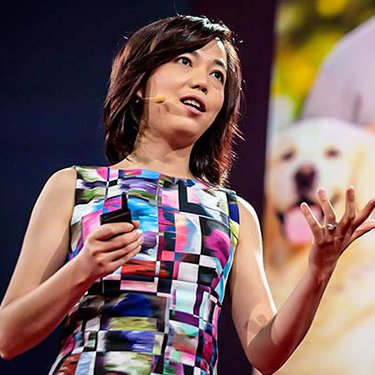

congratulations to @drfeifei on the $8.2b acquisition of @theworldlabs by @AMD, and to my partner, Jim Breyer, on a stellar early investment.
we look forward to seeing how this partnership blossoms under the remarkable leadership of Lisa Su, CEO of AMD.
@jimihendrixlive


some ideas for “muse for healthcare”:
- a morning digest pre-charting all patients for the day
- ambient monitoring for results (labs, imaging, etc) and notification of clinically actionable findings
- in-basket prioritization and triage
- auto-dialing other clinical sites to obtain records or other info
- monitoring of ED visits, admissions, or other specialist visits for a patient “watch list”
clinical medicine may be the largest biological experiment ever conducted, yet we still learn far too little from it.
i explored this idea, and much more, with my close friend Najat Khan, PhD, CEO @RecursionPharma
