

Statistician, Associate professor, Chalmers University of Technology and University of Gothenburg
Joined January 2018
- Tweets2.2K
- Following1K
- Followers1.1K
- Likes3.3K







Moritz Schauer retweeted

"Speculative data center debt is being repackaged and sold to pension and retirement funds, university endowments, and other institutional investors in a manner eerily reminiscent of the subprime bubble."
ourfinancialsecurity.org/res…

Two and a half stones!


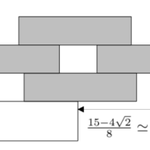
There is this little problem of maximal overhang of n bricks en.wikipedia.org/wiki/Block-…

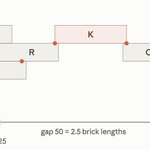
ALT Illustration of the first eight blocks in the solution to the single-wide block-stacking problem by CMG Lee. https://commons.wikimedia.org/wiki/File:Block_stacking_problem.svg#Licensing
The best you can do with 4 bricks is 1.16789... (see arxiv.org/html/0710.2357) But what about a bridge of 8 stones? . Two optimal 4-brick stacks back to back, that is two times 1.16789?

DAG people rejoice! The link between understanding and problems is just collider bias from conditioning on solutions.


Moritz Schauer retweeted

OpenAI issued PR statements saying they were interested in providing tools, not solving problems, then plowed millions of dollars of compute into solving problems. It is worth considering whether this has negative first order effects.


Looks like we have a lot of thinking in the vicinity to do...

☡ Some dangerous bends ahead in mathematics? en.wikipedia.org/wiki/Bourba…

Moritz Schauer retweeted

A lot of people—me included—do not enjoy reading LLM outputs. There’s an alternative!
Personally I have always been very bad at reading mathematics. But you don’t have to read it by reading it, if that makes sense. Rather, you think in its general vicinity.


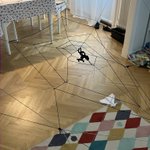
But the spider web itself is implemented using a small solver of Hooke's law that iteratively moves each free node in the direction of its net force. That is why adding a radius visibly shifts the hub and deforms the frame rather than simply drawing a new straight segment.
