

The official scientific journal of @SCAI. EIC: Alexandra Lansky, MD, MSCAI
Washington, DC
Joined November 2017
- Tweets2.6K
- Following4.4K
- Followers10.6K
- Likes2.1K




MyJSCAI retweeted

And here we are! Hot off the press. Introducing the 2026 SCAI SHOCK classification update!
Link: jscai.org/article/S2772-9303…
@SCAI @davebaran @agtruesdell @Babar_Basir @SandeepNathanMD @vbluml @Allison_Dupont @JasonKatzMD
@ShashankSinhaMD @NavinKapur4 @mwkrucoff @AHAScience


Ok the time has come!
This Sunday at #AHA2026 we unveil the 2026 SCAI SHOCK classification update, presented by my co-chair @davebaran on behalf of the writing group & all endorsing societies! Simultaneous publication in @MyJSCAI.
Lots of new updates to provide clarity, granularity, consensus and direction to level-set the field!
Details below ⬇️
@AlexandraLansky @agtruesdell @SCAI @Babar_Basir @vbluml @debdiercks @Allison_Dupont @HenrytTimothy @JasonKatzMD @SandeepNathanMD @mwkrucoff @ShashankSinhaMD @SarasVallabhMD @seanvandiepen @mirvatalasnag @DLBHATTMD @djc795 @TCTMD @CardioBusiness @theheartorg @nymedcollege @ACCinTouch @AHAScience @STS_CTsurgery @SCCMPresident @ISHLT

MyJSCAI retweeted

🆕2026 SCAI SHOCK Classification Expert Consensus Update
The new expert consensus update provides refined stage definitions, a greater focus on objective assessment, expanded guidance across cardiogenic shock phenotypes, and practical approaches to serial reassessment and clinical implementation.
Recognize severity. Reassess trajectory. Communicate across specialties.
Learn more ➡️ scai.org/media-center/news-a…
#SCAISHOCK #CardiogenicShock #InterventionalCardiology @SrihariNaiduMD @MyJSCAI @agtruesdell

MyJSCAI retweeted

Had a great time at #TCT2026, from presenting our latest research alongside our simultaneous publication @MyJSCAI to connecting with mentors and catching up with friends! Huge thanks to @TCTMD @crfheart @MayoClinicCV @MayoCVFellows
🔗 jscai.org/article/S2772-9303… – at San Diego, CA


MyJSCAI retweeted
📣 Applications are now open for the 2027 SCAI Early Career Research Grants!
This funding opportunity helps early-career interventional cardiologists advance cardiovascular research and their academic careers. Research topics include:
🔹 Angiography-derived physiology-based decision-making in coronary artery disease
🔹 Drug-coated balloon use in coronary artery disease
🔹 Hypertension management using renal denervation
🔹 Imaging and/or treatment of coronary bifurcation lesions
Apply today or share this opportunity with an early-career researcher in your network ➡️ scai.org/membership/career-d…
#InterventionalCardiology @MyJSCAI

MyJSCAI retweeted

When you’re one of the few, 2.2% hits differently
As a woman performing TAVR & M-TEER in community practice, this resonates deeply
Grateful for our team @DoylestownHlth
May these statistics become history for the next generation!
doi.org/10.1016/j.jscai.2026…
#WIC #StructuralHeart

MyJSCAI retweeted

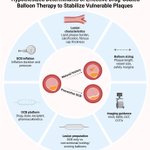
Must-Read Perspective on Drug-Coated Balloons as a Potential Treatment Option for Stabilizing Vulnerable Plaque jscai.org/article/S2772-9303… @MyJSCAI


MyJSCAI retweeted
Preservation of Distal Cap Bifurcation in Chronic Total Occlusion by Tip-Detection Antegrade Dissection Re-entry Method: A Retrospective Analysis of 77 Patients jscai.org/article/S2772-9303… @MyJSCAI


MyJSCAI retweeted
Must-Read Overview on Physiology-Guided and Intravascular Imaging-Guided Drug-Coated Balloon Percutaneous Coronary Interventions jscai.org/article/S2772-9303… @MyJSCAI

MyJSCAI retweeted
In a study including 546-patient real Heart Team discussions, LLMs showed moderate agreement with expert clinical decisions, but only when they received detailed, context-rich clinical narrative input jscai.org/article/S2772-9303… @MyJSCAI


MyJSCAI retweeted
📣The October issue of #JSCAI is now available!
Explore research on catheter-based cardiovascular procedures, coronary and structural heart interventions, clinical outcomes, and emerging techniques. Open access and designed for today's interventional cardiologist.
Read the full issue ➡️ ow.ly/MlSo50ZOQX3
#InterventionalCardiology #Cardiology @MyJSCAI

MyJSCAI retweeted
Excellent statement on the journey so far and path forward toward interventional heart failure (IHF) as a discipline. Worth a read.
Link: sciencedirect.com/science/ar…
Title ⬇️

MyJSCAI retweeted

Interventional cardiology or heart failure? Both. Grateful to have led this work with my coauthors on the future of training.
jscai.org/article/S2772-9303…
@MyJSCAI

MyJSCAI retweeted
The September issue of @MyJSCAI is now available. Explore new research, meta-analyses, and case reports covering cardiogenic shock, structural heart interventions, LAAO, and more. Open access and designed for today's interventional cardiologist.
Explore the issue ➡️ jscai.org/current
#InterventionalCardiology

MyJSCAI retweeted

Congratulations to @mderdem3 on her publication this week in @MyJSCAI examining our experiences at @HMethodistCV in patients with severe #Mitralregurgitation
At @MethodistHosp we found no sex differences in time from diagnosis to referral to our structural team, with the delay time shortening over time #valveteam
@NadeenFaza @SLittleMD
@WilliamZoghbi @HMHCardioFellow @AlanLumsdenMD
🔗 jscai.org/article/S2772-9303…


🫀Excited to share our work, now published in @JSCAI!
❓Do women and men with severe MR experience different delays in reaching the structural heart team?
➡️We looked at referral timing among patients undergoing M-TEER @DeBakeyCVedu 🧵
sciencedirect.com/science/ar…

MyJSCAI retweeted

🫀Excited to share our work, now published in @JSCAI!
❓Do women and men with severe MR experience different delays in reaching the structural heart team?
➡️We looked at referral timing among patients undergoing M-TEER @DeBakeyCVedu 🧵
sciencedirect.com/science/ar…
MyJSCAI retweeted

Edge to edge repair in SAM-mediated LVOT obstruction case series by @markjzorman et al. authors.elsevier.com/sd/arti… @MyJSCAI

MyJSCAI retweeted
🫀 Explore evolving approaches to #PulmonaryEmbolism in a new @MyJSCAI Editor-in-Chief curated collection from @AlexandraLansky, MD, MSCAI.
Discover evidence and clinical insights on PE diagnosis, risk stratification, and interventional management.
Explore the collection ➡️ jscai.org/Pulmonary-Embolism
#InterventionalCardiology #CardioX

MyJSCAI retweeted

Among the criticisms of #CTO #PCI is the higher risk compared to regular PCI procedures. This perception stems from the procedure's higher complexity.
The unmeasured factor is that CTO PCI is usually performed by operators who can identify and treat possible complications faster and have the awareness to prevent problems or manage them.
Our study from the National Trinetix database @MyJSCAI, led by @AdhamGR97 and @MohamedDomaa, compared 30-day outcomes between CTO PCI and ELECTIVE (non-MI) non-CTO PCI, and also trended outcomes over three recent periods (2014-2017, 2018-2021, 2022-2025).
Our major findings are as follows
1-CTO PCI risk of pericardiocentesis was higher than non-CTO PCI (0.2% vs 0.09%) but remains very small at 0.2%
2-CABG after CTO PCI was higher than non-CTO PCI; we could not determine the cause, but it was mostly related to failure and the need for revascularization rather than complications.
Also, the trend of CABG after CTO PCI has been decreasing.
3-Finally, none of this led to adverse outcomes, as there was absolutely no difference in mortality between the two groups.
In the hands of experienced operators, CTO PCI can be safe and effective.
sciencedirect.com/science/ar…
#CardioX #ACCFIT

MyJSCAI retweeted

Death tied to aortic stenosis are declining but progress has not been equal.
Analysis of US data from 1999-2024 shows persistent disparities in AS-related mortality by demographic and geographic groups. @MyJSCAI
Read more: bit.ly/4qIA39c

MyJSCAI retweeted

Featured in @CardioBusiness : Helena Smith and @EricSecemskyMD’s @MyJSCAI editorial describes the potential value of optical coherence tomography (OCT) in below-the-knee endovascular interventions. 🔗 Read the full editorial here: jscai.org/article/S2772-9303…