








ALT A graph from an Original Article published in the New England Journal of Medicine article titled "Retatrutide, a Triple Hormone Receptor Agonist, for Treatment of Obesity." The graph shows effect of retatrutide on body weight. The trial name, TRIUMPH-1, is in parentheses after the title. The NEJM identity sits at the bottom.

ALT Four panels show the changes from baseline to week 80 in the apnea–hypopnea index (AHI, the number of apneas and hypopneas per hour of sleep) in TRIUMPH-1-OSA (Panel A) and TRIUMPH-2-OSA (Panel C) and the percent changes in body weight from baseline to week 80 in TRIUMPH-1-OSA (Panel B) and TRIUMPH-2-OSA (Panel D).

ALT Four panels show percent changes in other OSA measures (hybrid-treatment estimand). Panels A and B show percent changes at week 80 in the AHI and the sleep apnea–specific hypoxic burden (SASHB, a measure calculated from a polysomnogram that encapsulates the frequency, duration, and depth of respiratory event–related oxygen desaturation) in TRIUMPH-1-OSA (Panel A) and TRIUMPH-2-OSA (Panel B). Panels C and D show the percentage of participants at week 80 with a 50% or greater decrease in AHI or an AHI of less than 5 or 5 to 14 events per hour with a score of 10 or lower on the Epworth Sleepiness Scale (ESS) in TRIUMPH-1-OSA (Panel C) and TRIUMPH-2-OSA (Panel D).

ALT Four images from the Images in Clinical Medicine article “Spinal Tuberculosis.” The NEJM identity sits at the bottom. Panels A and B show photos of a sharp, kyphotic angulation of the lower spine — also known as a gibbus deformity. Panel C displays an MRI of the spine, which shows L2–L4 segmental spondylitis complicated by abscess formation centered at L3–L4, with partial osseous destruction of the vertebral bodies, as well as L3 wedging and retropulsion that resulted in acute angulated kyphosis. Panel D shows a coronal view of the abscess extending into the left paravertebral region from T11 to L4 and involved the psoas muscle.

ALT A quote from a Perspective published in the New England Journal of Medicine reads as follows: "Even as health systems have invested in interventions to support near-term success in ACOs, the day-to-day challenges of primary care have remained largely unchanged.” The Perspective is titled "Why Shared-Savings ACOs Have Failed to Deliver for Primary Care” and the authors are Lisa S. Rotenstein, M.D., M.B.A., Nicholas Stine, M.D., and Bruce Landon, M.D., M.B.A. The background color is dark green and includes the NEJM identity.

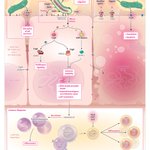
ALT An illustrated diagram shows the pathogenesis of H. pylori infection. Includes sections on colonization, immune evasion, and the immune response, with details on disruption of cell junctions, inflammation, and apoptosis.

ALT Two graphs from an Original Article published in the New England Journal of Medicine article titled “Ianalumab for the Treatment of Patients with Sjögren’s Disease.” The graphs show the change in ESSDAI score over time (full analysis population) for both trials, NEPTUNUS-1 and NEPTUNUS-2. The NEJM identity sits at the bottom.

ALT A quote from a Perspective published in the New England Journal of Medicine reads as follows: "I had lost my own pocket medical expert that I so cherished. We had learned so much together, we had made informed decisions together, we had improved my patients’ care together. And now it was gone.” The Perspective is titled “Not Available in Your Country” and the author is Christos P. Kotanidis, M.D., D.Phil. The background color is orange and includes the NEJM logo.

ALT Sagittal T1-weighted magnetic resonance imaging of an L2–L3 mass (arrows) and hematoxylin and eosin (H and E) staining of a tumor sample.

ALT This image contains an excerpt from the Research Summary "Long-Acting HIV Therapy in African Adults with Adherence Challenges” published in the New England Journal of Medicine. It presents participant details: 540 adults, median age 40 years, 60% women, 40% men. To the right is a visual representation of a patient with human immunodeficiency virus who has adherence challenges to daily antiretroviral therapy. There are two treatment groups depicted with illustrations: one for intramuscular cabotegravir + rilpivirine with 271 participants, administered every 8 weeks (first 2 injection visits 4 weeks apart) and one for daily oral dolutegravir-based antiretroviral therapy with 269 participants. A prompt to read the full Research Summary at NEJM.org sits at the bottom.


ALT Promotional image for episode 47 of the NEJM AI Grand Rounds podcast featuring Dr. Michal Nedoszytko. The left side includes the title: "Abridge’s Dr. Michal Nedoszytko on Physicians Who Build Software." A photo of Dr. Nedoszytko is on the right.

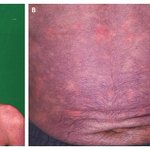
ALT Three medical images from the Images in Clinical Medicine article "Flushing in Carcinoid Syndrome.” Panels A and B: Photos of mottled, violaceous, blanchable flushing across the patient’s face and torso. Panel C: A photo of the patient’s face taken four weeks later, showing that the flushing had abated considerably.
![A graph from the Original Article “Retatrutide Once Weekly for Treatment of Obstructive Sleep Apnea.” The names of the two trials, TRIUMPH-1-OSA and TRIUMPH-2-OSA, are in parentheses after the title. The graph] shows the change in AHI among participants in TRIUMPH-1-OSA. The trial results are being presented at the European Sleep Research Society 2026 Congress. The logo of the New England Journal of Medicine is at the bottom.](https://pbs.twimg.com/media/HVIgx-QXsAAXxRZ.jpg?name=orig)
ALT A graph from the Original Article “Retatrutide Once Weekly for Treatment of Obstructive Sleep Apnea.” The names of the two trials, TRIUMPH-1-OSA and TRIUMPH-2-OSA, are in parentheses after the title. The graph] shows the change in AHI among participants in TRIUMPH-1-OSA. The trial results are being presented at the European Sleep Research Society 2026 Congress. The logo of the New England Journal of Medicine is at the bottom.

ALT A quote from a Perspective published in the New England Journal of Medicine reads as follows: "Of insurance plans that cover fertility treatments, many continue to define infertility as the inability to conceive after 6 to 12 months of unprotected heterosexual intercourse." The Perspective is titled "Who Counts as Infertile? A Missed Opportunity for Inclusion” and the author is Paula Amato, M.D., and I. Glenn Cohen, J.D. The background color is purple and includes the NEJM identity.

ALT A quote from an NEJM Voices blog post reads as follows: “Every visit can hide a treasure waiting just beneath the surface. I don’t always find it, because I’m not always in a state of mind to look. But when I do, I’m reminded yet again what a gift it is to be let into someone’s life, even just for 15 minutes.” The author is Michelle Kittleson, M.D. The background is a red-orange gradient and includes the NEJM Voices logo.

ALT Four figures showing the trial design for cohort 2, DENV-3 RNA viral loads, and mosnodenvir plasma concentrations. Panel A shows the trial design for Cohort 2. Twice-daily loading doses (LDs) were administered for 2 days, starting on day −2, and the maintenance doses (MDs) were administered for 21 days, starting on day 1. Panel B shows the DENV-3 viral load, assessed as the log10 area under the concentration–time curve (AUC) from day 1 through day 29. Panels C and D show the mosnodenvir plasma concentrations over time (through day 85 in Panel C and through day 29 in Panel D) in the pharmacokinetic analysis.

ALT A quote from a Perspective published in the New England Journal of Medicine reads as follows: "Without targeted, age-appropriate screening tools, needs will be misidentified, resources will be used inefficiently, and opportunities to improve people’s health and well-being will be missed.” The Perspective is titled " Health-Related Social Needs among Older Adults — Addressing Mismeasurement” and the authors are Mark A. Unruh, Ph.D., and Joshua R. Vest, Ph.D., M.P.H. The background color is dark orange and includes the NEJM identity.

ALT This image contains an excerpt from the Research Summary "Phase 2 Trial of Icotrokinra for Patients with Ulcerative Colitis” published in the New England Journal of Medicine. It details participant demographics: 252 adults; mean age, 42 years (men: 58%; women: 42%). To the right, there is an illustration of a patient with ulcerative colitis. Below are boxes and tablets for the three tested icotrokinra doses (400 mg, 200 mg, and 100 mg) and placebo. A prompt to read the full Research Summary at NEJM.org sits at the bottom.

ALT Four medical images from the Images in Clinical Medicine article "Alkaptonuria.” Panel A: A photo of patches of darkly pigmented sclera. Panel B: A radiograph of the lumbosacral spine showing narrowing of the intervertebral disk space, disk-space calcification, and vertebral end-plate sclerosis (lateral view). Panel C: A radiograph of the pelvis showing destruction of the femoral heads (anterior view). Panel D: A photo of a urine sample that turned black after being left out overnight at room temperature.


ALT Three photos from the Morning Report titled "An 18-Year-Old Woman with Abdominal Pain" show the darkening of urine after exposure to light and ambient air. Panel A: The urine sample, which was initially clear and yellow, became progressively darker after 6 hours of exposure to light and ambient air. Panel B: The sample after 24 hours. Panel C: The sample after 48 hours.