

Practicing Lawyer, Ambedkarite and human rights activist. [email protected]. RTs means retweets - no one paying me for tweeting
Hyderabad, India
Joined July 2009
- Tweets36.7K
- Following9.3K
- Followers46.5K
- Likes20.2K


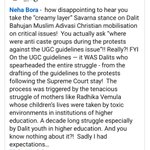



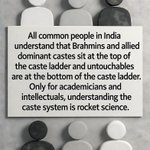
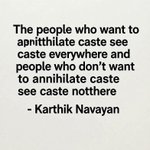


Dr.B.Karthik Navayan retweeted
The researchers on caste are going to SC colonies to study caste.
Pagal.
Go to Brahmin and Savarna gated communities to study and understand caste.
There is no caste in SC colonies to study and understand. Caste is with Brahmin Savarnas
Dr.B.Karthik Navayan retweeted
Deepali (Dipali) Salve and Rahul Sonpimple are Ambedkarite activists leading protests and a broader campaign demanding justice in the case of Sahil Wakode
Who is Sahil Wakode?
Sahil Wakode was a second-year BTech student in the Energy Science and Engineering department at IIT Bombay. He was found dead by suicide in his hostel room on 18 September 2026. His parents alleged caste-based harassment and discrimination (particularly involving Professor Suryanarayana Doolla, and in some reports also involving another faculty member).
Police registered a case of abetment of suicide along with provisions of the SC/ST (Prevention of Atrocities) Act. The Mumbai Crime Branch is investigating. Activists and the family describe the death as an “institutional murder” linked to caste discrimination on campus. Protests, hunger strikes by the parents, and demands for an independent probe, accountability, and action against the accused professor have continued since then.
Who is Deepali Salve?
Ambedkarite activist and PhD scholar at the University of Mumbai.
Maharashtra General Secretary of the All India Independent Scheduled Castes Association (AIISCA).
Director of the Savitribai Phule Resource Centre (SRC).
Comes from Anand Nagar, a Dalit-dominated slum in Chembur, Mumbai. Her father is an auto-rickshaw driver and her mother works as a sanitation worker (associated with Stree Mukti Sanghatana).
She has been at the forefront of the protests for Sahil Wakode organizing and leading marches (including at IIT Bombay gates, Azad Maidan, and Chaityabhoomi), supporting the parents’ hunger strike, and publicly framing the case as caste-based institutional violence.
Mumbai Police have detained her or placed her under house arrest multiple times during these protests (including ahead of a candle march at Chaityabhoomi).
Who is Rahul Sonpimple?
Founder and National President of AIISCA.
Former leader associated with the Birsa Ambedkar Phule Student Association (JNU).
Works closely with Deepali Salve. He has publicly narrated her background and their joint organizational work.
Actively involved in the same protests, hunger-strike support, meetings with politicians, and public statements demanding justice, an independent investigation, and action against alleged caste discrimination at IIT Bombay. He has also been detained during the protests.
Mumbaimirror
The movement they are leading
Through AIISCA they have organized and led the sustained public campaign for justice in Sahil Wakode’s case.
This includes:
Protests and marches at IIT Bombay, Azad Maidan, and Chaityabhoomi (a site of major significance for the Ambedkarite/Dalit community).
Support for the parents’ hunger strike.
Demands for a fair, independent, time-bound investigation; accountability of the accused professor(s) and the institute; and broader measures against caste discrimination in higher education institutions.
Framing the issue as systemic caste violence rather than an isolated suicide.
They are not mainstream political party leaders but independent Ambedkarite organizers focusing on Dalit/Scheduled Caste issues, education access for marginalized students, and anti-caste struggles.
Their role became particularly visible in the weeks after Sahil Wakode’s death as they coordinated ground-level mobilization, social-media outreach, and public pressure.
In short: Deepali Salve and Rahul Sonpimple are the key Ambedkarite faces currently driving the public movement seeking justice for Sahil Wakode and highlighting alleged caste discrimination at IIT Bombay.
Dr.B.Karthik Navayan retweeted

JNU हर साल सवर्ण क्रांतिकारी पैदा करता है जो बाद में BJP-Congress के आगे झुक जाते हैं।
दलितों की जातिवाद के खिलाफ लड़ाई में न Left साथ आता है न Right, सिर्फ अम्बेडकरवादी ही लड़ते हैं।
RSS-BJP पृष्ठभूमि वाले ब्राह्मणवादी परिवार से आने वाली नेहा बोरा हमें एक्टिविज़्म न सिखाएं।
Dr.B.Karthik Navayan retweeted

The audacity of privileged voices lecturing grassroots anti-caste movements on how, where, and when to struggle. Marginalized communities don’t need Savarna gatekeepers dictating the "correct" way to fight oppression.
@neha_aisa @deepali_writes

The audacity of privileged voices lecturing grassroots anti-caste movements on how, where, and when to struggle. Marginalized communities don’t need Savarna gatekeepers dictating the "correct" way to fight oppression.
@neha_aisa

Dr.B.Karthik Navayan retweeted

Hey @neha_aisa
This is Adv Disha Wadekar. She’s Ambedkarite She’s Dalit
The UGC Regulations itself
came into being following a six-year long legal battle in the Supreme Court of India led by Adv Disha for a petition filed by Rohith and Payals mothers.
And you have the audacity to talk about Ambedkarites not protesting against UGC roll back?
Dalit and anti caste activist, and parties work harder and longer for justice and make substantial change in society . Look what Mayawati has achieved in Northen India, VBA has achieved in Maha. They are usually boycotted by media
Because they are not previlege Savarna like you.
Disha Wadekar would be a national icon if she was Disha Bora. @WadekarDisha

Dr.B.Karthik Navayan retweeted

Oh Savarna Upper Caste Hindus will commit caste atrocities on Dalits across India but oppressor upper Caste youth activists will not outrage against the culprits & savarna communist parties wont march for Dalit justice but oppressed caste youths and parties must go to rescue the Dalit dead bodies? Are we getting it right?
Dr.B.Karthik Navayan retweeted

Discrediting Dalit voices and rendering Dalit struggles invisible are standard practices in Savarna left politics. Bora has been given a platform by Dipke, a Dalit boy. Savarna lefties have no shame when it comes to denying Dalits the credit they deserve and appropriating the contributions of those who have actually led the struggle. It would hardly be surprising if Bora were to claim tomorrow that she led the CJP movement, rather than Dipke!
Dr.B.Karthik Navayan retweeted

@neha_aisa You benefit from the system, yet you have the nerve to lecture those fighting it. Drop the savior act and check your privilege
#CastePolitics
Dr.B.Karthik Navayan retweeted
Days after police action against protesting students inside IITB, students put police brutality pics in Main building of IITB
I simply love IITB students for resistance in their relentless pursuit to seek accountability on Sahil’s death demanding Kedare and Dulla’s resignation and #JusticeForSahilWakode
Jaibhim
Dr.B.Karthik Navayan retweeted

How limited the imagination, idea, and knowledge of resistance of so called Communists like @neha_aisa has to be that they think "protest" is the only means of resistance or that whether one has protested or not is the only measure of one's commitment to building a resistance.
That is not even Marxist-Leninistit.
That is Gandhian.
Dr.B.Karthik Navayan retweeted
The audacity of privileged voices lecturing grassroots anti-caste movements on how, where, and when to struggle. Marginalized communities don’t need Savarna gatekeepers dictating the "correct" way to fight oppression.
@neha_aisa
Dr.B.Karthik Navayan retweeted

Babasaheb Ambedkar repeatedly emphasized that Bahujan Samaj must take its own leadership. He clearly stated that upper castes, no matter how sympathetic they may be, ultimately cannot completely free themselves from the interests of their social status.

Dr.B.Karthik Navayan retweeted

What Neha Bora must understand is that there is no need for us to “go to the slums”, “go to the protests” , because we actually live in the slums . We are from the slums . We are still connected to the slums and the epi centre of the protests is us !
The seed for the rebellion is our own lives ! Our Dalit lives!
Unlike the Communist Savarnas who “visit” the slums for mobilising cadres for their protests and movements, we stay there. Live there . And we have First class experience in solving the issues . Unfortunately we do not get that limelight what media gives to these Savarnas like Neha .
Politics is not different from our lives so that we chose to do something out of the ordinary like Neha and others .
Our life itself is political. Our individual personal life is more political than any political party out there.
It is not Neha but we Dalits who must be saying “ we know better than you “ , so stop appropriating our struggles in the name of communist politics.
Your party is sustaining only because of us . If we say FO and show our middle finger to the left, your whole communist eco system will crumble.
Dr.B.Karthik Navayan retweeted

భయంకరమైన ఎల్ నినో వచ్చింది. అంటే వర్షాభావ కరువు పరిస్థితులు. నెలలు గడిచే కొద్ది దీని ప్రభావం చాలా ఘోరంగా ఉంటుంది. కొందామన్నా నీళ్లు దొరకని పరిస్థితి వస్తుంది. అందుకే మనం నీరు పొదుపుగా వాడుకుందాము.
రాష్ట్రప్రజలు పేదలు, ధనవంతులు అందరూ నీటిని జాగ్రత్తగా వాడుకోవాలి.
మనం వేసుకునే బట్టలు షర్ట్స్, పాంట్స్, చీరలు, చుడిదార్ లు ఒక్కసారి మాత్రమే వేసుకోని ఉతకకుండా రెండు లేక మూడు సార్లు (చేసే శ్రమ ను బట్టి) వేసుకుని ఉతుక్కుందాము. అట్లాగే స్నానం ఒక్క బకెట్ తోనే సరిపెట్టుకుందాము. నేను వారం నుండి అట్లాగే ఒక్క బకెట్ తో perfect గా చేస్తున్నాను. షవర్ వాడకండి. అన్ని పనులకు సంబంధించి అన్ని విషయాలలో కూడా ఆలోచించి తక్కువ నీళ్లు వాడుదాము.
సినీ హీరోలు మహేష్ బాబు, అల్లు అర్జున్, నాగార్జున, విజయ్ రష్మికా మీరు కూడా ఒక్క బకెట్ ఛాలెంజ్ తీసుకోండి, చెయ్యండి. X లో పోస్టులు పెట్టండి. అందరికీ మెసేజ్ పంపండి.
ఎల్ నినో ను అందరం కలిసి ఎదుర్కొందాము.
#faceElnino
#droughtMitigation


Dr.B.Karthik Navayan retweeted

In 2024-25, the Tata Trusts spent Rs 902 crore on charity. Delhi's Signature Bridge over the Yamuna cost Rs 1,518 crore. A year of Tata charity cannot even build one bridge.
Even Anant Ambani's wedding reportedly cost Rs 4,000 to 5,000 crore. One wedding cost about five times the Tata Trusts' charity budget.
TCS alone earned Rs 48,553 crore profit in 2024-25. That is about Rs 931 crore in just 7 days, more than a whole year of Tata charity.
The Tata group earned about Rs 15.3 lakh crore in revenue in 2024-25. Charity was just 0.06% of that. About 6 paise in every Rs 100.
The Tata Trusts own about 66% of Tata Sons. Tata Sons is a privately held company. It controls TCS, Tata Steel, Tata Motors and the whole Tata group.
The RBI has rejected Tata Sons' plea to escape and told it to list on the stock exchange. The deadline passed in 2025. It still has not listed.
Should a trust that gives so little in charity control a group worth lakhs of crores in the name of charity, with no SEBI oversight and no accountability to small shareholders?
Listing Tata Sons is in the national interest. Defending this structure is not. LOL.


Dr.B.Karthik Navayan retweeted
Daughter of an Auto-Rickshaw Driver: Deepali Salve’s Journey from the Slums of Mumbai to the Frontlines of the Ambedkarite Movement.
Some people rise above their circumstances to change their own destiny. Others rise to change the destiny of an entire community. Deepali Salve belongs to the latter.
I first met Deepali Salve in Nanded, Maharashtra, in 2022. She had travelled all the way from Mumbai, all alone, to listen to our Ambedkarite speakers. When I asked her about her journey, she replied simply, “Yes, Dada. I came here to listen to all our Ambedkarite speakers.”
I did not know then that this meeting would become the beginning of a shared journey of struggle, organization, and social transformation.
As we spoke about the condition of our people, the atrocities committed against Dalits, and the continuing injustice faced by our communities, Deepali expressed a pain that went far beyond her personal experiences. She said, “Dada, when I see the condition of our people and the atrocities committed against them, I feel that we are still living under Peshwa rule.”
Her words struck me deeply. They reflected the anguish of a young Dalit woman who had witnessed inequality and understood that silence could never be the answer to oppression.
That day, we shared more than our concerns. We shared a determination to organize, resist, and build a movement that could give our people a stronger collective voice. From that conviction emerged the All India Independent Scheduled Castes Association (AIISCA)—an effort to organize our communities, assert our rights, and carry forward the unfinished mission of Babasaheb Dr. B. R. Ambedkar.
But we also understood that political awareness and social mobilization alone were not enough. Our children needed education. Our girls needed opportunities. Our most marginalized students needed guidance, resources, and someone who would tell them that their dreams were possible.
This realization led us to establish the Savitribai Phule Resource Centre (SRC).
Today, we have more than 15 centres, helping students from marginalized backgrounds pursue higher education. Every year, more than 100 students move towards higher education in some of India's premier institutions. Behind every student who succeeds is a family that dares to dream, a young person who refuses to surrender, and a movement that believes no child should be denied an education because of caste, class, or circumstances.
Deepali is an inseparable part of this struggle.
Her own life tells a powerful story of courage, sacrifice, and determination. She comes from Anand Nagar, a Dalit-dominated slum in Chembur, Mumbai—a community where poverty restricts opportunities, where girls often struggle to pursue education, and where early marriage can bring an end to their dreams before they have a chance to take flight.
Her father drives an auto-rickshaw. Her mother works as a sanitation worker and is associated with Stree Mukti Sanghatana. They may not have possessed great financial resources, but they possessed something far more powerful: the determination to educate their children despite every hardship.
Through their sacrifices, they gave their children the opportunity to imagine a different future.
From a government school in Jalna to Dr. B. R. Ambedkar High School and Acharya College in Chembur, Deepali continued her journey against the odds. Poverty could have limited her opportunities. Social stigma could have weakened her confidence. The barriers of caste and gender could have forced her to abandon her aspirations.
But she refused to let her circumstances define her destiny.
Today, she is a PhD scholar at the University of Mumbai, the Maharashtra General Secretary of AIISCA, and a Director of the Savitribai Phule Resource Centre. She is also breaking barriers as one of the rare women from her neighbourhood to pursue a doctorate.


Dr.B.Karthik Navayan retweeted
How are judges of the Supreme Court and the High Courts appointed? Not by the Constitution's text, but by a system the judges created for themselves.
Article 124 says the President appoints judges after consulting the CJI. In 1993 and 1998, the Supreme Court read "consultation" as "concurrence" and gave the final word to a Collegium.
For the Supreme Court, the Collegium is the CJI and the four senior-most judges.
For a High Court, its Chief Justice and two senior-most judges recommend names. Those names then go to a Supreme Court Collegium of three: the CJI and the two senior-most judges.
The rules are in the Memorandum of Procedure of 1999. The state government and the Intelligence Bureau give inputs, and the Law Ministry sends the file to the PM and the President.
The government can return a name only once. If the Collegium reiterates it, the government must appoint.
In 2015, Parliament tried to change this through the NJAC. The Supreme Court struck it down and asked for a revised Memorandum of Procedure. Eleven years later, there is still no agreement, and the 1999 rules continue.
No written criteria. No public reasons. No time limits. Judges choose judges.
So…
Article 124 gives the government a role. It is time to make that role real, open and accountable.
I wrote on how Baba Sahab Dr Ambedkar rejected this very idea in the Constituent Assembly: theprint.in/opinion/ambedkar…
Dr.B.Karthik Navayan retweeted
You deploy an entire Police force to crush a single Ambedkarite girl, yet show zero urgency when it comes to hunting down the casteists at IIT Bombay.
If the state put even half as much energy into dismantling caste terror as it does into suppressing marginalized voices, we’d be back in our classrooms studying
#JusticeforSahil