





Neuropixels Opto is out! 🎉🥳🍾🚨 Congratulations to a fantastic team!
nature.com/articles/s41592-0…

If you’re at Cosyne, catch @maxime_beau at the workshop on “Bridging the gap between cell types and spike trains"! Monday 16th March:
celltypestospikesworkshop.gi…
The culmination of 8 years of teamwork: the IBL brain-wide map and prior papers have been published in @Nature today! We are so happy to be part of this great collaboration 🎉🎉🎉
doi.org/10.1038/s41586-025-0…
doi.org/10.1038/s41586-025-0…

This is real team science: 5 labs expert in recordings from mouse and monkey cerebellum joined forces to make the project happen. Thanks to a great team, led by @1DanaCohen1, @Steve_Lisberger, @dkneurolab , @theHullLab, @Neuralcomplab, and Javier Medina.

Every step of our approach is generalizable to other systems. We hope that our work will inspire other groups to acquire their own ground-truth database to crack cell type classification in other brain regions.
This is a game-changer, as we can now simultaneously track the activity of 5 different neuron types with silicon probes such as Neuropixels during behaviour, without the need for genetic engineering.
The algorithm is open source and freely available on our website (c4-database.com) so you can use it for analysing your own recordings. The site also provides free access to our entire dataset and a set of tools for visualizing neurons in the library.
The VAE’s latents were then used to train a supervised multi-layer perceptron. The final algorithm is highly accurate, yielding > 95% reliable prediction of cell types in both mouse and monkey cerebellar recordings.
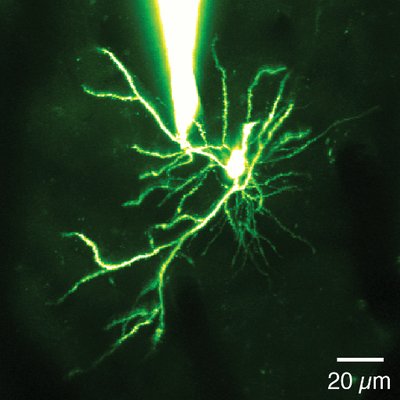
We created a carefully validated “ground truth” library of over 200 optogenetically tagged cerebellar neurons and used this to train a classifier with semi-supervised generative modelling to recognize neuron types based on their electrophysiological signatures.
We tackled a decades-old problem in systems neuroscience: the identification of neurons in extracellular recordings in vivo.
Our “Neuro-AI” paper has just been published in Cell. It describes a new deep learning-based classifier for identifying different cell types in Neuropixels recordings: doi.org/10.1016/j.cell.2025.…
Congratulations to the team! @omgauld, @paqio, @llerussell, @hwpdalgleish, Maya Iuga, @Fran_Sacadura, @ArndRoth & @BeverleyAClark
This result suggests that non-coding neurons can still convey important information, which may have significance for builders of brain-machine interfaces as it widens the pool of neurons available to enhance behavioral performance.
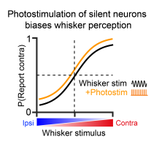
Second, the recruitment of this non-coding pool by optogenetic stimulation can enhance perception. This means that this latent pool of neurons (the “dark matter”) can actually be useful for sensory processing!

We therefore provide two key new insights into the mechanism and significance of sparse coding. First, the sparse code is enforced by selective targeting of powerful inhibition, which predominantly suppresses non-coding neurons.

The all-optical experiments also revealed that these non-coding (i.e. normally silent) neurons are selectively targeted by inhibition recruited during sensory stimulation – in other words, they are preferentially suppressed by sensory stimulation.

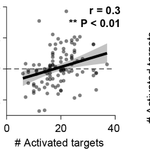
All-optical interrogation revealed that we can produce a behavioral bias which depends on the number of neurons activated. Moreover, what is fascinating is that the behavioral effect is dominated by activation of non-coding neurons.

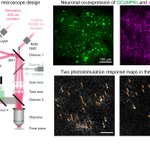
Next, we switched to all-optical interrogation to be able to activate small ensembles of identified neurons using two-photon optogenetics, and measure the impact both on local network activity and on behavior.

