

Game Developer | Math Teacher
Joined August 2016
- Tweets761
- Following674
- Followers128
- Likes2.6K





Prof. Williams retweeted

During the mid-20th century, cats played an important role on ships as skilled rodent catchers. Sailors realized that having cats aboard helped control the population of rats and mice, which were notorious for damaging supplies and spreading diseases. These ship cats became valued members of the crew and were even given passports to acknowledge their contribution and ensure their safety during international travels.
The passports for ship cats were a unique and lighthearted tradition. While they didn't serve any legal or official purpose, they were created to recognize the cats' role and provide a form of identification. The passports typically consisted of a small booklet with pages that included the cat's name, description, and an area for their paw print.
When it was time to depart or dock in a foreign port, the ship's captain or crew members would present the cat's passport to the authorities as a fun way to document the feline's presence onboard. The cat's paw print, obtained using ink or paint, was added to the designated page, providing a personalized and whimsical touch to the document. This practice not only amused the sailors but also showcased the camaraderie they shared with their feline companions.
While these ship cat passports were not legally recognized, they symbolized the close bond between humans and their feline shipmates. They served as a reminder of the cats' essential role in maintaining a clean and rodent-free ship, thus safeguarding the crew's provisions and health during long sea voyages.
However, as the mid-20th century progressed and maritime practices evolved, the reliance on ship cats diminished with the advent of more effective pest control methods. With the decline in the need for ship cats, the tradition of issuing passports gradually faded away. Nevertheless, the memory of these seafaring felines and their unique passports continues to fascinate and entertain those interested in maritime history and the unique relationships forged between humans and animals at sea.


Prof. Williams retweeted

Hayao Miyazaki's notes on animating run cycles, originally published in June 1980 edition of Animation Monthly magazine. Translated by me! (1/2)


Prof. Williams retweeted

Genuary Day 15: Sine waves
#genuary #genuary2023 #genuary15 #seohyowork #creativecoding #dailycoding
Prof. Williams retweeted

1979 Sesame Street & Philip Glass “The Geometry of Circles #1″ animation.

Prof. Williams retweeted

New research-y project: Blueprints for Intelligence, a visual history of artificial neural networks from 1943 to 2020
philippschmitt.com/blueprint…


Prof. Williams retweeted
Akihiro Miwa perfects Moro's laugh in the recording sessions for Princess Mononoke
From: How Princess Mononoke Was Born (1998), dir. Toshiro Uratani, Buena Vista Home Entertainment
Prof. Williams retweeted
@kianamaiart Thank you so much for making this. 😭💕🙏 I made some Fanart. Seriously, the highlight of my 2022.


Prof. Williams retweeted

Phil Tippett's MAD GOD has been acquired by @Shudder, for a limited theatrical release and streaming bow June 16. This one’s a masterpiece. bit.ly/3iMjNSv


Prof. Williams retweeted
Part of Yoshitaka Amano's 1001 Nights (1998), dir. Mike Smith, Hyperion Studio
The wild illustrations of Amano (Final Fantasy, Angel's Egg) brought to life
Prof. Williams retweeted

Physics, astronomy, mathematics of orbits.
Space Debris orbiting Earth. (Credit: Technical University Braunschweig.
Prof. Williams retweeted

I've been busy the working on prototypes for a set of collectible figures, Koroks!! Currently all figures are 3d printed in colored resin, but I've recently started creating molds to make more durable copies. Each comes with a glow-in-the-dark korok seed!
#korok #3Dprinting #toys – at Montréal, Québec


Prof. Williams retweeted
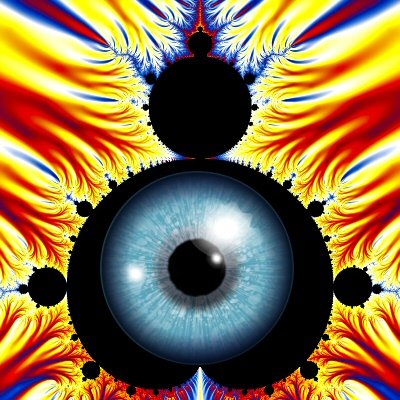
Mathematics.
Imagine the challenge of hand-drawing complicated mathematical graphs, like this absolute value of the complex gamma function (from 1909). tinyurl.com/y97prqdo
