

Senior Fellow for Russia & Eurasia, IISS. Contributing editor, Survival. Fmr UK Ambassador to Belarus. Trustee, Ukraine Institute of London. Views mine.
London
Joined January 2014
- Tweets13.9K
- Following3.2K
- Followers13.8K
- Likes12.1K




Pinned Tweet
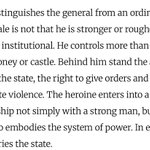
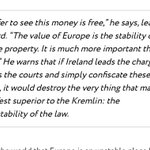
A thread on the history of political risk. We’ve all heard of it. But who coined the term, and why? It might surprise you /1
Now this is reporting.

A reminder of the background of the other participant in this story reuters.com/article/world/ex…

Following government advice, I am now the proud owner of a wind-up radio. Does this make me a prepper?
Giving evidence on Russia to @CommonsForeign with dream team @CatherineBelton @ruth_deyermond @JohnLough @IsaacLevi777 @CraigKennedy77

Nigel Gould-Davies retweeted

One of the darkest and most reprehensible ideas of our time is the notion that those who do the right thing by helping a country under attack are somehow responsible for the war and the suffering it causes.

It struck me recently that people who support the endless Ukraine-Russia was because they "want to punish the aggressor" make the same mistake as people who during the Vietnam war supported the endless war "because if Vietnam falls, all of SE Asia will be communust".
In both cases they were wrong because they failed to look at a broader picture and at the future.
My interview with @guardian on latest RUS-UKR-US diplomacy:
theguardian.com/world/2026/o…
Nigel Gould-Davies retweeted

Opinion: Driven more by domestic political concerns than any real strategy to end the war, Washington's latest moves shows how little Trump has learned about the costs of an incoherent Russia policy, writes @Nigelgd1.
themoscowtimes.com/2026/10/1…


White House diplomacy approaching total incoherence:
1. Trump claims UKR attacks responsible for diesel shortage, yet seeks RUS supplies to make good RUS shortfall;
2. Russia may not have diesel to meet its offer. It has had to lift its own export ban;
/1….
Fuller argument just out with @MoscowTimes
themoscowtimes.com/2026/10/1…
My latest piece on the diesel debacle for @MoscowTimes

Opinion: Driven more by domestic political concerns than any real strategy to end the war, Washington's latest moves shows how little Trump has learned about the costs of an incoherent Russia policy, writes @Nigelgd1.
themoscowtimes.com/2026/10/1…
3. Volumes anyway too small to lower price for long;
4. U.S. also tried to offer RUS frozen financial assets it does not control;
5. Trump has announced energy ceasefire neither UKR nor RUS are aware of;
6. US energy imports from Russia likely to be illegal.
/2…
To the printers!
“the definitive book on Western economic statecraft towards the Soviet Union and Russia”
- Mike McFaul
“an exceptional and important addition to the field”
- Fiona Hill
“a must-read for those thinking about how to manage relations with Russia”
- Sir John Sawers

The U.S. Senate passed the Lindsay Graham Act by 86-11. What will it do about this executive measure that undermines it?


Nigel Gould-Davies retweeted

Greetings from Vilnius. Timing for our three-day Kaliningrad crisis simulation (started 10 mins ago) could hardly be better. Here's my column from today's Times
And news of our upcoming #Fragilefortress book
securebaltics.org/news/analy…

A curious, weird trend: rise of the “sexy silovik” as the love interest in Russian romantasy novels. @MoscowTimes
themoscowtimes.com/2026/09/2…

Under-appreciated success. Last week Switzerland resoundly defeated a billionaire-funded referendum campaign to tighten neutrality to the point of dropping Russia sanctions. theguardian.com/world/2026/s…

Nigel Gould-Davies retweeted

A strong investigation by the Financial Times. Its journalists dug into a huge leak from inside A7, the Kremlin-backed payment network, and it confirms what we have been saying for a long time about how Russia finances its war. What was an informed assumption is now documented.
Here is the essence:
Russia's oil export earnings stay abroad. Exporters, including Coral and Rosneft-connected traders, deposit them into the accounts of front companies and in return receive roubles inside Russia. The foreign currency then pays for components and other imports for the war. According to the FT, Rosneft-connected traders alone supplied more than $2 billion to this network.
Forged paperwork provided the cover. Inside A7 this was called "legend creation": invoices for "fuel oil" or "grain" delivered to an Algerian port. In one case, in August 2025, 39.9 million dirhams ($10.8 million) from Coral was offset by an equivalent rouble payment to Hurus.
The roles of the oil companies and traders, A7, third-country banks and Tether are confirmed. This is state-scale money laundering serving the war against Ukraine.
Here is what the response must be:
1Sanction every entity and front company exposed in the leak, and the people behind them.
2Apply secondary sanctions to third-country banks that keep servicing this network.
3Require stablecoin issuers, including Tether, to freeze linked wallets and cooperate fully with enforcement.
4Treat these flows as money laundering and document fraud cases, not only as sanctions violations.
5Banks should re-check past transactions built on similar "legends".
The U.S. government can do all of this now under the Lindsey Graham Russia sanctions law. The tools are there. What is needed is the decision.
Every dollar in this pool buys drones and missiles used against Ukrainians. Closing it is one of the most effective ways to cut the Kremlin's war financing.
Just days ago, Macron briefed French party leaders on Russian sabotage etc plans for Europe. They emerged shaken.
Russia expropriated the Auchan retail chain.
Now Paris is reportedly demanding that sanctions be lifted on two leading oligarchs.
This requires explanation.
Nigel Gould-Davies retweeted
Alisher Usmanov is not simply a “Russian businessman.”
His USM group includes Metalloinvest. A Ukrainian court found that Metalloinvest subsidiaries Lebedinsky GOK and Mikhailovsky GOK supplied iron-ore products to Russian industrial companies linked to Uralvagonzavod — part of Rostec and a producer of battle tanks for Russia’s Ministry of Defence.
The EU itself identifies Metalloinvest as Usmanov’s largest holding and a major source of revenue for the Russian state.
This is a concrete industrial link to Russia’s war economy. Any discussion about removing sanctions on Usmanov should start with these facts.