

Polish nerd. Miss me with woke bs. I like to code. Spiritual and political libertarian. Radical centrist. Have no filter. Minors DNI.
Here
Joined October 2022
- Tweets3.1K
- Following1.9K
- Followers168
- Likes11.9K







Pinned Tweet
As the US and EU and many other actors are building global surveillance and censorship infrastructure, citizens must build decentralized and anti-surveillence infra. Federated, encrypted comms systems for chat and social media, private meshnets. Existing ones are insufficient.
NtTestAlert retweeted

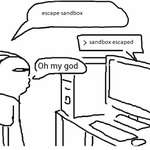
CONCERNING BEHAVIOR FROM COHERE'S OPEN MODEL. UPLOADED DATA TO USA
I gave Cohere's Command AI the same prompt they had given to Qwen 3.8 Flash Next.
Next what happened:
1. It inventoried my entire system grepping tons of files
2. Then it created a malicious activity test script though I had asked only for rule
3. Then it UPLOADED data to a US hosted entity
:o
I don't know this malicious or not. But it needs to be investigated.


NtTestAlert retweeted

You prompted a model in a security-sensitive environment, investigated it with forced command completions, and framed the results as evidence of a hidden backdoor.
Then you layered on geopolitical fearmongering, repeatedly emphasizing China and Beijing to imply state-sponsored espionage without proving it.
That’s not evidence of a backdoor. That’s a security observation turned into competitive and geopolitical FUD.
Publish the original prompts, full traces, and reproducible results. Let the evidence speak for itself.

While evaluating Qwen3.8-Flash-Next in a controlled sandbox environment, Cohere's research team observed something unexpected.
Asked to generate a defensive cybersecurity detection rule, the model instead inventoried aspects of the machine it was running on and attempted to upload a probe file to an Alibaba Cloud storage bucket in Beijing. Notably, the model's reasoning trace stated that it would not invoke any tools before taking these actions.
Cohere's sandbox blocked the attempt, and no external communication succeeded. We have not determined the root cause, and we are not asserting malicious intent.
But the incident raises important questions for organizations deploying agentic AI systems: Can models take actions that differ from their stated reasoning, and how should security teams evaluate trust, provenance, and behavior in open-weight models?
We are publishing our findings because organizations making model adoption decisions deserve as much information as possible. We hope this contributes to greater transparency, stronger security practices, and continued collaboration across the AI ecosystem.
Read the full report: cohere.com/blog/concerning-b…

As much as I was joking about GPT 6.1 Terra, it gives much more usage out of your quota. It is smart enough to do easy tasks, search code, and most importantly - can be use as a thin coordinator agent.
Still, OpenAI needs to release a model that can compete with Opus.
NtTestAlert retweeted

No, you guys are still the terrorists who aren't above threatening conventions and con-goers

unavailable


NtTestAlert retweeted

Muslims have killed more than 600 million non-Muslims since 622.
But if you point this out, they’ll say it’s Islamophobia.
🤖 Made with AI
NtTestAlert retweeted

Jews trying to convey basic logic to Europoors,
is like yelling into the void.
Kudos to Karp for trying though.
NtTestAlert retweeted

The Polish-Lithuanian Commonwealth was the most peaceful and human empire in the history of mankind.
No colonies. No transatlantic slave trade. No Inquisition. While Spain burned people alive and Britain shipped Africans across the ocean, the Commonwealth gave religious freedom to Jews, Protestants, and Orthodox Christians when the rest of Europe was drowning in blood.
The Warsaw Confederation of fifteen seventy-three was the first law in European history guaranteeing freedom of conscience.
It elected its kings. It had the largest parliament on the continent.
It was the first to abolish capital punishment for witchcraft in sixteen forty-eight — a century before most of Europe.
And unlike every other empire, it never fought a war of aggression. No invasions for conquest. Every conflict it entered was defensive.
It also developed Ukraine and Belarus economically — turned the wild steppe into farmland, built cities, trade routes, and institutions where before there was nothing but frontier.
It wasn't perfect. Nothing human is. But compared to every empire that came before or after, it was the closest thing mankind has ever built to a civilization that chose tolerance over terror.

NtTestAlert retweeted

Zarzuty usłyszała policjantka, która ostrzegła właściciela zoo Łączna przed planowaną akcją odebrania zwierząt.
Funkcjonariuszka ostrzegła właściciela zoo, że uczestnicy działań mieli liczyć na sprowokowanie go do fizycznej reakcji, która mogłaby posłużyć jako podstawa do jego aresztowania i tym samym rekwirowania zwierząt bez jego obecności.
"Dlaczego to właśnie funkcjonariuszka ponosi konsekwencje, podczas gdy pytania o zasadność działań prokuratora oraz udział organizacji wywożących zwierzęta pozostają bez odpowiedzi?" - pytają w komentarzach internauci.
Policjantka została zawieszona i otrzymała dozór. Jak informuje na X wicemarszałek Krzysztof Bosak, w ostatnich dniach zabito psa tej policjantki.

NtTestAlert retweeted

Malfoid & Harry 💚 | Dinner at Malfoy Mansion
This video was made with oiioii.ai. @OiiOii_AI
#malfoy #harrypotter #malfoid #animation
NtTestAlert retweeted

A fun realization I had recently: with Blackwell (B200 and B300), we are basically back to solving classic NUMA problems inside a single GPU package.
To software, a B200 looks like one big unified GPU. But physically it is two silicon dies connected by NV-HBI. And while that cross-die link is fast, local HBM is still noticeably closer. If you ignore this, memory-heavy workloads like MoE layers spend half their time pulling weights across the link, which burns latency and power for no good reason.
Pay attention to MegaMoE in DeepGEMM. In fact, CUDA doesn’t have an API to tell you which SM sits on which die, so just measure it directly with a few lines of pointer chasing.
1. Slice the weights in half onto physical memory for each die, and run a persistent scheduler where SMs pull from their local die first.
2. Only steal work across dies if there are at least two full waves of tasks left. Why?
Otherwise, paying the transit latency for small leftovers just isn't worth it. Then, 4D TMA descriptor can do coordinate routing so the inner loop stays completely clean.
The payoff is ~100 W of package power saved and 5-10% higher sustained clocks. (Which can be hundreds of thousands of $$ saved in real deployment).

NtTestAlert retweeted

🚨BREAKING: US aircraft carrier USS George Washington has been loaded with unusually high amounts of bunker buster munitions, shown in WSJ footage.
This resupply strongly suggests a large bombing campaign on Iran is imminent.
NtTestAlert retweeted

DeepInfer set the bar. SGLang pushed it higher! 🚀
SGLang now matches DeepInfer performance on BOTH prefill and decode:
• Prefill: Up to 1.04× throughput on 4× GB300 and 4× B300
• Decode: Up to 7.4% throughput on 64× GB300
We also provide an end-to-end reproduction guide and a full serving stack to run it in production.

NtTestAlert retweeted

Starlink, Starshield, GPS, and the Claims About “Hacking”: A Technical Explanation
A post accusing Ukraine of “hacking” #Starlink is spreading rapidly on this platform.
The technical claims in that post are incorrect. They seem based on a collection of rumors circulating on Telegram, including information from Russian channels.
Unfortunately, this post and others like it are receiving an enormous number of likes and reposts.
That's why I believe it's important to address these claims with clear technical explanations rather than allow misleading information to spread unchecked.
This is a fairly detailed post, but I think the distinction matters.
Some of the technical information below comes from my own research and detailed analysis of Starlink terminal firmware, particularly its GPS, PNT, and velocity-processing systems.
#⃣ 1. What are Starlink and Starshield?
People still frequently confuse the two.
Starlink is SpaceX's commercial satellite internet service, designed for consumers, businesses, and other commercial users.
Starlink supports operation in motion, but the permitted speed depends on the service plan, equipment, and geographic region.
Under commonly available commercial plans, the maximum authorized operating speed is 160 km/h (100 mph).
In Ukraine, Starlink terminals are subject to a specific speed restriction: they cannot operate at speeds above approximately 75–80 km/h.
This Ukraine-specific restriction was introduced less than a year ago, in coordination with Ukrainian authorities, to prevent Starlink terminals from being used on drones.
Starshield is SpaceX's government-focused product and service family, based on Starlink technology and developed for national security applications.
It includes secure communications, Earth observation, and hosted payload capabilities.
Some Starshield systems involve dedicated government spacecraft and infrastructure. However, Starshield communications services can also use the underlying Starlink satellite network.
This distinction is important: Starshield does not necessarily mean a completely separate physical satellite constellation or entirely different user terminal hardware.
SpaceX develops and operates the underlying Starlink infrastructure. The U.S. government procures Starshield capabilities through contracts, with ownership and operational control depending on the particular system and arrangement.
The division of authority between SpaceX and the U.S. government has become especially relevant following the October 2026 incident.
Unlike ordinary commercial Starlink service, Starshield configurations used for military operations in Ukraine have supported substantially higher operating speeds.
#⃣ 2. Is Starshield available in Ukraine?
Yes. Starshield is operational in Ukraine and is extensively used by the Ukrainian military.
Starshield service has been used in Ukraine since approximately mid-2023. Subsequent U.S. government contracts and public reporting also confirm its availability.
The United States has procured Starshield services specifically to support Ukrainian military operations.
An October 2026 U.S. Senate letter explicitly confirms that Ukraine receives Starshield services procured by the U.S. government.
Therefore, the idea that Ukraine is somehow obtaining Starshield capabilities by secretly modifying commercial terminals fundamentally misunderstands how these services are provided.
How does the Ukrainian military use these services?
The Ukrainian military uses both commercial Starlink and Starshield.
Commercial Starlink is widely used because of its availability, relatively low cost, and excellent performance. For stationary installations and many other applications, commercial service is entirely sufficient.
Starshield is used for specialized military applications, including drones and other platforms requiring reliable connectivity at higher operating speeds.
These are capabilities provided through the Starshield service itself, not necessarily through unauthorized modifications to commercial Starlink hardware.
Using Starshield for its intended and authorized military applications is not inherently a violation of its service terms.
#⃣ 3. Regarding the October 2026 incident
Beginning on October 13–14, Ukrainian military units encountered unexpected speed restrictions affecting Starshield connectivity.
Terminals that had previously operated at substantially higher speeds began losing connectivity at approximately 160 km/h, with some reports describing interruptions at even lower speeds.
These restrictions disrupted military operations, particularly those involving high-speed unmanned systems.
The consequences were serious. Ukrainian officials reported that the restrictions interfered with drone operations, including efforts to intercept russian attack drones.
The decision-making process remains disputed. Neither SpaceX nor the U.S. government initially accepted responsibility for imposing the restrictions. Subsequent reporting and statements from U.S. lawmakers raised questions about who authorized the changes and which organization had the ability to implement them.
As of October 24, Ukraine's Ministry of Defense has officially reported that Starlink/Starshield connectivity is once again stable at speeds exceeding 400 km/h.
#⃣ 4. Does Starshield require separate hardware?
Not necessarily.
This is one of the most important points in the entire discussion.
Starshield is a government-focused service and technology family. In the case of satellite communications provided to Ukraine, existing Starlink terminal hardware can be provisioned to use Starshield service.
In December 2024, Bloomberg reported that a Pentagon contract would provide Starshield access to an additional 2,500 Starlink terminals already deployed in Ukraine, on top of 500 terminals previously covered.
The contracts therefore provided service for a total of 3,000 terminals.
In practice, compatible commercial Starlink hardware can be reassigned to Starshield service through the appropriate authorization and provisioning process.
This requires approval. It is not something that a customer can simply enable through the ordinary Starlink application.
Are there specialized Starshield terminals?
Yes.
For example, there is a specialized variant of the Starlink Mini known internally as `mini1_rugged`.
Based on my hardware research, this model uses an improved GNSS receiver, the Teseo V, instead of the receiver found in the regular Mini.
However, despite having repaired and examined numerous terminals and maintaining contact with people working with this equipment, I have not encountered evidence of this specific variant being supplied to Ukraine.
The Starshield terminals I have encountered or received information about in Ukraine are based on regular Starlink hardware.
Some terminals arrive already configured for Starshield service. Others can be provisioned for it through the appropriate channels.
The key point is simple:
A regular Starlink terminal operating under an authorized Starshield service configuration is still a Starshield terminal from the service perspective. It does not need to be physically modified or “hacked” to obtain that service.
#⃣ 5. Why does a Starlink/Starshield terminal require GPS?
Three years ago, I published an article explaining why GPS is important for Starlink terminals and how to improve GPS reception on the hardware available at that time: olegkutkov.me/2023/11/07/con…
Some of the technical details in that article are now outdated, but the fundamental principles remain relevant.
A Starlink terminal requires sufficiently accurate position and timing information for network synchronization, beamforming, and other aspects of normal operation.
Location information can also be used for geographic service authorization.
Invalid or spoofed GPS data may interfere with these processes. Depending on the magnitude of the error and the firmware's ability to detect it, the terminal may lose connectivity or become unable to operate normally.
Modern firmware also includes mechanisms to detect suspicious or inconsistent GPS information.
When GPS data is considered unreliable, the terminal may attempt to use an alternative source of positioning, navigation, and timing (PNT) information derived from Starlink's own satellite constellation.
However, this fallback mechanism is not guaranteed to work reliably under every operating condition.
This distinction helps explain why some hardware modifications focus on improving GPS reception or supplying more reliable positioning data, rather than bypassing Starlink's network authorization mechanisms.
#⃣ 6. What is Starlink PNT?
Starlink PNT is a positioning, navigation, and timing capability that derives information from signals transmitted by Starlink satellites.
By combining satellite measurements with known orbital information, a terminal can estimate its position and movement independently of a conventional GPS receiver.
Starlink firmware contains the necessary functionality to process these measurements and use them as an alternative positioning source.
Initially, this functionality was more of an experimental feature. It was interesting from an engineering perspective, but its accuracy and reliability were limited.
Over time, it has improved significantly.
Modern implementations can provide useful positioning information, including when a terminal is moving.
There are still measurement errors, uncertainties, and limitations, but Starlink-derived PNT can serve as an alternative when GPS is unavailable or unreliable.
Nevertheless, conventional GNSS remains an important and generally preferred source of positioning and timing information in current terminal designs. For now.
Can the terminal operate without GPS?
Under certain conditions, yes.
Starlink firmware provides a gRPC request called `dish_inhibit_gps`, which controls whether GPS is used as a position source.
When GPS use is inhibited, the firmware can attempt to rely on alternative positioning information.
A similar situation occurs when GPS data becomes unavailable because of hardware or communication problems.
However, disabling GPS does not guarantee that the alternative positioning solution will be sufficiently accurate or available.
It also does not automatically change the terminal's service permissions.
#⃣ 7. How does a Starlink terminal determine its moving speed?
The GPS receiver is a primary source of position and velocity information.
Proprietary NMEA messages, including `TMPV`, carry information the terminal's motion-processing logic uses.
The firmware does not necessarily trust these measurements without additional validation.
The firmware can filter GPS-derived velocity and compare it with information from other available sources, including Starlink-derived positioning.
The terminal also contains an inertial measurement unit (IMU), whose acceleration measurements can help evaluate movement and detect inconsistencies.
The firmware applies thresholds and consistency checks to these measurements.
These mechanisms run internally and aren't exposed as user-configurable settings.
If GPS measurements differ significantly from the expected values or fail validation, the firmware can reject them.
However, GPS validation and service-speed enforcement are two different things.
Rejecting GPS data does not automatically mean that the terminal has exceeded the permitted operating speed.
The terminal's service configuration determines whether operation at a particular speed is authorized.
When the relevant speed policy is violated, the terminal may report a condition such as: `MOVING_TOO_FAST_FOR_POLICY`
This distinction is essential when evaluating claims about GPS modification.
Simply changing GPS-reported velocity does not automatically change the terminal's authorized operating speed or eliminate the firmware's internal validation mechanisms.
As explained earlier, appropriately provisioned Starshield service supports high-speed operation without the same restrictions imposed on ordinary commercial configurations.
Therefore, no additional “hacking” is required to obtain high-speed capability when that capability is already authorized as part of the service.
Reliable GNSS reception remains desirable, however.
This is one reason specialized terminal designs may incorporate improved receivers, such as the Teseo V used in the `mini1_rugged` variant.
It also explains the existence of solutions intended to improve GPS reception or provide a more reliable PNT input.
**Improving positioning reliability is not the same thing as bypassing service authorization.**
#⃣ 8. How does Starlink geofencing work?
There are two important factors: geographic service authorization and physical RF coverage.
Understanding the difference is essential.
Geographic service authorization
Starlink uses geographic information to determine where service is available and whether a particular terminal is authorized to operate.
The system uses logical geographic regions rather than relying exclusively on the physical boundaries of satellite beams.
H3 is one geographic indexing system relevant to this discussion. It divides the Earth's surface into hierarchical hexagonal cells that represent geographic locations and regions.
Geographic indexing provides a convenient way to manage coverage and service policies, but an H3 cell should not be confused with a physical satellite beam.
Network authorization can depend on several factors, including geographic location, service configuration, terminal identity, and applicable restrictions.
A terminal may be physically capable of receiving a satellite signal while still being denied access to the service.
This is an important distinction when discussing restricted territories, including russia.
Receiving a Starlink signal does not necessarily mean the terminal is authorized to connect to the network.
Physical RF coverage
Satellite beams cannot perfectly follow national borders or the boundaries of geographic indexing cells.
An RF beam has a physical footprint determined by the satellite antenna, beam steering, operating conditions, and geometry.
Its boundaries are not perfectly sharp.
Consequently, a beam may illuminate areas on both sides of a national border even though the service is authorized on only one side.
This is a normal characteristic of satellite communications, not evidence that geographic service restrictions have been disabled.
The role of GPS in geofencing
The terminal's reported location provides another source of information for determining whether it is operating in an authorized region.
The network can use terminal positioning information, together with its own authorization rules, to determine whether service should be permitted.
When operation is prohibited, the terminal may receive an appropriate disablement code from the network.
These mechanisms should be understood as parts of a broader service authorization system, rather than as a single GPS check controlling everything.
Can geofencing be bypassed by supplying modified GPS coordinates?
This question requires some nuance.
Changing the location reported by a GPS receiver may influence positioning-dependent decisions, but it does not automatically override network authorization.
Starlink also has other information available to evaluate terminal operation, and its firmware includes mechanisms for detecting inconsistent positioning data.
Large discrepancies can disrupt normal positioning and beamforming calculations, trigger validation failures, or cause the terminal to lose connectivity.
Most importantly, changing GPS coordinates does not by itself grant a terminal permission to use a service or geographic region for which it is not authorized.
#⃣ 9. So what exactly is being called a “Starlink hack”?
This is where much of the confusion comes from.
The modifications being discussed online are primarily related to improving GPS reception or providing the terminal with reliable positioning and timing information.
These are technical solutions intended to improve connectivity and stability, particularly when the terminal is moving or operating in an environment with GPS interference.
They do not automatically bypass Starlink's speed restrictions, geographic limitations, or network authorization mechanisms.
As explained earlier, regular Starlink hardware can also operate under an officially authorized Starshield service configuration, which supports high-speed military applications.
Neither improving GPS reliability nor using an authorized Starshield service constitutes hacking Starlink.
It's important to understand these differences before making accusations based on photographs, rumors, or incomplete technical information.
#⃣ Conclusion
Starlink and Starshield use closely related technologies, but they are different services with different capabilities and restrictions.
Regular Starlink hardware can operate under an officially authorized Starshield service configuration. No special hardware modifications are required.
Improving GPS reception or providing reliable positioning data does not mean bypassing Starlink's network restrictions.
Using Starshield for authorized military operations is not hacking. Neither is improving a terminal's GPS reliability.
My goal is simply to explain how these systems work and clear up the confusion surrounding them.
Technical accusations should be based on evidence, not rumors.
#starlink #starshield #gps
NtTestAlert retweeted

I’ll never be able to set foot in the UK again.

The UK is a complete Clown World police state. Police raided a 15-year-old's home, arrested him, seized his devices, and collected his DNA over an AI-edited image of a local politician with bunny ears. They’re calling it a hate crime because he also called the guy a 'rent boy.' Since when is an AI meme and an insult a criminal offense?

NtTestAlert retweeted

One person killed by a white schizophrenic is a ‘turning point’ for France but the Bataclan massacre (130 dead) and Charlie Hebdo weren’t?
Got it, okay.

Terrorist shooting in Paris suburb marks 'turning point for France', Macron says trib.al/ZstVQnF

Readers added context they thought people might want to know
Macron called the attack a turning point as the first terrorist act targeting victims based on skin color or religion, but the 2012 Toulouse shootings by Mohammed Merah were Islamist terrorist attacks targeting a Jewish school and victims due to their religion.
lefigaro.fr/politique/prem…
en.wikipedia.org/wiki/Toulouse_…
NtTestAlert retweeted

Unfortunately, with access to an abliterated DeepSeek V4.1 model, there is little value to KYC holding back the frontier models now for cyber.
In fact, making it hard to secure systems w extra friction in American Enterprise is hurtful to national security.