

NBP is a growth consulting firm headquartered in Singapore with regional presence in India, Africa, Türkiye. NBP is 100% focused on the nuclear energy sector.
Asia, Africa, India, Türkiye
Joined July 2015
- Tweets8.7K
- Following620
- Followers3.2K
- Likes12.9K






Stop reading Southeast Asia's nuclear announcements. Start reading the agreements. 🌏⚛️
There's a reliable test for whether a nuclear market is real or aspirational: ignore the policy statements. Look at the signed agreements, the committed money, and the ground being broken.
Apply that test to Southeast Asia in 2026 and the answer is unambiguous. This region isn't preparing for a nuclear market. It's operating one.
Here's the deal flow 👇
🇻🇳 Vietnam — Intergovernmental construction agreement with Russia for Ninh Thuan 1, signed March 2026. Binding. Site clearance physically underway in Khanh Hoa. Resettlement in progress. Separately: a four-party MOU connecting Korea Eximbank, K-SURE, KEPCO and PetroVietnam for Ninh Thuan 2 financing — a live commercial framework, not a statement of interest
🇵🇭 Philippines — USTDA-funded feasibility study worth $2.7M directing Meralco toward US-designed SMRs. Plus a tripartite MOU: KHNP + KEXIM + Meralco. South Korea connected technology, export financing and the off-taker in a single instrument. That's a complete commercial proposition
🇹🇭 Thailand — KHNP–EGAT MOU signed June 2025 covering SMR technology study, knowledge exchange and HR development. US–Thailand 123 Agreement in force July 2025. Both active
🇲🇾 Malaysia — Strategic Civil Nuclear MOU with the US signed July 2025. The formal precursor to a 123 Agreement
🇮🇩 Indonesia — ThorCon's Site Evaluation Plan approval from BAPETEN, August 2025. First formal regulatory milestone for a non-light-water advanced reactor design anywhere in ASEAN
Now the four gaps that cut across all five markets — none of which require winning a vendor selection 👇
1️⃣ Financing architecture — not one of the five programmes has a fully structured financing solution. The World Bank lifted its nuclear financing ban in June 2025, opening a multilateral channel that didn't exist before
2️⃣ Regulatory capacity — every market is building its licensing framework in parallel with vendor engagement, not before it. Contributing to that process shapes the standards reactors get judged against
3️⃣ Workforce — a licensed operator can't be trained in 18 months. Demand across all five markets is concurrent, not sequential
4️⃣ Data centre power — hyperscale operators need firm low-carbon baseload. Renewables can't reliably deliver it. SMRs as dedicated campus power create private-sector offtake that simplifies financing enormously. Indonesia and Malaysia are the most immediate
On timelines: Vietnam targets COD at Ninh Thuan 1 between 2030–2035. Philippines first power 2035–2038. Thailand SMRs by 2037.
Those aren't finish lines. They're the endpoints of procurement cycles already running. The engineering contracts, component supply agreements, training partnerships and regulatory advisory engagements feeding them are being awarded now — not in 2034.
Every agreement that closes without your firm's involvement is a position someone else is building.
Which of the four gaps is your firm actually positioned to fill? 👇
👉 To know more about Asia, click here: nuclearbusiness-platform.com…
#NuclearEnergy #SoutheastAsia #NuclearPower #CleanEnergy #NetZero #EnergySecurity #NuclearTech #SMRs #Vietnam #Philippines #Thailand #Malaysia #Indonesia #NinhThuan #KHNP #KEXIM #PetroVietnam #Meralco #EGAT #ThorCon #BAPETEN #USTDA #ANBP #NuclearMarket #EnergyTransition #GlobalNuclear #EnergyTwitter #Baseload #Decarbonization #NuclearForClimate #AtomsForPeace #EmergingMarkets #EnergyIndependence

Türkiye just became a nuclear nation — and its next 15 GW might be bigger than Akkuyu itself. 🇹🇷⚛️
Akkuyu Unit 1 enters commercial operation in 2026. First unit. First nuclear electricity. The threshold is crossed.
But the real story is what's queued behind it 👇
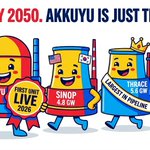
⚛️ Akkuyu NPP — 4.8 GW. USD 11 billion already deployed into the Turkish economy
⚛️ Sinop NPP — 4.8 GW. Site approved. EIA completed. A US–South Korea trilateral negotiation framework now active
⚛️ Thrace NPP — 5.6 GW. The largest single nuclear investment opportunity in the global pipeline right now
⚛️ SMR programme — 5 GW formally committed.
Rolls-Royce and Westinghouse in active discussions. US EXIM Bank financing confirmed
The target: 20 GW by 2050. Net zero by 2053.
That's a USD 100 billion+ commercial opportunity.
And Türkiye isn't starting from zero on the industrial side:
⚛️ 400+ Turkish companies with nuclear construction experience
⚛️ 49 holding active ASME certifications
⚛️ Independent regulator (NDK) already in place
⚛️ Constitutional investment protections
⚛️ World Bank re-entry into nuclear financing expanding the capital pool
Then there's the demand story nobody's pricing in: data centres, hydrogen production, desalination, industrial co-generation. Nuclear as an industrial heat and power platform, not just a grid asset.
Former Deputy Minister Bayraktar's own estimate: Türkiye needs 16–20 reactors in total, or 12–16 beyond Akkuyu, to reach carbon neutrality.
Sinop, Thrace, and the SMR programme all move against the backdrop of a Türkiye that already operates nuclear power. The credibility premium is real.
Which project closes first — Sinop with the US–Korea framework, or Thrace as the biggest single opportunity in the global pipeline? 👇
👉 To know more about Türkiye, click here: nuclearbusiness-platform.com…
#NuclearEnergy #Türkiye #Turkey #NuclearPower #CleanEnergy #NetZero #EnergySecurity #NuclearTech #SMRs #Akkuyu #Sinop #Thrace #TUNAS #NUTED #NDK #RollsRoyce #Westinghouse #EXIM #TNBP #NuclearMarket #EnergyTransition #GlobalNuclear #EnergyTwitter #Baseload #Decarbonization #NuclearForClimate #AtomsForPeace #NuclearEnergyInnovation #EmergingMarkets #EnergyIndependence #DataCentres

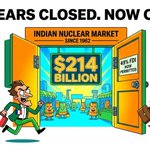
India just ended a 60-year nuclear monopoly. The door is open for the first time. 🇮🇳⚛️
The SHANTI Act, passed December 2025, did three things:
1️⃣ Dismantled the state monopoly on nuclear operation
2️⃣ Capped operator liability in line with global standards
3️⃣ Opened private and foreign equity of up to 49% in nuclear projects
For six decades, international stakeholders couldn't engage India's nuclear market on commercially viable terms. That constraint is gone.
The target: 100 GW by 2047.
The near-term milestone: 22,480 MW by 2031–32.
The investment required: over USD 214 billion.
Where it stands today 👇
⚛️ 8.78 GW installed
⚛️ 13.6+ GW in construction and pre-project stages
⚛️ 100 GW target by 2047 — capacity growth India has never attempted before
What's actually open now:
⚛️ Bharat Small Reactor programme — $26 billion, backed by an initial $2.4 billion government outlay. Six industrial giants. 16 sites. A plug-and-play market for international component manufacturers and digital system integrators
⚛️ Precision manufacturing — reactor internals, specialised sensors, advanced cooling systems
⚛️ Hydrogen co-generation, nuclear fuel supply, lifecycle services
⚛️ Customs duties removed on critical nuclear imports until 2035 — directly lowering entry cost
And the buyers aren't just utilities anymore. Private conglomerates in steel, aluminium and data centres are now authorised to fund, build and operate nuclear assets under a new "User" category.
India's own assessment: the most consequential newly opened nuclear market in the world.
The question for international firms is no longer whether to engage. It's how quickly.
Which international vendor moves first into post-SHANTI India — Westinghouse, EDF, or Rosatom?
👉 To know more about India, click here: nuclearbusiness-platform.com…
#NuclearEnergy #India #NuclearPower #CleanEnergy #NetZero #EnergySecurity #NuclearTech #SMRs #SHANTIAct #BharatSmallReactor #BSR #NPCIL #NTPC #TataPower #Adani #Reliance #JSW #Westinghouse #EDF #Rosatom #PFBR #Thorium #NuclearMarket #EnergyTransition #GlobalNuclear #EnergyTwitter #Baseload #Decarbonization #NuclearForClimate #AtomsForPeace #EmergingMarkets #EnergyIndependence

10+ African countries want nuclear within the next decade. $105 billion is on the table. 🌍⚛️
Most people still think of Africa's nuclear story as South Africa and nothing else. That read is two decades out of date.
Here's what's actually happening 👇
7 sub-Saharan African countries are committed to nuclear in their energy mix between 2030 and 2037:
🇬🇭 Ghana
🇺🇬 Uganda
🇳🇬 Nigeria
🇷🇼 Rwanda
🇰🇪 Kenya
🇿🇲 Zambia
(+ others in earlier stages)
Ghana, Nigeria and Uganda have all developed a Nuclear National Position — and they're evaluating both large reactors and SMRs, not defaulting to one.
The numbers behind the pipeline:
⚛️ Up to 15,000 MW of new nuclear capacity by 2035
⚛️ A potential investment market of roughly $105 billion
⚛️ Vendors already circling: Russia, China, the US, France, South Korea — each with a different offer
And the offers are not equivalent:
→ Russia brings Build-Own-Operate financing
→ China brings full IP plus a closed fuel cycle
→ The US brings Section 123 frameworks and EXIM/DFC
→ France brings EPR and institutional partnership
→ Korea brings proven delivery and competitive cost
The countries are not choosing a reactor. They're choosing an ecosystem — financing, fuel, workforce, regulation and geopolitics in one package.
That's why the tier classification matters. Government commitment and timelines vary enormously. Some of these programmes reach financial close. Others stall at the feasibility stage.
For vendors and investors, the diligence question isn't "which African market is biggest?" It's "which one has firm government commitment and a tangible timeline?"
The window to engage early is now — before the partnerships lock.
Which African country moves first after South Africa? 👇
👉 To know more about Africa's nuclear market, click here: nuclearbusiness-platform.com…
#NuclearEnergy #Africa #NuclearPower #CleanEnergy #NetZero #EnergySecurity #NuclearTech #SMRs #Ghana #Nigeria #Uganda #Kenya #Rwanda #Zambia #SouthAfrica #AFNBP #NuclearMarket #EnergyTransition #GlobalNuclear #EnergyTwitter #Baseload #Decarbonization #NuclearForClimate #AtomsForPeace #NuclearEnergyInnovation #EmergingMarkets #EnergyIndependence #Rosatom #CNNC #Westinghouse #EDF #KHNP

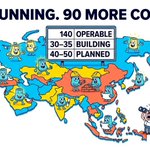
140 reactors running. 30–35 under construction. 40–50 more planned. 🌏⚛️
Asia isn't "emerging" in nuclear anymore. It's the epicentre.
Here's the map everyone should be staring at 👇
🇨🇳 China — 53 reactors, 53 GWe operating. 20 more under construction. 5% of electricity, targeting ~70 GW by 2025 and carbon neutral by 2060
🇰🇷 South Korea — 24 reactors, 27% of electricity. Four under construction, six more by 2030. Nuclear share projected at 34.6% by 2036. Carbon neutral by 2050
🇯🇵 Japan — recommitted. Target: 20–22% of the energy mix by 2030. 27 restart applications filed, 17 passed safety checks, only 10 running
🇮🇳 India — 7,380 MW today → 22,480 MW by 2031. Wants nuclear at 9% of electricity by 2047 (from 3.2%). Carbon neutral by 2070
🇵🇰 Pakistan — 3,262 MW installed, ~7.5% of generation. 50% emissions cut targeted by 2030
🇧🇩 Bangladesh — Rooppur coming online. Two VVER-1200s from Russia. Demand growing ~7% per year
Now Southeast Asia, where the targets are stacking up 👇
🇮🇩 Indonesia — 500 MW by 2034. SMR. Net zero 2060
🇵🇭 Philippines — 1,200 MW by 2032 → 2,400 by 2035 → 4,800 by 2050. SMR + large. Net zero 2050
🇻🇳 Vietnam — 4,000 MW by 2035 → 12,000 by 2050. SMR + large. Net zero 2050
🇹🇭 Thailand — 600 MW by 2037. SMR. Net zero 2065
🇲🇾 Malaysia — SMR, targeting 2031. Net zero 2050
And Central Asia is quietly moving:
🇰🇿 Kazakhstan — world's largest uranium producer, now building its first commercial plant. Carbon neutral by 2060
🇺🇿 Uzbekistan — two VVER-1200 units agreed with Russia. INIR Phase 2 underway
The pattern? China and South Korea aren't just building — they're exporting their own indigenous designs. That's the shift nobody priced in a decade ago.
Asia went from buyer to vendor.
Which market surprises everyone next — Indonesia, Kazakhstan, or the Philippines? 👇
👉 To know more about Asia, click here: nuclearbusiness-platform.com…
#NuclearEnergy #Asia #NuclearPower #CleanEnergy #NetZero #EnergySecurity #NuclearTech #SMRs #China #SouthKorea #Japan #India #Pakistan #Bangladesh #Indonesia #Philippines #Vietnam #Thailand #Malaysia #Kazakhstan #Uzbekistan #ANBP #NuclearMarket #EnergyTransition #GlobalNuclear #EnergyTwitter #Baseload #Decarbonization #NuclearForClimate #AtomsForPeace #EmergingMarkets #EnergyIndependence

A nuclear plant that sails to you — built in a shipyard, ready in months, no site infrastructure needed. 🚢⚛️
Most remote communities still burn diesel and coal because they can't afford — or can't site — a conventional reactor.
Floating nuclear power plants break that deadlock.
Here's why this is the most underrated deployment model in nuclear 👇
⚛️ Built in shipyards — factory conditions, serial production, not one-off construction projects
⚛️ Rapidly deployable — tow it to site. Minimal on-site infrastructure required
⚛️ Serves coastal + isolated grids — exactly the markets that conventional reactors can't reach
⚛️ Clean electricity AND heat — not just power, also district heating and desalination
⚛️ Proven and available today — this is not a concept paper
Right now there's no harmonized international framework for licensing a reactor that crosses borders, docks in one jurisdiction, and supplies another. Every deployment is a bespoke negotiation.
That's the real barrier for developing countries and new markets: not cost, not technology — but an untested regulatory path.
The designs already exist:
⚛️ China — ACPR50S (60 MWe offshore), plus ACP100 applications for floating use
⚛️ China — SPIC's OceanStar-V, a barge-mounted CAP200
⚛️ Russia — Akademik Lomonosov already operating in the Arctic
⚛️ Denmark's Seaborg — barge-mounted molten salt, partnered with Samsung Heavy Industries and KHNP for Southeast Asia's archipelagic grids
Southeast Asia is the obvious testing ground. Thousands of islands. Fragmented grids. Diesel dependence. Shipyard capacity already there in Korea.
The gap isn't engineering. It's paperwork.
Which country licenses the first floating reactor in ASEAN — and does it set the precedent for everyone else? 👇
👉 To know more about global nuclear developments, click here: nuclearbusiness-platform.com…
#NuclearEnergy #FloatingNuclear #NuclearPower #CleanEnergy #NetZero #EnergySecurity #NuclearTech #SMRs #MaritimeNuclear #Seaborg #ACPR50S #ACP100 #OceanStarV #AkademikLomonosov #WNA #CORDEL #NuclearMarket #EnergyTransition #GlobalNuclear #EnergyTwitter #Baseload #Decarbonization #NuclearForClimate #AtomsForPeace #NuclearEnergyInnovation #SoutheastAsia #EmergingMarkets #EnergyIndependence #NuclearRegulation #ClimateAction

China didn't just learn nuclear from the West. It's now selling it back. 🇨🇳⚛️
The playbook, in order:
1️⃣ Import — France's M310 at Daya Bay, Canada's CANDU at Qinshan, Russia's VVER at Tianwan, Westinghouse's AP1000 at Sanmen and Haiyang
2️⃣ Absorb — Westinghouse agreed to transfer tech over the first four AP1000 units so SNPTC could build the rest alone
3️⃣ Localize — CAP1000 at 80% domestic content. CAP1400 at 90%+ indigenous
4️⃣ Export — Hualong One / HPR1000 becomes the flagship
Now the details that matter 👇
⚛️ Hualong One — 177 fuel assemblies, double containment, 60-year design life, ~90% indigenous components. Fuqing 5&6 and Fangchenggang 3&4 already connected to grid. Under construction in Pakistan
⚛️ CNNC + CGN formed a 50-50 JV — Hualong International Nuclear Power Technology Co — to manage the Hualong brand, IP and assets at home and abroad
⚛️ HPR1000 submitted for European Utility Requirements certification. CGN targeting Central and Eastern Europe, Africa, Southeast Asia
⚛️ Hualong Two announced April 2021 — costs down to CNY 13,000/kW (~$2,000), construction time from 5 years to 4
⚛️ CAP1400 / Guohe One — full Chinese IP above 1350 MWe. Unit 1 commercially operational end-2024. SPIC promoting it for export, with Türkiye and South Africa in discussions
⚛️ HTR-PM at Shidaowan — world's first pebble-bed high-temperature gas-cooled commercial plant, operational December 2023. HTR-PM600 commercialization being pursued; agreements signed in Saudi Arabia and Indonesia
⚛️ ACP100 / Linglong One — 125 MWe SMR with full IP. Cold functional tests completed October 2025, commissioning expected 2026
⚛️ ACP300 / CNP-300 — already built at Chasma in Pakistan
And this isn't a commercial sideline. Exporting nuclear is one of 16 key national science & technology projects, pursued at the highest political level using China's economic and diplomatic weight.
The strategy is backed by a closed fuel cycle — full front-end and back-end capability, not just a reactor catalogue.
So when Western vendors talk about the "China challenge" in Southeast Asia, Africa or Eastern Europe, this is what they mean: a vendor with its own IP, its own supply chain, its own financing, and a state that treats the export as strategic policy.
Not a competitor. A parallel system.
Is the West still ahead on technology — or just on branding? 👇
👉 To know more , click here: nuclearbusiness-platform.com…
#NuclearEnergy #China #NuclearPower #CleanEnergy #NetZero #EnergySecurity #NuclearTech #SMRs #HualongOne #HPR1000 #CAP1400 #ACP100 #LinglongOne #HTRPM #CNNC #CGN #SPIC #Westinghouse #NuclearMarket #EnergyTransition #GlobalNuclear #EnergyTwitter #Baseload #Decarbonization #NuclearForClimate #AtomsForPeace #NuclearEnergyInnovation #NuclearExports #EmergingMarkets #EnergyIndependence

China has 65 reactors running. 38 more under construction. Zero shut down. 🇨🇳⚛️
Read that again.
⚛️ 65 operable reactors — 65,085 MWe
⚛️ 38 under construction — 39,755 MWe
⚛️ 0 shut down — 0 MWe
No other country on Earth is building at this scale. Not close.
And the 15th Five-Year Plan (2026–2030), approved March 2026, targets 110 GWe of nuclear capacity by 2030.
Where it stands today: ~62 GWe operating, ~43 GWe under construction at end of 2025. The 14th FYP target was 70 GWe gross — they're sprinting past it.
Why the urgency? In 2024, coal was 59% of generation (6,000 TWh). Nuclear was 4% (451 TWh). The World Bank once put pollution's economic cost at nearly 6% of GDP. Smog in Beijing hit a record 993 µg/m³ in January 2013 — WHO guidelines say 25.
So they declared war on pollution and went all-in on nuclear.
The technology story is the part most people miss 👇
→ AP1000 from Westinghouse — tech transfer over the first four units at Sanmen and Haiyang
→ CAP1000 — localized version, 80% domestic content, demo at Haiyang 3&4
→ CAP1400 / Guohe One — full Chinese IP, >90% indigenous components. Unit 1 hit commercial operation end-2024
→ Hualong One / HPR1000 — the export flagship. Fuqing 5&6 and Fangchenggang 3&4 already grid-connected
→ ACP100 / Linglong One — 125 MWe SMR, cold functional tests done Oct 2025, commissioning expected 2026. Potentially the world's first operating land-based commercial SMR
→ HTR-PM at Shidaowan — world's first pebble-bed high-temperature gas-cooled commercial plant, commercial operation December 2023
→ VVER-1200 from Rosatom at Tianwan 7&8 and Xudapu 3&4
→ CANDU at Qinshan Phase III, now evolving into the Advanced Fuel CANDU Reactor with CNNC
They imported from France, Canada, Russia, and the US — then localized, adapted, and now export.
China signed the Declaration to Triple Nuclear Energy by 2050 in March 2026, joining 37 other nations.
The West's SMR race isn't theoretical anymore. It has a reference plant — and it's in Hainan.
Is China now the world's nuclear technology leader, not just the biggest builder? 👇
👉 To know more, click here: nuclearbusiness-platform.com…
#NuclearEnergy #China #NuclearPower #CleanEnergy #NetZero #EnergySecurity #NuclearTech #SMRs #HualongOne #CAP1400 #ACP100 #LinglongOne #HTRPM #AP1000 #Westinghouse #Rosatom #CNNC #CGN #NuclearMarket #EnergyTransition #GlobalNuclear #EnergyTwitter #Baseload #Decarbonization #NuclearForClimate #AtomsForPeace #NuclearEnergyInnovation #EmergingMarkets #EnergyIndependence #Uranium

Malaysia isn't a 1.2 GW market. It's the keys to a $208 BILLION one. 🇲🇾⚛️
Everyone's pricing Malaysia as a small domestic SMR opportunity by 2050. That's the wrong number.
Here's the right one 👇
Southeast Asia needs ~USD 208 billion to build 25 GW of nuclear by 2050. Five countries racing. Whichever country commissions the first SMR sets the regional template — and hands its vendor the most valuable credential in the region.
A working plant in Southeast Asia answers everything Manila, Jakarta, Hanoi and Bangkok are asking:
⚛️ Can it be delivered on time and on budget?
⚛️ Can it be licensed under an ASEAN regulatory environment?
⚛️ How does it perform on grid integration, reliability, maintenance?
⚛️ What financing and localisation structure actually works?
No feasibility study replicates that. No MOU either. Operating data, performance records, regulatory precedent, grid-integration evidence — the vendor behind plant #1 arrives in every subsequent market with all of it.
And Malaysia is quietly one of the strongest candidates:
→ Malaysia Nuclear Power Corporation set up as NEPIO back in 2011
→ Worked through all 19 IAEA nuclear-infrastructure issues
→ Programme suspended in 2018, now revived
→ Nuclear policy approved into the 13th Malaysia Plan, 2026–2030
→ MyPOWER Corporation designated NEPIO in 2025
→ Initial deployment now ~2035 (was 2031)
Not starting from zero. Rebuilding from an existing base.
The energy case is real too: 2020 primary supply was ~42% gas, 27% oil, 26% coal, under 4% renewables. Net-zero commitment as early as 2050. 70% renewables capacity target by 2050 — but that's capacity, not generation. For a grid serving manufacturing, heavy industry and data centres, firm low-carbon baseload isn't optional.
Meanwhile the region is moving:
🇵🇭 Philippines — USTDA-backed Meralco assessment
🇮🇩 Indonesia — 500 MWe by 2034 (two 250 MWe units)
🇻🇳 Vietnam — Ninh Thuan 1 & 2 revived, 4.0–6.4 GWe
🇹🇭 Thailand — two 300 MWe units, COD 2037
The window to build that first reference is narrowing.
Which country actually gets there first — Malaysia, Philippines, or Indonesia? 👇
👉 To know more, click here: nuclearbusiness-platform.com…
#NuclearEnergy #Malaysia #SMRs #NuclearPower #CleanEnergy #NetZero #EnergySecurity #NuclearTech #SoutheastAsia #Philippines #Indonesia #Vietnam #Thailand #MyPOWER #IAEA #ANBP #NuclearMarket #EnergyTransition #GlobalNuclear #EnergyTwitter #Baseload #Decarbonization #NuclearForClimate #AtomsForPeace #NuclearEnergyInnovation #AsiaNuclear #EmergingMarkets #EnergyIndependence #Uranium #ClimateAction

US SMR companies can't win abroad on reactor design alone. Here's the actual playbook. 🇺🇸⚛️
Domestic NRC licensing is slow. Long capital cycles. So near-term revenue for NuScale, X-energy, Holtec and TerraPower has to come from international markets.
But a reactor license is not a product. The winning package is: US technology + Korean manufacturing + EXIM/DFC financing + an industrial customer who already wants off coal.
Where the markets actually are 👇
🇵🇭 Philippines — most advanced, most US-aligned
Section 123 Agreement in force since July 2024. Target: 1,200 MW by 2032, 4,800 MW by 2050. Independent regulator PhilATOM created. USTDA put $2.7M into Meralco PowerGen to evaluate US SMR designs. FIRST program funding university partnerships + reactor simulators in the Luzon Economic Corridor.
🇮🇩 Indonesia — industry-driven, not utility-driven
500 MW by 2034, aimed at Sumatra and Kalimantan mining regions. Nickel, bauxite, aluminum processing running on captive coal. The customer already exists — they're just waiting for the replacement.
🇹🇭 Thailand — two 300 MW units
Construction from 2032, commercial operation by 2037.
🇰🇷🇯🇵 Korea and Japan — partners, not buyers
Doosan, Hyundai E&C, Samsung C&T, DL E&C, KHNP. The US lost much of its heavy forging capacity — Korean industry is what makes these projects buildable at all.
🌍 Africa — the long game
Ghana is the clearest case: Nuclear Power Ghana + Regnum Technology Group deploying a NuScale VOYGR-12, targeting mid-2030s. DOE + Ghana Atomic Energy Commission set up a Regional Nuclear Energy Training Hub in Accra with $1.75M in FIRST funding. Kenya, Rwanda, Nigeria, South Africa, Morocco all evaluating.
Now the uncomfortable part 👇
CNNC's ACP100 (Linglong One) — 125 MWe — has cleared cold functional testing and non-nuclear steam trials. Commercial operation targeted H1 2026. That would make it the world's first operating land-based commercial SMR, giving China a reference plant years ahead of the West.
Rosatom offers Build-Own-Operate: finances, builds, operates, fuels, and takes back the spent fuel. No commercially funded US developer can match that alone.
The response has to be the full package — EXIM, DFC, CNIWG coordination. An MOU is not a plant.
Which market breaks first for US SMRs — Philippines or Indonesia? 👇
👉 To know more, click here: nuclearbusiness-platform.com…
#NuclearEnergy #SMRs #NuclearPower #CleanEnergy #NetZero #EnergySecurity #NuclearTech #Philippines #Indonesia #Thailand #Ghana #Africa #NuScale #Xenergy #Holtec #TerraPower #Doosan #Hyundai #Samsung #KHNP #CNNC #Rosatom #NuclearMarket #EnergyTransition #GlobalNuclear #EnergyTwitter #Baseload #Decarbonization #NuclearForClimate #AtomsForPeace #EmergingMarkets #EnergyIndependence

The biggest story in Western SMRs isn't China or Russia. It's Korea. 🇰🇷⚛️
Every US and European SMR vendor is telling the same story: "we're racing China and Russia to lock up Asia."
That story hides the real bottleneck 👇
Look where the American SMR industry actually went to build its reactors:
⚛️ Doosan Enerbility → SMR component foundry
⚛️ Hyundai E&C → Westinghouse (large + SMR), plus Holtec and TerraPower
⚛️ Samsung C&T → GE Vernova Hitachi, plus NuScale
⚛️ DL E&C → X-energy
Four of the most prominent US SMR names. All independently landing on the same handful of Korean conglomerates.
Why? The US lost much of its heavy forging and nuclear-grade manufacturing capacity. A reactor design without a manufacturing partner is a license, not a product.
Europe is doing the identical math — just from a different door. KHNP + Samsung Heavy Industries + Denmark's Seaborg are commercializing barge-mounted molten salt reactors for Southeast Asia's archipelagic grids. European design, Korean shipyard, Korean regulatory credibility.
Now here's the part worth sitting with 👇
Doosan, Hyundai, Samsung and DL each have real but limited capacity. Forging bays. Skilled welding crews. Module lines. Shipyard slots. None of that scales on demand.
So when 4 American vendors + a growing list of European ones all route through the same Korean firms, the constraint stops being your engineering timeline. It becomes how much of that finite Korean capacity you secured — and how early.
The companies actually setting the pace of the Western SMR push into Asia aren't the developers with their names on the press releases. They're the Korean conglomerates deciding who moves to the front of the queue.
Meanwhile: CNNC's ACP100 (Linglong One) is moving through cold functional testing toward commercial operation in H1 2026 — potentially the world's first operating land-based commercial SMR. And Rosatom offers Build-Own-Operate financing no Western developer can fully match.
Financing has multiple sources. Manufacturing at this precision level does not.
The diligence question is no longer "whose reactor design is strongest?"
It's "which Korean partner did you actually secure capacity from, on what timeline, and how much is already committed elsewhere?"
Which Korean player ends up controlling the West's SMR fate? 👇
👉 To know more, click here: nuclearbusiness-platform.com…
#NuclearEnergy #SMRs #NuclearPower #CleanEnergy #NetZero #EnergySecurity #NuclearTech #SouthKorea #Doosan #Hyundai #Samsung #KHNP #Westinghouse #NuScale #Holtec #TerraPower #Xenergy #Seaborg #CNNC #Rosatom #NuclearMarket #EnergyTransition #GlobalNuclear #EnergyTwitter #Baseload #Decarbonization #NuclearForClimate #AtomsForPeace #NuclearEnergyInnovation #AsiaNuclear #EmergingMarkets #EnergyIndependence

Vietnam just asked Russia and France for the exact same thing — 4 days apart. 🇻🇳⚛️
Sept 7–11, 2026. To Lam goes to Moscow, then Paris.
Strip out the diplomacy and here's what he asked BOTH of them 👇
1️⃣ Train our people
2️⃣ Build our regulator
3️⃣ Help us do our own safety research
4️⃣ Transfer the technology — don't just sell us the finished product
Russia already has a signed construction contract. France has no reactor contract at all.
Same shopping list. 👀
That's not an accident. That's a country that has standardized its buying criteria and applies it to every partner regardless of stage.
And it's already in the formal procurement terms: Ninh Thuan 2 vendors must hit 30% local content scaling to 60%, legally transfer technical designs and advanced manufacturing IP, and plug Vietnamese firms into their global supply chain.
Here's the reframe that matters for suppliers:
Stop asking "which reactor will Vietnam buy?"
Start asking "which of these 4 capability gaps can I fill?"
Workforce training. Regulatory capacity. Safety research. Manufacturing transfer.
Every one is a commercial service with an identified buyer — VAEI, universities, the radiation safety department, EVN, PetroVietnam.
None of them require winning a reactor contract. All of them are in demand at BOTH plants — including Ninh Thuan 1, where Rosatom already has the construction slot locked.
France figured this out: no reactor contract, still asked to help build the regulator and train the workforce. That's a durable commercial relationship sitting entirely outside the procurement.
Bonus market: To Lam also pushed nuclear medicine. Research centre in Hanoi. Isotope production. Separate procurement cycles — and they move faster than a first power reactor.
The Ninh Thuan 2 partner decision is expected Q3 2026. That's the test of whether Vietnam can extract the full capability package under commercial pressure.
Firms arriving with equipment specs alone are answering a question Vietnam has stopped asking. 👇
👉 To know more, click here: nuclearbusiness-platform.com…
#NuclearEnergy #Vietnam #NuclearPower #CleanEnergy #NetZero #EnergySecurity #NuclearTech #SMRs #NinhThuan #Rosatom #France #EDF #NuclearMarket #EnergyTransition #GlobalNuclear #EnergyTwitter #Baseload #Decarbonization #NuclearForClimate #AtomsForPeace #NuclearEnergyInnovation #ANBP #EmergingMarkets #EnergyIndependence #AsiaNuclear #NuclearWorkforce #TechnologyTransfer #NuclearMedicine #Uranium #ClimateAction

Türkiye is about to cross the line that separates nuclear builders from nuclear nations. 🇹🇷⚛️
Akkuyu Unit 1 — a VVER-1200 built by Rosatom under Build-Own-Operate — is in pre-commissioning. First commercial electricity is close.
And when it flows, everything changes 👇
⚛️ Türkiye imports 55%+ of its energy. USD 65.59B spent on energy imports in 2024 alone.
⚛️ Akkuyu's 4 units = 4,800 MW. A permanent, compounding cut to that outflow.
⚛️ NDK shifts from a construction-permit reviewer to a full operating-licence regulator.
⚛️ Several hundred licensed operators, supervisors, health physics and maintenance staff — a workforce that did not exist in Türkiye before.
That operating reference plant is the unlock. Sinop, Thrace, and the 5,000 MWe SMR programme all get faster and more bankable once lenders can point to Akkuyu as proof of concept. The US-backed technical roadmap through TÜNAŞ lands in a market where nuclear has already been validated on Turkish soil.
Energy Minister Bayraktar has been clear: this isn't the finish line. It's the foundation.
Translation for vendors: Türkiye is no longer a construction market. It's an operating market — different procurement needs, different institutions, different workforce demand. Training, simulation, requalification, O&M services: that procurement category doesn't end when the plant starts. It intensifies.
Is Türkiye the most underrated nuclear market in the world right now? 👇
👉 To know more about Türkiye, click here: nuclearbusiness-platform.com…
#NuclearEnergy #Türkiye #Turkey #Akkuyu #NuclearPower #CleanEnergy #NetZero #EnergySecurity #NuclearTech #SMRs #Rosatom #VVER1200 #NDK #Sinop #NuclearMarket #EnergyTransition #GlobalNuclear #EnergyTwitter #Baseload #Decarbonization #NuclearForClimate #AtomsForPeace #NuclearEnergyInnovation #TUNAS #EmergingMarkets #EnergyIndependence #NuclearWorkforce #Uranium #ClimateAction #Mersin

Southeast Asia's $208B nuclear race has a dirty secret: only one country can win it first. 🌏⚛️
Vietnam. Philippines. Thailand. Malaysia. Indonesia.
25 GW by mid-century. Everyone's watching the targets.
But here's what the targets don't show 👇
The real bottleneck isn't money. It isn't reactor technology. It's delivery capacity — and it's finite.
⚛️ Licensed nuclear engineers take years to train. No country can speed that up.
⚛️ Only a handful of financiers have real nuclear project finance experience.
⚛️ Vendor engineering teams can only staff so many projects at once.
South Korea's KHNP is already juggling both:
→ Philippines: tripartite with KEXIM + Meralco
→ Thailand: MOU with EGAT on SMR study + workforce
Same vendor. Same finite team. Two countries pulling on the same institutional bandwidth. 👀
And the rule is brutal: whichever country reaches financial close first gets the vendor's best people. The other one gets the B-team, or waits.
Financing works the same way. Every one of the five is knocking on the same small set of ECAs and lenders. First to close claims priority for years. Second one negotiates with an institution already buried in someone else's deal.
So the question isn't "which country has the biggest target?"
It's "which country is moving fastest right now?"
Because the resources that determine execution success are being claimed NOW — not in 2040.
Which Southeast Asian country do you think crosses the finish line first? 👇
👉 To know more about Asia, click here: nuclearbusiness-platform.com…
#NuclearEnergy #SoutheastAsia #NuclearPower #CleanEnergy #NetZero #EnergySecurity #NuclearTech #SMRs #Vietnam #Philippines #Thailand #Malaysia #Indonesia #KHNP #NuclearMarket #EnergyTransition #GlobalNuclear #EnergyTwitter #Baseload #Decarbonization #NuclearForClimate #AtomsForPeace #NuclearEnergyInnovation #ANBP #EmergingMarkets #EnergyIndependence #AsiaNuclear #NuclearFinance #Uranium #ClimateAction

The US just tore up the nuclear licensing playbook. 🇺🇸⚛️
The NRC finalized its first major reactor rule change in years — and it's a big one.
Companies can now use data, test results and analyses from DOE and DOW demonstration projects to support commercial licensing applications. Translation: if the government already tested it, you don't have to prove it from scratch.
Why it matters:
⚛️ Direct pathway from federal demo → commercial license
⚛️ Targets the SMR and advanced reactor wave
⚛️ Part of EO 14300 — 18-month approval targets
⚛️ NRC: "This is not a shortcut, this is not a compromise"
The catch? Applicants still have to map every DOE/DOW finding to NRC requirements. Design differences, site-specific hazards, consequence analysis — all still get scrutinized. NRC says it may even go stricter on accident impact estimates.
Critics (including the Union of Concerned Scientists) worry the NRC is ceding independence. Supporters say it just stops duplicating work already done.
Either way: the US is betting that faster licensing = faster deployment. The SMR race just got a regulatory turbo boost.
Is this the right call — or a safety gamble? 👇
👉 To know more about global nuclear developments, click here: nuclearbusiness-platform.com…
#NuclearEnergy #NRC #NuclearPower #CleanEnergy #NetZero #EnergySecurity #NuclearTech #SMRs #AdvancedReactors #USNuclear #NuclearRegulation #EnergyTransition #GlobalNuclear #EnergyTwitter #Baseload #Decarbonization #NuclearForClimate #AtomsForPeace #NuclearEnergyInnovation #DOE #Microreactors #NuclearLicensing #EnergyPolicy #NuclearIndustry #EmergingMarkets #EnergyIndependence #NuclearMarket #ClimateAction

India is building TWO nuclear programmes at once — and most vendors are reading it wrong. 🇮🇳
Track 1: The indigenous three-stage plan. Thorium. Homi Bhabha's 1954 blueprint.
→ PFBR at Kalpakkam hit first criticality in April 2026
→ ~90% domestic manufacturing on the reactor
→ Thorium reserves = ~25% of the world's identified supply
Track 2: Importing foreign reactors. France's EPR. Russia's VVER-1200.
→ EPR talks: Ministry of Power, MEA, CEA, NTPC, NPCIL + EDF
→ Rosatom in talks with Adani, Reliance, Jindal and NTPC
→ Already 50% localisation at Kudankulam — ready to replicate
The target: 100 GW by 2047. From 8.78 GW today. That's not a target — that's a moonshot.
And here's the part foreign vendors keep missing 👇
The import track exists to accelerate capacity, not to create permanent dependence. The SHANTI Act 2025 ended NPCIL's monopoly, opened 49% FDI, killed the supplier liability clause — but the state layer still anchors the programme.
Translation: India needs your reactor. It does not intend to need you forever.
Vendors who structure entry around localisation + JVs with private Indian counterparties win. Those looking for a captive market lose.
Is India the smartest nuclear market in the world right now? 👇
👉 To know more about India, click here: nuclearbusiness-platform.com…
#NuclearEnergy #India #NuclearPower #CleanEnergy #NetZero #EnergySecurity #NuclearTech #SMRs #Thorium #PFBR #SHANTIAct #NPCIL #Rosatom #EDF #EPR #VVER #NuclearMarket #EnergyTransition #GlobalNuclear #EnergyTwitter #Baseload #Decarbonization #NuclearForClimate #AtomsForPeace #NuclearEnergyInnovation #IndiaNuclear #MakeInIndia #Uranium #EmergingMarkets #EnergyIndependence

Nuclear's best-kept secret? A reactor that doesn't need enrichment at all. 👀
Every newcomer country buying its first nuclear plant inherits a hidden problem: enriched uranium means long-term dependence on the handful of countries that control enrichment — Russia, the US, France, China.
Canada's CANDU was built to sidestep that entirely.
Natural uranium fuel. Heavy water moderator. No enrichment supply contract. No geopolitical leash.
And this isn't theory:
⚛️ 12 CANDU units already sold & built outside Canada
⚛️ 25 CANDU reactors operating across 5 countries
⚛️ India, South Korea, Romania, Argentina, Pakistan, China — track record on the board
Now the next chapter: the Candu Monark (1000 MWe, passive safety) — and in March 2026, Candu Energy signed an MOU with Türkiye's TÜNAŞ to assess deployment there. 👀
The diligence question every buyer should ask isn't just "who offers the best financing?" — it's "which vendor removes the most future dependencies from my energy security?"
CANDU's answer has 30 years of operating history behind it.
Which emerging market do you think goes CANDU next? 👇
👉 To know more: nuclearbusiness-platform.com…
#NuclearEnergy #CANDU #NuclearPower #CleanEnergy #NetZero #EnergySecurity #NuclearTech #SMRs #Uranium #NuclearFuel #Canada #NuclearIndustry #EnergyTransition #GlobalNuclear #Türkiye #TUNAS #India #NuclearMarket #EnergyTwitter #ClimateAction #Baseload #Decarbonization #NuclearForClimate #AtomsForPeace #NuclearEnergyInnovation #CanduMonark #HeavyWater #NaturalUranium #EmergingMarkets #EnergyIndependence

Africa's nuclear future has an anchor! 🇿🇦⚡
As nations across the African continent advance their clean energy roadmaps, South Africa stands out as the ultimate anchor point for the region's nuclear buildout.
Operating commercial reactors at Koeberg for decades, boasting an established independent nuclear regulator, supplying vital medical radioisotopes globally, and pioneering new SMR and advanced reactor technologies, South Africa offers unmatched institutional expertise. For vendors, financial institutions, and emerging nuclear nations, it serves as the ultimate blueprint—having already run the playbook on regulations, grid integration, and vendor negotiations that the rest of the continent is now beginning.
Read: nuclearbusiness-platform.com…
#SouthAfrica #NuclearEnergy #AfricanEnergy #CleanEnergy #SMR #NuclearPower #EnergyTransition #Infrastructure

Powering the nuclear boom in Southeast Asia! ⚛️🌏
Southeast Asia is rapidly emerging as a massive clean energy hub, with nations like Vietnam, the Philippines, Thailand, Malaysia, and Indonesia driving a shared $208 billion pipeline toward 25 GW of nuclear capacity by mid-century.
However, the real constraint isn't demand—it's delivery capacity. With countries buying nuclear tech from vendors worldwide (from South Korea's KHNP partnering across the region to various international collaborations), the race is on. Ultimately, success will belong to whichever nations and projects can lock in scarce financing, regulatory readiness, and vendor bandwidth first!
Read: nuclearbusiness-platform.com…
#SoutheastAsia #NuclearEnergy #CleanEnergy #SMR #GlobalEnergy #Infrastructure #EnergyTransition #NuclearPower

Building a sustainable energy future! 🇰🇪⚡
An IAEA expert mission (ARTEMIS) has concluded that Kenya shows strong commitment to the safe management of radioactive waste as it advances its nuclear power programme and plans for its first research reactor.
Hosting the first-ever review of its kind in Africa, Kenya is taking proactive steps—aligning with international safety standards—to ensure robust waste management, regulatory independence, and long-term environmental protection as clean energy development grows.
#KenyaNuclear #IAEA #CleanEnergy #NuclearSafety #SustainableEnergy #RadioactiveWasteManagement #AfricanEnergy
