

Toronto Dad - Animation Director/Artist/Cinematographer/Pre-vis artist/Photographer Flickr photos here https://teapaw.org/t.co/hUxXslcKux
Toronto, Canada
Joined January 2009
- Tweets7.8K
- Following4.8K
- Followers707
- Likes18.1K








Michael Helmer retweeted

Notice how changing the rhythm also changes the comedy! When each beat in this shot from Minions & Monsters is roughly timed the same, the scene can start to feel monotonous. By varying the timing, we can draw attention to certain moments, making the comedy land in differently.
Michael Helmer retweeted

Bill Withers built his 1972 band straight out of Charles Wright's Watts 103rd Street Rhythm Band. James Gadson on drums, Melvin Dunlap on bass, Benorce Blackmon on guitar, Raymond Jackson on keys.
📽️: via @therockgarden.tv


Michael Helmer retweeted

The opening titles to Guava Island (2019), dir. Hiro Murai, New Regency Productions
Animation by Six Point Harness

Michael Helmer retweeted

CANADIAN TV TIME MACHINE
G-Force, the Phoenix, and the Japanese Origins of Battle of the Planets!
Remember racing home from school to watch Battle of the Planets?
Back in the late 1970s and early 1980s, Ontario kids could catch the adventures of G-Force on Global Television, with the series appearing in weekday listings at 5:00 p.m. My memory had it at 4:00 p.m.
Mark, Jason, Princess, Keyop and Tiny defended Earth against the evil forces of Spectra and their mysterious commander, Zoltar.
And who could forget their incredible spaceship, the Phoenix?
It carried four smaller vehicles that could launch independently, including Mark’s fighter jet, Jason’s race car, Princess’s motorcycle and Keyop’s futuristic buggy. Tiny remained at the controls of the Phoenix itself.
And when things got really desperate, the entire ship could transform into the spectacular Fiery Phoenix!
But here’s something many of us never knew as kids.
Battle of the Planets actually began in Japan in 1972 as Science Ninja Team Gatchaman, created by Tatsuo Yoshida and produced by Tatsunoko Production.
In 1978, American producer Sandy Frank adapted the Japanese series for North American television. Of the original 105 episodes, 85 were reworked with English dialogue, new music and significant editing.
Violent scenes were removed, storylines were altered, and entirely new animation was created to make the show more suitable for younger viewers.
And remember that little robot, 7-Zark-7? He wasn’t even in the Japanese original! He was added for the North American version, partly to fill gaps left by the editing and to capitalize on the enormous popularity of Star Wars.
Years before Transformers arrived on television, G-Force was already giving us futuristic vehicles, incredible transformations and spectacular battles.
Who remembers watching Battle of the Planets after school?
Sources: Battle of the Planets historical archives; Animation Studies; Ontario television listings (1979–80).
#BattleOfThePlanets #GForce #RetroTV
Michael Helmer retweeted

The amount of detail that Eyvind Earle and his team put into painting the backgrounds of Sleeping Beauty is staggering. There's so much beauty in every painting and it looks so painstaking and exquisite. Easily some of the best backgrounds created for an animated film.


Michael Helmer retweeted
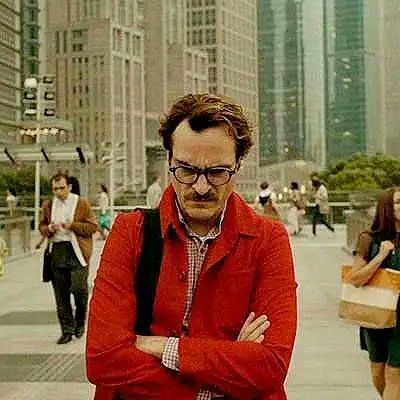
Queen’s FLASH GORDON (1980) soundtrack is gloriously ridiculous in the best possible way. The film is operating at full comic-book lunacy, then Brian May and the band hit you with guitars, synths and Freddie’s voice. Who else could’ve scored this? Really.

What’s your GOAT original film score?
Not a compilation of existing songs or the usual Zimmer and Williams picks, but a score that stayed with you long after the credits rolled and became something you return to just to listen to. CONAN THE BARBARIAN and STAR TREK II: THE WRATH OF KHAN are two personal favourites. What’s yours?

Michael Helmer retweeted

A stunning vision of a Brutalist megacity by German artist Clemens Gritl.
Part of his project “A Future City From The Past,” exploring the monumental architectural utopias of the 1960s and 1970s through incredibly detailed 3D environments.


Michael Helmer retweeted
The Iron Giant was one of Hollywood's best movies of the '90s. It works because the Giant feels alive.
Brad Bird wanted this 3D model to belong with the hand-drawn characters -- and the "CGI had to be as emotive as the 2D animation." We explore:
animationobsessive.substack.…

Michael Helmer retweeted
CANADIAN TV TIME MACHINE
The King Had No Crown, But He Ruled Kensington!
Remember Al Waxman as Larry King, the lovable neighbourhood busybody who always had time for everybody else’s problems?
From 1975 to 1980, King of Kensington brought a little slice of Toronto life into Canadian living rooms, becoming one of the country’s best-loved homegrown sitcoms.
Set in Toronto’s colourful Kensington Market, the CBC comedy followed Larry, a variety store owner whose shop was practically the neighbourhood headquarters. Between his wife Cathy (Fiona Reid), his opinionated mother Gladys (Helene Winston), and regulars like Nestor, Max and Duke, there was never a shortage of arguments, advice or laughs.
Created by Perry Rosemond, the series ran for five seasons and 111 episodes. It even found an audience south of the border, selling to American television stations.
But what made King of Kensington special wasn’t just the comedy. It was the way it captured a multicultural Canadian neighbourhood, where everybody knew everybody, everybody had an opinion, and Larry somehow managed to get involved in everything!
And who could forget that catchy theme song and its unforgettable send-off: “What a guy!”
Al Waxman went on to international recognition playing Lieutenant Bert Samuels on Cagney & Lacey, but for generations of Canadians, he’ll always be the King of Kensington.
Who remembers watching Larry King and the gang?
#CanadianTVTimeMachine #KingOfKensington #CanadianTelevision


Michael Helmer retweeted

55 years ago today, Sly & the Family Stone's "Family Affair" was released as a single.
