

Assistant Professor @OregonStateBEE, who studies electroactive microbes. Beaver 🦫, Husband, Father, Runner.
97331
Joined August 2022
- Tweets450
- Following1.6K
- Followers402
- Likes5.3K





Congratulations Jamie!

Want to hear more about this amazing bacterium? Come to my presentation @FEMSmicro 2025 in Milan next week!
2
184
Goodbye #ASM2025. I had a great time hearing many amazing talks and connecting with brilliant minds. Like many students and early career scientists, I share the sadness and anxiety about shrinking funding and uncertain futures. Let’s stay strong, support each other, and move forward with empathy and vigilance. #ASMicrobes @ASMicrobiology

1
15
521
Cheng Li 李成 retweeted

Hey 👋 #ASMicrobe! Don’t forget > social media meetup at 3PM at the conference entrance by the BIG “ASM L A” sign. Group Photo!
Please 🙏 RePost!
Meet your #scicom friends from social media in person! It’s epic!
CC @ASMicrobiology
Cheng Li 李成 retweeted

These #ASMicrobe attendees laced up their running shoes and got their steps in for the day with an early morning fun run/walk around L.A., learning historical and cultural info about the city along the way! 👟

ALT A group of people

ALT A person smiling and holding the camera with a group of people in the background
ASM 2025 LA downtown 5K. Thank ASM for organizing this. We need mamba mentality to navigate through the tough time in science. "The most important thing is to try and inspire people so that they can be great in whatever they want to do." #ASMicrobe #ASM #MambaMentality @ASMicrobiology

3
186
Proud to serve as a mentor in the ASM Future Leaders Mentorship Fellowship, a program empowering the next generation of microbial scientists. Honored to support emerging voices in the field. @ASMicrobiology #ASM2025 #ASMicrobes #FutureLeaders #MentorshipMatters

12
511
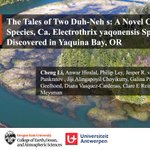
Missed my talk this morning at #ASM2025? Catch the recording here: youtu.be/CilCzOFQYuw?si=i_d0… via @YouTube. The Tales of Two Duh-Neh s: A Novel Cable Bacteria Species, Ca. Electrothrix yaqonensis Sp. Nov. YB6 Discovered in Yaquina Bay, OR. #cablebacteria #asmicrobe2025 #asm2025 #ASMicrobe

1
138
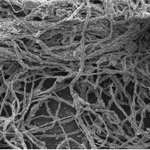
Come hear my talk today (9:15–9:30 AM, LACC 403B) on our newly discovered cable bacteria species with sheath formation and ultra-wide ridges! #ASM2025 #ASMicrobes #cablebacteria

1
135
At ASM 2025, I will share our newest finding of a new cable bacteria species in Yaquina Bay, OR, and the people of Yaqona! I am excited to represent Oregon State. #cablebacteria #ASM2025 #ASMicrobe

12
419
Excited to be on board! Let's go, Beavs! 🦫

Please extend a warm welcome to our newest faculty, Dr. Cheng Li!
His current projects include development of marine MFCs that generate sustained power from ocean biomass. He is excited to join OSU BEE to advance microbial electro-biotech for sustainable food and water systems!

3
9
199
Thank you, Discover Magazine.

Learn more about Ca. Electrothrix yaqonensis, a new species of cable bacteria — named after the Yaqona people — that could assist in environmental cleanup and produce better biomedical devices.
discovermagazine.com/the-sci…

1
171
Cable bacteria are absolutely marvelous!
Cable bacteria were discovered more than a decade ago, but I haven't seen a deep article on them yet.
Last year, I visited Aarhus University in Denmark (where they were discovered) to learn more about them. So let me break down why I think these microbes are so fascinating...
First, some context. Danish researchers found these weird microbes in a lake near Aarhus, and published their discovery in 2012. Peering at the microbes beneath a microscope, they found that the cells resembled human hair. It turns out that these microbes link together, end to end, to form centimeters-long chains. There are hundreds or thousands of microbes in each of these chains.
Cells located near the middle of the chain form physical structures that allow electrons to flow through the length of the filament. These structures are built from protein-based fibers running through the periplasm (the space between the inner and outer membranes) and act like little “conduction channels.” Basically, cable bacteria act like living wires.
One tip of the microbial chain oxidizes (or strips electrons from) sulfides in the mud. These electrons then race up the chain, toward the surface, where the cell on the other tip reduces oxygen or nitrate. By creating this electron bridge, cable bacteria have basically evolved a super unique way to spatially separate redox reactions to power their collective metabolism. This stands in stark contrast to a long-held assumption in biology that every living cell independently generates its own energy supply.
And amazingly, nobody has ever isolated these cells in the laboratory! They do not grow in the typical media! So researchers basically just go to the lake where they were initially found, scoop up a bunch of mud, and do all their studies with that mud.
Cable bacteria may also seem like just a niche organism. And there are lots of weird and fun organisms to learn about in biology! But cable bacteria could also have some serious applications in agriculture.
First, you should know that sulfate reducing microbes and methanogens compete for the same resources. So in 2020, researchers took some cable bacteria and added them to soil pots where rice had been planted. Because the cable bacteria oxidize sulfide (and increase sulfate levels by ~5-fold), they also stifle methanogens. And this, in turn, led to "the reduction of methane emissions by 93%." (See the Nature Comms paper by Scholz V.V. et al.)
(Quick context: Methane emissions are an important contributor to climate change, and about 11% of all anthropogenic methane emissions come from rice fields!)
In other words, it's possible that we could spray cable bacteria into rice fields and seriously reduce methane emissions. A bunch of Stanford researchers got a grant to start scaling this approach just last year.
And there's more stuff about cable bacteria, too. If you're interested, let's talk about them and figure out how to write something together!


5
269


Congrats

A biotic/abiotic #CO2➡️syngas📷#multicarbon domino!
Check our latest work by @su2lin_SEU and Santiago on adapted #syngas-fermenting #bacteria for #photocatalytic acetate and ethanol production ☀️🦠
pubs.rsc.org/en/Content/Arti…

144